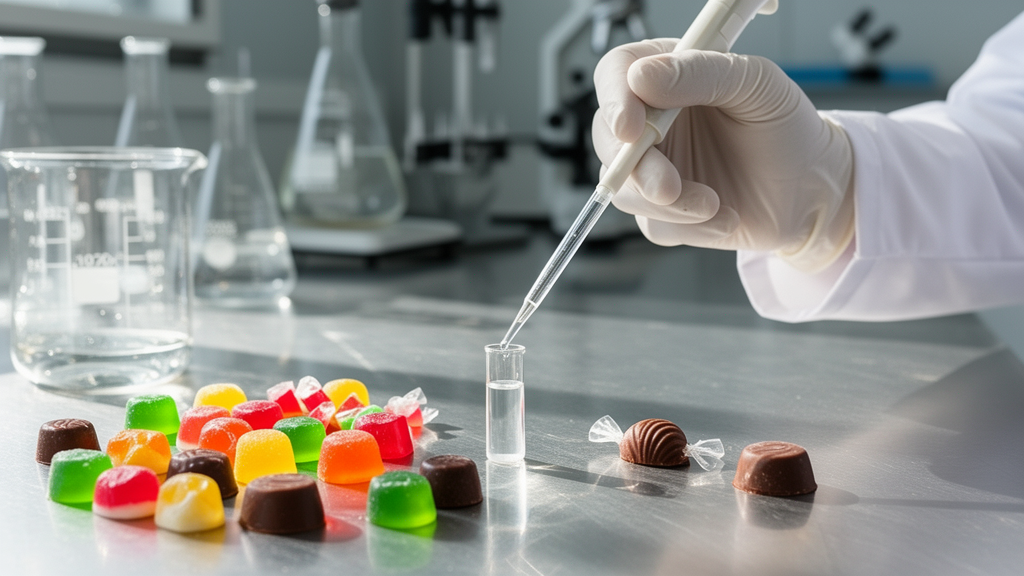
Researchers from Brazil have published a detailed analysis of high-intensity sweeteners in a wide range of commercial fruit-based sweets, desserts, and confections. The study, appearing in the journal Food Safety and Risk, evaluated the presence and concentrations of nine specific non-sugar sweeteners in 110 commercial samples collected from the local market in Campinas, São Paulo. The primary objective was to assess the occurrence of these additives in products with partial or total sugar reduction, providing updated information on their levels in the Brazilian food supply. This work addresses a gap in local data regarding the specific concentrations of high-intensity sweeteners in various sweet food categories.
The team developed and validated a single analytical method capable of simultaneously determining acesulfame potassium, sucralose, aspartame, neotame, saccharin, sodium cyclamate, stevioside, rebaudioside A, and advantame. The method involved sample dilution, filtration, and analysis using ultra-high-performance liquid chromatography coupled to tandem mass spectrometry, or LC-MS/MS. Validation experiments demonstrated that the method was precise and accurate, with coefficients of variation for precision lower than 16.6% and accuracy values ranging between 72.2% and 109.9%. This robust analytical approach allowed for the reliable detection and quantification of multiple sweeteners in complex food matrices.
The samples analyzed included fruit-based sweets, fruit-based jams, powders for jelly, pudding, and flan, candies, chewing gum, and cocoa products. In total, 55 distinct products from two different batches were purchased in 2023, resulting in 110 individual samples for analysis. The researchers also evaluated the nutrition claims on the product labels, specifically looking for statements regarding sugar content. The claim “zero” was the most prevalent, accounting for 29% of the total samples, particularly in categories such as jelly, candy, and chewing gum. This finding aligns with broader marketing trends toward sugar-free or zero-sugar formulations in the confectionery industry.
The analysis revealed that the products contained between one and five different high-intensity sweeteners in their formulations. Sucralose was identified as the most common sweetener, detected in 60 of the 110 samples, which represents 54.5% of the total. In contrast, neotame and advantame were not found in any of the evaluated products. The presence of multiple sweeteners in a single product is a common strategy used by manufacturers to enhance sweetness while reducing the amount of any single additive. This blending approach can also help to mask undesirable aftertastes associated with individual sweeteners.
Concentration levels varied significantly across the different sweeteners and product types. For acesulfame potassium, concentrations ranged from 1.5 to 299.2 mg/100 g, while saccharin levels were between 1.0 and 25.7 mg/100 g. Sodium cyclamate was found at levels ranging from 1.5 to 105.6 mg/100 g, and sucralose concentrations spanned from 4.2 to 106.1 mg/100 g. Aspartame showed the widest range, from 2.2 to 649.0 mg/100 g, followed by stevioside at 2.0 to 7.7 mg/100 g and rebaudioside A at 2.2 to 33.3 mg/100 g. These ranges highlight the variability in formulation practices among different brands and product categories.
In fruit-based jams and sweets, sucralose was the predominant sweetener, reflecting its stability at high temperatures and low pH, which makes it suitable for cooked fruit products. A specific brand of guava sweet was found to contain a mixture of sucralose, sodium saccharin, sodium cyclamate, and rebaudioside A. In jelly products, associations of acesulfame potassium with aspartame or sucralose were common, as were mixtures of cyclamate and saccharin. The use of sweetener blends in these products is often intended to improve the sweetening power and reduce the content of each individual high-intensity sweetener in the final formulation.
Pudding and flan samples presented mixtures with up to four different high-intensity sweeteners. While the combinations of acesulfame potassium with aspartame or sucralose were less frequent in these desserts compared to jelly, they were still observed in 33.3% of the samples. The content ranges for flan and pudding were very similar, suggesting consistent formulation strategies across these dessert categories. The frequent use of saccharin and aspartame mixtures in these products may be attributed to their synergistic effect, which enhances sweetness intensity while allowing for lower individual concentrations of each sweetener.
Cocoa products, including cocoa-sugar mixtures and chocolate bars, showed distinct patterns of sweetener use. Cocoa-sugar mixtures contained up to five different high-intensity sweeteners in a single product. One brand of cocoa-sugar mixture exceeded the maximum permitted limit for saccharin. In chocolate bars, the samples contained only sucralose or steviol glycosides. However, products from three specific brands exceeded the maximum permitted limit for sucralose according to Brazilian legislation. The use of steviol glycosides in cocoa products remains uncommon, identified in only 16.7% of cocoa-sugar mixtures and 20.0% of chocolate bars.
Candies and chewing gum exhibited high concentrations of sweeteners, which is expected given the higher legal limits allowed for these product types. One batch of cherry-flavored candy exceeded the limit for acesulfame potassium by 19.7%. The strategic combination of sweeteners, such as aspartame and acesulfame potassium, is widely used in these products to produce synergistic effects. These blends can enhance sweetness perception, improve sensory profiles, and reduce bitter or metallic off-notes that might be present if a single sweetener were used alone.
Most of the analyzed samples complied with the maximum limits currently established for high-intensity sweeteners in Brazil. However, some samples, particularly in the confectionery and chocolate categories, exceeded these regulatory values. The study highlights the importance of continuous monitoring of sweetener levels in foods to ensure compliance with legislation and to support exposure calculations for risk assessment purposes. The data generated by this study can be useful for understanding consumer exposure to these additives and for informing future regulatory decisions.
The researchers noted that the analysis of a greater number of different batches would allow for more reliable conclusions regarding the variability of sweetener contents used by industries. The current study provides a snapshot of the market in 2023, and formulations may change over time due to shifts in consumer preferences, regulatory updates, or changes in manufacturing processes. The findings underscore the need for robust analytical methods to monitor the presence and levels of high-intensity sweeteners in a variety of food products.
This study contributes to the growing body of evidence on the use of non-sugar sweeteners in the Brazilian food market. By providing detailed concentration data for nine specific sweeteners across multiple product categories, the research offers valuable insights into current formulation practices. The results can serve as a baseline for future studies and for regulatory agencies aiming to protect public health through the monitoring of food additives. The availability of such data is crucial for assessing the safety and compliance of sweetened products available to consumers.
Beyond testing sweetener concentrations, the investigation situated these findings within Brazil’s changing regulatory landscape for packaged foods. National health authorities established front-of-package nutritional warnings, requiring foods containing more than 15 grams of added sugar per 100 grams to carry a prominent advisory message. This policy shift spurred industrial reformulation toward non-sugar substitutes. Examining package declarations showed distinct marketing patterns across product categories. While zero-sugar claims were common in jellies and confections, the researchers found that “no added sugar” was predominantly chosen for fruit-based items, whereas “zero added sugar” appeared most frequently on cocoa-containing goods. Overall, only 10.9 percent of the evaluated products lacked a specific sugar-related nutritional claim on their packaging.
Developing a single method across varied sweet matrices required specialized sample preparation protocols prior to liquid chromatography and tandem mass spectrometry. Defatting chocolate bars demanded two consecutive extractions with hexane in an ultrasonic bath at 40 degrees Celsius, followed by centrifugation at 10,000 g and subsequent analyte extraction using methanol. In contrast, powdered items and confections were dissolved in water, with candies requiring ultrasonic heating at 45 degrees Celsius. In the final dilution step, florfenicol was incorporated as an internal standard at a concentration of 100 nanograms per milliliter. Method validation using blank strawberry jam and milk chocolate highlighted significant matrix interferences in fruit jam, where acesulfame potassium and aspartame experienced signal enhancement, while sucralose, saccharin, stevioside, and rebaudioside A underwent signal suppression. Conversely, the defatted chocolate extract produced no detectable matrix effect, and calibration curves demonstrated linearity with correlation coefficients exceeding 0.98.
The findings also provided a temporal perspective on food manufacturing trends in Brazil when compared to earlier research published approximately eight years prior. A previous 2015 survey by Pane and colleagues analyzed powdered sweet foods using high-performance liquid chromatography with a diode array detector. That earlier study identified only aspartame in commercial jelly samples, whereas the recent assessment identified diverse combinations of up to five sweeteners. In powdered puddings, the older study observed no sodium cyclamate, yet cyclamate appeared across all pudding samples in the new evaluation. Additionally, earlier reported sweetener concentrations in diet chocolate pudding reached 15.1 milligrams per 100 milliliters for saccharin and 12.1 milligrams per 100 milliliters for aspartame, substantially higher than the current study’s average concentrations of 4.5 milligrams and 4.9 milligrams per 100 milliliters. In cocoa-sugar mixtures, the average concentration of acesulfame potassium rose from 14.8 milligrams per 100 milliliters in the 2015 study to 25.5 milligrams per 100 milliliters, reflecting measurable changes in commercial sweetening practices over time.
Subject of Research: Analysis of high-intensity sweetener concentrations in Brazilian fruit-based sweets, desserts, and confections.
Article Title: Evaluation of high-intensity sweeteners in fruit-based sweets, desserts and confections
Article References: Nicoluci, Í. G., da Silva, B. S., Braga, P. A. C., & Arisseto-Bragotto, A. P. (2026). Evaluation of high-intensity sweeteners in fruit-based sweets, desserts and confections. Food Safety and Risk, 13(1), Article 11. https://doi.org/10.1186/s40550-026-00135-3
Image Credits: AI Generated
DOI: 10.1186/s40550-026-00135-3
Keywords: high-intensity sweeteners, food safety, Brazil, sucralose, aspartame, confectionery, regulatory compliance, LC-MS/MS, nutrition claims, food additives, Evaluation, high-intensity
News Source: Daisy Hatcher. (November 12, 2026). Brazilian Study Finds High Sweetener Levels in Sweets. Scienmag.