• HOME
  • NEWS
  • EXPLORE
    • CAREER
      • Companies
      • Jobs
    • EVENTS
    • iGEM
      • News
      • Team
    • PHOTOS
    • VIDEO
    • WIKI
  • BLOG
  • COMMUNITY
    • FACEBOOK
    • INSTAGRAM
    • TWITTER
Wednesday, November 11, 2026
BIOENGINEER.ORG
No Result
View All Result
  • Login
  • HOME
  • NEWS
  • EXPLORE
    • CAREER
      • Companies
      • Jobs
        • Lecturer
        • PhD Studentship
        • Postdoc
        • Research Assistant
    • EVENTS
    • iGEM
      • News
      • Team
    • PHOTOS
    • VIDEO
    • WIKI
  • BLOG
  • COMMUNITY
    • FACEBOOK
    • INSTAGRAM
    • TWITTER
No Result
View All Result
Bioengineer.org
No Result
View All Result
Home NEWS Science News Biology

New Method Measures Brain Memory Effects Across Wakefulness and Deep Sleep

by
November 11, 2026
in Biology
Reading Time: 2 mins read
0
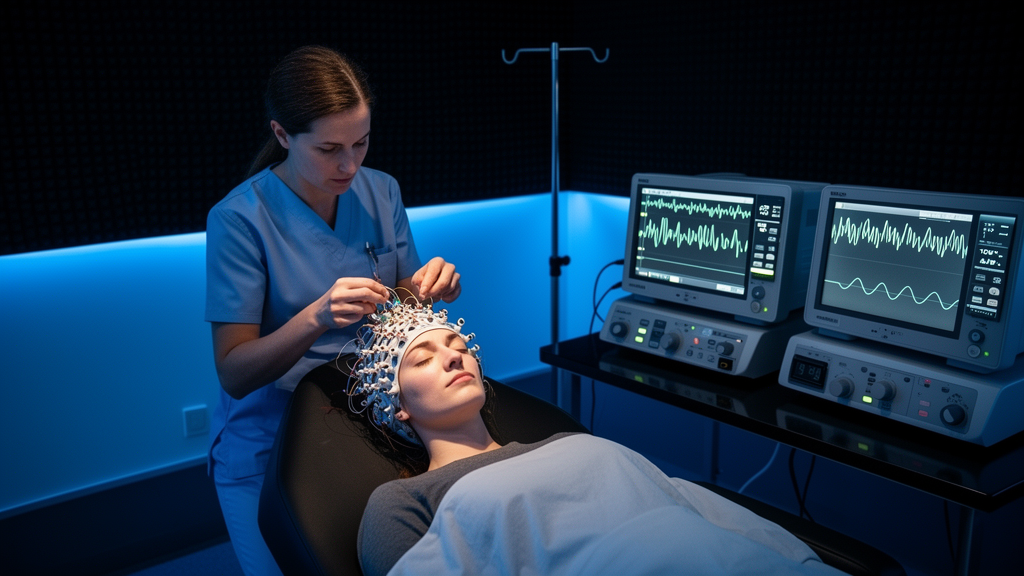
New Method Measures Brain Memory Effects Across Wakefulness and Deep Sleep

New Method Measures Brain Memory Effects Across Wakefulness and Deep Sleep

Share on FacebookShare on TwitterShare on LinkedinShare on RedditShare on Telegram

A new computational framework known as the FDTest assesses local memory effects in multidimensional systems by measuring violations of a generalized fluctuation-dissipation theorem. Introduced by Sebastian Manuel Geli, Juan Manuel Monti, Adrián Ponce-Alvarez, Gustavo Deco, and Yonatan Sanz Perl, this mathematical method evaluates how individual brain areas retain past information fed back from the surrounding network rather than operating strictly according to their immediate internal state.

Investigating how the human brain flexibly balances local and distributed information processing to support diverse cognitive and conscious states represents a fundamental challenge in neuroscience. The investigators hypothesized that a primary signature of this operational balance is the presence of memory effects. In neural dynamics, memory effects manifest whenever a region’s future activity depends not only on its present condition, but also on historical signals returned from the broader brain network.

To evaluate this dynamic behavior, the team applied the FDTest framework to whole-brain computational models fitted to empirical human neuroimaging data. Their initial modeling experiments demonstrated that the brain’s local memory structure directly reflects its underlying structural connectivity. By detecting explicit violations of the generalized fluctuation-dissipation theorem, the testing procedure uncovers how network-level feedback shapes localized neural activity across different brain areas.

The researchers then expanded their computational analysis to individualized whole-brain models of subjects during wakefulness and deep sleep. Their comparisons revealed that memory effects are consistently stronger during wakefulness than in deep sleep. According to the study, these amplified memory signatures in the waking brain indicate richer inter-regional dependencies and substantially more integrated neural dynamics across active brain circuits.

These experimental modeling findings establish local memory as a dynamical marker of brain state. By demonstrating that thermodynamic fluctuation-dissipation violations capture network communication across sleep and waking conditions, the authors position the FDTest as a principled analytical tool for probing the hidden dynamical structure of neural systems.

Subject of Research: Measurement of local memory effects in brain dynamics using fluctuation-dissipation theorem violations

Article Title: FDTest: Fluctuation-dissipation theorem as a test for memory effects in brain dynamics

Article References: Geli, S. M., Monti, J. M., Ponce-Alvarez, A., Deco, G., & Sanz Perl, Y. (2026). FDTest: Fluctuation-dissipation theorem as a test for memory effects in brain dynamics. PLOS Computational Biology, 22(11), e1014883. https://doi.org/10.1371/journal.pcbi.1014883

Image Credits: AI Generated

DOI: 10.1371/journal.pcbi.1014883

Keywords: fluctuation-dissipation theorem, FDTest, brain dynamics, memory effects, computational neuroscience, wakefulness, deep sleep, neuroimaging, whole-brain models, neural connectivity, information processing, dynamical markers, brain states, inter-regional dependencies, integrated dynamics, multidimensional systems

News Source: Cassandra Pierce. (November 11, 2026). New Method Measures Brain Memory Effects Across Wakefulness and Deep Sleep. Scienmag.


Tags: brain dynamicsbrain statesComputational neurosciencedeep sleepdynamical markersFDTestfluctuation-dissipation theoreminformation processingintegrated dynamicsinter-regional dependenciesmemory effectsmultidimensional systemsneural connectivityneuroimagingwakefulnesswhole-brain models
Share12Tweet7Share2ShareShareShare1

Related Posts

Chloroplast Genomes Reveal Geographic Evolution of East Asian Roses

Chloroplast Genomes Reveal Geographic Evolution of East Asian Roses

November 11, 2026
PhysInfer Neural Network Infers Transcriptional Bursting Dynamics From Single-Cell RNA Sequencing

PhysInfer Neural Network Infers Transcriptional Bursting Dynamics From Single-Cell RNA Sequencing

November 11, 2026

Predatory Insects Slash Invasive Spiralling Whitefly Infestations in Eggplant Fields

November 11, 2026

Mitochondrial Protein OPA1 Suppresses Glioma Progression and Predicts Favorable Patient Survival

November 11, 2026

POPULAR NEWS

  • Splicing Changes Drive Kidney Disease in Zebrafish Model

    Splicing Changes Drive Kidney Disease in Zebrafish Model

    29 shares
    Share 12 Tweet 7
  • New Compound Targets TMED3 to Trigger ER Stress in Pancreatic Cancer

    29 shares
    Share 12 Tweet 7
  • Review Evaluates Sensory Ion Channels and Targeted Therapies in Dry Eye Disease

    29 shares
    Share 12 Tweet 7
  • Adolescent With Proteus Syndrome Develops Multiple Coexisting Ovarian Tumors and Amenorrhea

    29 shares
    Share 12 Tweet 7

About

We bring you the latest biotechnology news from best research centers and universities around the world. Check our website.

Follow us

Recent News

China Comprehensive Pilot Program Cuts Agricultural Chemical Fertilizer Density by Ten Percent

Development and external validation of a nomogram incorporating the TyG index and prognostic nutritional index for predicting cardiovascular events in patients with heart failure with preserved ejection fraction and chronic kidney disease

Hypothesis Proposes Targeting NLRP3 Inflammasome and Magnesium Deficiency in Atrial Fibrillation

Subscribe to Blog via Email

Enter your email address to subscribe to this blog and receive notifications of new posts by email.

Join 86 other subscribers
  • Contact Us

Bioengineer.org © Copyright 2023 All Rights Reserved.

Welcome Back!

Login to your account below

Forgotten Password?

Retrieve your password

Please enter your username or email address to reset your password.

Log In
No Result
View All Result
  • Homepages
    • Home Page 1
    • Home Page 2
  • News
  • National
  • Business
  • Health
  • Lifestyle
  • Science

Bioengineer.org © Copyright 2023 All Rights Reserved.