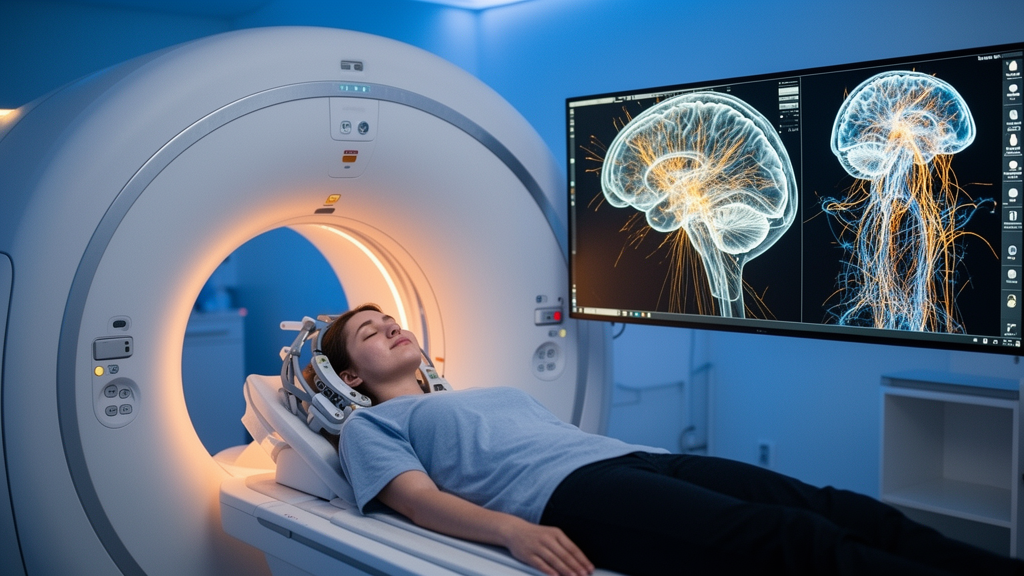
Neuroimaging researchers evaluating resting-state functional magnetic resonance imaging have demonstrated that machine learning classifiers can reliably distinguish between distinct physiological brain states across independent imaging facilities, even when data are processed through vastly different analytical pipelines. In a comprehensive benchmarking investigation published in Brain Informatics, a research team systematically evaluated 256 distinct functional connectivity analysis workflows to determine how diverse methodological choices influence cross-site classification performance. By contrasting scans recorded during eyes-open and eyes-closed conditions across two unrelated research cohorts, the investigators discovered that top-performing configurations sustainably achieved approximately 90 percent classification accuracy. This robust discriminative capability was maintained despite extensive permutations in image preprocessing, anatomical brain parcellations, BOLD signal denoising strategies, and mathematical metrics used to estimate functional connectivity. Rather than collapsing under analytical divergence, functional connectivity models proved resilient when differentiating clearly defined physiological states, demonstrating that core neural signatures remain preserved across diverse computational workflows and multi-site acquisition platforms.
The study directly addresses a persistent reproducibility challenge that has hindered the translational deployment of machine learning applications in human cognitive and clinical neuroscience. Although predictive models trained on functional connectivity matrices offer substantial potential for identifying clinical neuromarkers and mapping neurodegenerative disorders, methodological variability across laboratories frequently obscures underlying neurobiology. Decisions made across neuroimaging workflows—ranging from spatial filtering and motion artifact removal to anatomical atlas selection and correlation mathematics—can alter derived network matrices and diminish the generalizability of predictive algorithms. Combined with natural physiological noise, state-dependent signal fluctuations, and scanner-specific hardware variations, analytical inconsistencies make it difficult to compare published findings or separate genuine neurobiological patterns from pipeline artifacts. Previous classification attempts have often relied on heterogeneous clinical samples or complex cognitive tasks where individual patient differences, varying disorder subtypes, and task performance discrepancies introduce uncontrolled variance, leaving researchers uncertain whether divergent outcomes stem from genuine pathology or arbitrary software parameters.
To eliminate uncontrolled inter-subject variability and isolate the exact consequences of analytical decisions, the authors implemented a controlled within-subject experimental framework comparing two distinct physiological baseline conditions. Specifically, the team examined the transition between resting with eyes open while fixated on a central crosshair and resting with eyes closed. Classical neuroimaging literature has established that opening and closing the eyes triggers pronounced reorganizations across sensory, attentional, and intrinsic connectivity networks. For instance, eye closure suppresses functional interactions across visual cortices while increasing coupling among auditory and sensorimotor regions, whereas eye opening reinstates visual network synchronization and modulates default mode network connectivity. Core regions of the default mode network, such as the medial prefrontal cortex and posterior cingulate cortex, mediate self-referential thought during stimulus-free intervals. By focusing on this binary physiological contrast within the same individuals, the researchers established an objective ground truth that bypassed diagnostic ambiguity, providing an ideal testbed for evaluating pipeline robustness.
The benchmarking evaluation utilized resting-state fMRI datasets gathered from two independent research institutions utilizing distinct hardware environments and scanning protocols. The first dataset, obtained from the Institute of the Human Brain of the Russian Academy of Sciences, comprised 84 healthy adult participants scanned on a 3-Tesla Philips Achieva system across eyes-closed and eyes-open fixated sessions. Functional echo-planar imaging scans were collected across 32 axial slices with 120 volumes, utilizing a repetition time of 2500 milliseconds, an echo time of 35 milliseconds, and a 90-degree flip angle, alongside structural images with 0.94-millimeter slice thickness. The second dataset originated from the Beijing Eyes Open Eyes Closed Study, encompassing 48 healthy controls scanned on a 3-Tesla Siemens Trio system across three sequential sessions. Functional runs captured 33 axial slices and 240 volumes with a repetition time of 2000 milliseconds and an echo time of 30 milliseconds, alongside structural volumes with 1.33-millimeter slice thickness.
Standardized raw preprocessing for both datasets was conducted through fMRIPrep version 23.2.0, incorporating anatomical skull stripping, tissue segmentation, spatial normalization into MNI coordinate templates, slice timing correction, head motion realignment, and four-millimeter Gaussian smoothing. To prevent signal dropout and noise contamination around anatomical cavities, researchers generated empirical subject-specific brain masks and combined them into a group mask thresholded at 50 percent subject overlap. To investigate anatomical parcellation effects, the authors selected four widely cited predefined brain atlases spanning distinct spatial resolutions and design principles. These included the Automated Anatomical Labeling atlas with 116 macroscopic regions, of which 106 passed coverage thresholds; the functional Schaefer atlas configured at 200 cortical regions, retaining 182 regions; the multi-modal Brainnetome atlas containing 246 cortical and subcortical areas, yielding 220 usable regions; and the high-resolution HCPex atlas with 426 subdivisions, leaving 379 parcels. Restricting the study to predefined standardized atlases ensured direct comparability across datasets.
To benchmark BOLD signal denoising, the researchers designed 16 distinct confound regression strategies incorporating combinations of head motion parameters, physiological components, and global signal adjustments. Head motion correction was evaluated using either a standard 12-parameter model or an expanded 24-parameter model comprising motion estimates, temporal derivatives, and quadratic expansions. Physiological confounds originating from white matter and cerebrospinal fluid were modeled using anatomical CompCor with either a fixed 10-component set or adaptive components explaining 50 percent of variance, alongside temporal CompCor. The team also evaluated aggressive and non-aggressive implementations of ICA-AROMA, an automated method that identifies motion artifacts based on spatial edge coverage, high-frequency temporal signatures, and volume-wise motion correlations. Furthermore, half of the tested pipelines incorporated four global signal regression parameters, including whole-brain mean signal, its temporal derivative, its square, and the derivative of its square, enabling an empirical test of whether global signal removal introduces artificial negative correlations or improves classification.
Functional connectivity matrices were computed using four distinct mathematical formulations that capture functional interactions through different computational principles. In addition to standard bivariate Pearson correlation, which quantifies linear dependencies, the authors evaluated tangent space parametrization, which projects individual functional connectivity matrices onto a Riemannian tangent space to capture individual variations while preserving shared geometric structures. They also implemented partial correlation and regularized partial correlation via graphical lasso, which estimate direct inter-regional connections while conditioning out mediated influences from remaining parcels. Each symmetric connectivity matrix was vectorized along its upper triangle excluding the diagonal. To prevent overfitting and mitigate multicollinearity in the high-dimensional feature space, the team applied principal component analysis restricted strictly to training folds, retaining components that accounted for 95 percent of variance. The transformed features were then supplied to a linear Logistic Regression classifier with L2 regularization and an LBFGS optimization solver capped at 1000 iterations.
Model validation was structured around two distinct operational regimes to evaluate generalization without information leakage. Under the direct cross-site validation protocol, classifiers were trained exclusively on data from one institution and evaluated on unseen participants from the other institution, prohibiting target-site data from influencing feature extraction, dimensionality reduction, or hyperparameter selection. In the few-shot domain adaptation protocol, training sets were augmented with a small cohort of target-site participants before testing on the remaining unseen target participants. Across 256 pipeline variations, models consistently delivered robust classification accuracy, centering near 90 percent for top configurations. Direct comparisons between few-shot domain adaptation and purely cross-site validation demonstrated comparable predictive performance, revealing that models trained on high-contrast physiological states generalized across scanners without localized calibration samples. Subject-level data partitioning ensured that both scans from any individual were strictly assigned together, preventing identity leakage where algorithms inadvertently learn subject-specific idiosyncrasies rather than authentic experimental conditions.
Statistical modeling using linear mixed-effects frameworks and Brier score loss functions confirmed that the choice of functional connectivity estimator was the single most influential determinant of predictive success. In Type III Wald tests of fixed effects, connectivity metric selection vastly outweighed brain atlas selection, denoising strategy, and global signal regression. Nonparametric sign-flip permutation tests across 5000 iterations revealed that tangent space parametrization significantly outperformed alternative connectivity metrics across both cross-site transfer directions, with Pearson correlation also demonstrating strong accuracy. Conversely, partial correlation and graphical lasso yielded inferior classification scores, likely due to estimation instability, the curse of dimensionality across dense parcellations, and sensitivity to noise. Denoising comparisons revealed that aggressive ICA-AROMA consistently delivered the worst accuracy and was significantly inferior to CompCor-based strategies across both evaluation directions, while global signal regression exerted only a negligible effect. Quality control correlations and Intraclass Correlation Coefficient analyses further indicated that CompCor combined with tangent space projection achieved optimal measurement stability.
To uncover the neurobiological drivers of classification, the authors conducted 1000 iterations of site-stratified subsampling on the pooled multi-site cohort, applying the Haufe transformation to convert backward classifier weights into forward model activation patterns. This analysis revealed a consistent network-level reorganization separating eyes-open and eyes-closed states. Eye opening was characterized by pronounced hyperconnectivity between the frontoparietal control network and the default mode network, alongside heightened coupling between control, somatomotor, and default systems. In contrast, eye closure triggered heightened functional coupling between visual networks and somatomotor areas, as well as between visual and dorsal attention networks. The investigators noted several methodological limitations, emphasizing that findings were established in healthy cohorts under a high-contrast physiological paradigm and may not extend directly to subtle clinical phenotypes, that only logistic regression was evaluated, and that scrubbing was omitted. Nevertheless, the study demonstrates that functional connectivity measures, particularly tangent space parametrization paired with CompCor denoising, offer exceptional resilience against analytical variability in multi-site neuroimaging studies.
Subject of Research: Benchmarking resting-state fMRI functional connectivity pipelines for cross-site classification
Article Title: Benchmarking resting state fMRI connectivity pipelines for classification: robust accuracy despite processing variability in cross-site eye state prediction
Article References: Medvedeva, T., Knyazeva, I., Masharipov, R., Korotkov, A., Cherednichenko, D., & Kireev, M. (2026). Benchmarking resting state fMRI connectivity pipelines for classification: robust accuracy despite processing variability in cross-site eye state prediction. Brain Informatics, 13(1), Article 18. https://doi.org/10.1186/s40708-026-00305-1
Image Credits: AI Generated
DOI: 10.1186/s40708-026-00305-1
Keywords: neuroimaging, resting-state fMRI, functional connectivity, machine learning, brain parcellation, denoising pipelines, cross-site validation, Brain Informatics, Benchmarking, resting, state, fMRI
News Source: Cassandra Pierce. (November 11, 2026). Resting-State Brain Connectivity Predicts Eye State Accurately Across Analytical Pipelines. Scienmag.