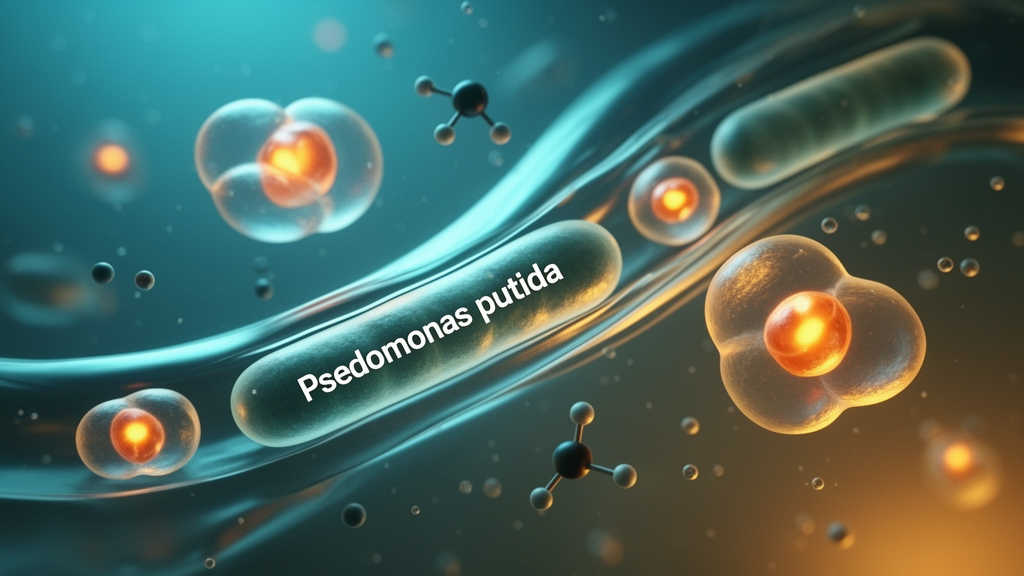
In an unexpected outcome for industrial biotechnology, researchers investigating aerobic microbial bioprocesses have discovered that expressing plant hemoglobin genes in Pseudomonas putida KT2440 reduces whole-cell bioconversion rates and impairs cellular respiration, even when oxygen is freely available. The study, published in AMB Express by Fredrik Lund, Matilda Dellson, Nélida Leiva Eriksson, Marie Gorwa-Grauslund, and Magnus Carlquist, evaluated whether introducing recombinant oxygen-carrying hemoglobins could help overcome the metabolic bottlenecks that frequently arise during oxygen-limited fermentations. While heterologous hemoglobin expression, particularly using the bacterial hemoglobin from Vitreoscilla stercoraria, has often been reported to enhance cell growth and protein productivity under oxygen-restricted conditions in other microbes, introducing plant-derived hemoglobins into P. putida produced the opposite effect during bioreactor cultivation. Despite non-limiting levels of dissolved oxygen in the culture broth, strains expressing plant hemoglobin showed delayed growth, lowered biomass yields, and reduced conversion rates of guaiacol into cis, cis-muconic acid, indicating a shift in intracellular oxygen utilization.
The soil bacterium Pseudomonas putida has emerged as a premier host for environmental biocatalysis and the biological upcycling of aromatic components derived from industrial lignin waste. Possessing a versatile metabolism and high tolerance to toxic aromatic substrates, P. putida KT2440 can catabolize diverse aromatic compounds into valuable convergent chemical precursors, including cis, cis-muconic acid, beta-ketoadipate, and adipic acid, which are critical precursors for producing commercial polyamides. However, the assimilation of aromatic monomers depends heavily on molecular oxygen, which acts as an obligatory cosubstrate for native monooxygenase and dioxygenase enzymes. When aerobic microbial bioprocesses are scaled up to large bioreactors, the low water solubility of oxygen typically creates severe oxygen transfer limitations, leading to sluggish growth and reduced catalytic productivity. Continuous aeration with pure oxygen or vigorous agitation can alleviate these constraints but incurs prohibitive capital and operational expenses, prompting researchers to seek genetic strategies that enhance bacterial oxygen utilization.
To investigate whether heterologous oxygen carriers could support aerobic performance, the research group focused on two plant non-symbiotic hemoglobin genes: AHb2 from Arabidopsis thaliana and BvHb2 from Beta vulgaris. In higher plants, non-symbiotic hemoglobins fulfill diverse metabolic duties distinct from vertebrate blood hemoglobins; while Arabidopsis Hb1 functions predominantly in scavenging nitric oxide, AHb2 is proposed to serve as an authentic oxygen transport protein due to its moderate oxygen affinity. In sugar beet, BvHb2 has been implicated in regulating intracellular nitric oxide levels and hypothesized to maintain cellular energy levels during vernalization and flowering. A phylogenetic evaluation comparing these two plant hemoglobins against ten other microbially produced globins showed that AHb2 and BvHb2 form a closely related cluster sharing 72.8 percent sequence identity. Notably, both plant proteins clustered far away from the widely studied bacterial hemoglobin VHb, sharing only 20.8 percent and 23.4 percent sequence identity with the bacterial counterpart.
The authors cloned AHb2 and BvHb2 into multicopy expression plasmids under the control of the strong constitutive promoter p14g and transformed them into P. putida KT2440 by electroporation. Recombinant expression of both proteins was confirmed through sodium dodecyl sulfate-polyacrylamide gel electrophoresis, which revealed the expected 17-kilodalton protein bands, as well as a distinct red pigmentation in the bacterial lysates. Spectrophotometric assays of carbonmonoxy-derivatized cell extracts verified proper folding, showing functional hemoglobin concentrations of 0.92 ± 0.30 milligrams per liter for AHb2 and 0.61 ± 0.23 milligrams per liter for BvHb2. In contrast, attempts to express the Vitreoscilla vgb gene failed to yield visible protein bands or characteristic absorbance spectra, demonstrating that VHb was not functionally produced by the expression system. Consequently, the researchers excluded VHb from subsequent physiological experiments, focusing exclusively on the two successfully produced plant hemoglobins to evaluate their operational impact on bacterial physiology.
Initial physiological assessments during aerobic batch cultivations in shake flasks containing M9 minimal medium supplemented with glucose demonstrated that hemoglobin expression altered vegetative growth. In standard aerated shake flasks, the AHb2-producing strain achieved a significantly higher final optical density at 620 nanometers than both the empty-plasmid control and the BvHb2-expressing strain (p < 0.05). The BvHb2 strain displayed a slight trend toward increased optical density, but this difference did not attain statistical significance (p = 0.56). When the strains were cultured under oxygen-restricted static conditions in non-agitated flasks, all cultures suffered from extended lag phases, lower growth rates, and reduced final cell densities. While both hemoglobin-expressing strains exhibited an apparent tendency toward slightly improved cell densities under static microaerobic conditions compared to the control, these differences were not statistically confirmed, prompting the research team to investigate cellular performance under more rigorously controlled bioreactor environments.
To determine whether hemoglobin expression affected native oxygen-dependent metabolic pathways, the researchers monitored bacterial growth on vanillin, an aromatic substrate whose catabolism in P. putida requires multiple oxygen-consuming enzymes. Vanillin is initially oxidized to vanillic acid, which undergoes demethylation to protocatechuic acid via the Rieske-type monooxygenase vanillate O-demethylase (VanAB) before ring cleavage by protocatechuate 3,4-dioxygenase. Growth trials conducted with the AHb2-expressing strain TMBFL048 and the control strain TMBFL049 in baffled shake flasks under both shaking and static conditions showed identical substrate profiles. In all test conditions, vanillin was completely converted into vanillic acid before cell growth commenced, and no significant differences in conversion rates or biomass accumulation were observed between the strains. These results confirmed that heterologous hemoglobin expression did not enhance or impede native vanillin catabolism, demonstrating that plant globins do not universally stimulate endogenous aerobic pathways in P. putida.
The team next investigated the effect of AHb2 expression on the whole-cell bioconversion of guaiacol to cis, cis-muconic acid, a high-value industrial chemical intermediate. For this bioconversion, P. putida was engineered to express the heterologous cytochrome P450 enzyme system GcoAB from Rhodococcus rhodochrous, which utilizes molecular oxygen and reduced nicotinamide adenine dinucleotide to demethylate guaiacol into catechol and formaldehyde. Endogenous catechol 1,2-dioxygenase (CatA) subsequently catalyzes the oxygen-dependent ring cleavage of catechol into cis, cis-muconic acid, while chromosomal deletions of catBC prevent product degradation. The authors constructed plasmid pFL038 to co-express AHb2 with GcoAB in P. putida strain TMBFL038, comparing its performance against the hemoglobin-free control strain TMBFL028. Experiments were conducted in two-liter stirred-tank bioreactors operated at one-liter working volumes, 30 degrees Celsius, 500 revolutions per minute, 0.5 vessel volumes per minute of aeration, and pH 7.0, with M9 medium supplemented with glucose, guaiacol, and 5-aminolevulinic acid.
Bioreactor monitoring revealed marked differences in growth and conversion kinetics between the two strains. Control strain TMBFL028 exhibited a standard batch profile, entering rapid exponential growth following a brief 2 to 4 hour lag phase, attaining a specific growth rate of 0.40 per hour, and reaching a cell dry weight of 2.1 grams per liter. It depleted glucose and guaiacol within 12 hours while producing 5.0 millimolar cis, cis-muconic acid. In contrast, the AHb2-expressing strain TMBFL038 displayed sluggish dynamics, with a delayed lag phase of 4 to 6 hours and a reduced exponential growth rate of 0.25 per hour. TMBFL038 accumulated only 1.6 grams per liter of biomass by 12 hours and consumed glucose much more slowly, taking over 12 hours to exhaust the sugar. Guaiacol conversion was correspondingly delayed, yielding only 3.6 millimolar muconic acid at 12 hours, although final product yield on substrate remained stoichiometric at approximately one mole per mole.
Quantitative off-gas analysis during the exponential growth phase established that hemoglobin expression caused a pronounced suppression of specific respiratory activity. Although volumetric oxygen uptake rates were comparable between the control and hemoglobin-producing cultures (7.86 ± 1.64 versus 7.08 ± 0.01 millimoles per liter per hour), biomass-normalized physiological metrics diverged sharply. The specific oxygen uptake rate (qO2) dropped from 10 millimoles per gram cell dry weight per hour in TMBFL028 to approximately 6 millimoles per gram per hour in TMBFL038, while specific carbon dioxide evolution (qCO2) decreased from 10 to 5 millimoles per gram per hour. Consequently, the respiratory quotient declined from 0.96 in the control to 0.84 in the AHb2 strain. Furthermore, the hemoglobin-producing strain consumed glucose at higher specific rates but exhibited a substantially lower biomass yield on substrate (0.08 grams per gram compared to 0.17 grams per gram), indicating that cellular energy utilization was uncoupled from efficient biomass formation.
Crucially, bioreactor measurements confirmed that the suppressed growth and bioconversion were not caused by environmental oxygen deficiency, as dissolved oxygen levels remained well above limiting thresholds, never dropping below 45 percent saturation in the control or 60 percent in TMBFL038. The researchers proposed several potential biological mechanisms to explain why hemoglobin caused cells to behave as though oxygen-starved despite abundant dissolved gas. While competition for endogenous heme was initially suspected, supplementing cultures with 5-aminolevulinic acid supported abundant active hemoglobin without restoring catalytic rates, indicating that heme limitation alone was not responsible. Instead, the authors hypothesized that AHb2, possessing a high oxygen affinity, may outcompete the low-affinity cytochrome P450 enzyme GcoA for available intracellular oxygen. Moreover, the altered respiratory balance and lower respiratory quotient could disrupt nicotinamide adenine dinucleotide cofactor availability, while the burden of folding multiple complex heterologous proteins may compromise cellular metabolic stability, highlighting the need for careful physiological evaluation when engineering oxygen-carrier proteins.
Subject of Research: Effects of plant hemoglobin expression on aerobic bioconversion and cellular respiration in Pseudomonas putida
Article Title: Hemoglobin expression reduces aerobic bioconversion of guaiacol in Pseudomonas putida despite non-limiting oxygen
Article References: Lund, F., Dellson, M., Eriksson, N. L., Gorwa-Grauslund, M., & Carlquist, M. (2026). Hemoglobin expression reduces aerobic bioconversion of guaiacol in Pseudomonas putida despite non-limiting oxygen. AMB Express, 16(1), Article 96. https://doi.org/10.1186/s13568-026-02089-3
Image Credits: AI Generated
DOI: 10.1186/s13568-026-02089-3
Keywords: Pseudomonas putida, Plant Hemoglobin, Guaiacol Bioconversion, Muconic Acid, Arabidopsis thaliana AHb2, Beta vulgaris BvHb2, Oxygen Limitation, Bioreactor Cultivation, Respiratory Quotient, Oxygen Uptake Rate, Cytochrome P450, GcoAB, 5-Aminolevulinic Acid, Lignin Valorization, Metabolic Engineering, Vanillin Assimilation, Cell Dry Weight
News Source: Gregory Coleman. (November 10, 2026). Plant Hemoglobin Expression Impairs Aerobic Guaiacol Bioconversion in Pseudomonas putida. Scienmag.