Credit: Photo: Sally McCay
For most of his life, Kevin Hughes has felt like an outsider. A loner as a child, the 65-year-old comedian struggled socially as a teenager and lacked friends as an adult, often offending people without knowing why.
It wasn't until a few years ago after one of his comedy shows that he first realized he might be among the millions of undiagnosed adults with autism spectrum disorder (ASD). "A couple came up to me who were doctors and said, 'What a marvelous way to use your autism for a career,'" recalls Hughes. "I called my wife and kids to laugh about it, but there was dead silence on the other end – until they finally said simultaneously, 'Dad, that makes total sense.'" That night was the start of a painful three-year journey to self-diagnosis.
Hughes is not alone. Approximately 1.5 percent of all U.S. adults (about 4.8 million) are believed to have ASD, with many attempting to self-diagnose. A new study in the journal Archives of Psychiatric Nursing explores the experiences of this oft-ignored population to help adults struggling with the neurodevelopmental disorder and help healthcare workers identify adults with ASD before they become depressed or harm themselves.
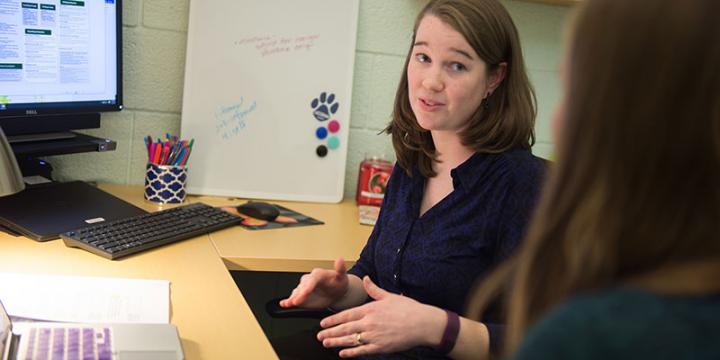
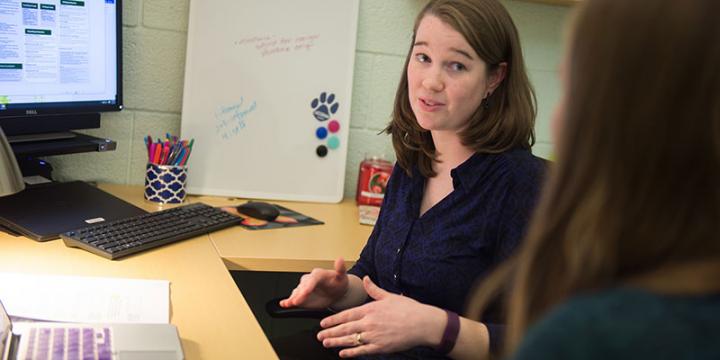
"Healthcare professionals must have an understanding of self-diagnosis to help individuals transition to formal diagnosis and to adequately educate, support, and screen this population for comorbidities," says study author Laura Lewis, assistant professor in the College of Nursing and Health Sciences at the University of Vermont. "Without knowledge of their diagnosis or supports in place, this undiagnosed population is likely at a higher risk of depression, anxiety and suicide."
Five major themes emerged from the qualitative study of 37 adults who were in the process of self-diagnosing ASD for an average of 3.8 years. These include managing self-doubt; a sense of belonging; understanding myself; questioning the need for formal diagnosis; and feeling "othered."
Many study participants reported always "feeling different" and "isolated" as children, which continued into adulthood. "I thought every child spent months alone in their backyard building a radio telescope," says Hughes, whose misdiagnosis by a physician increased his level of self-doubt and delayed his formal diagnosis. "I got in trouble in second grade for writing a paper about being from another planet. Even as an adult I've never belonged. I've lived in three cities for more than a decade each and had no friends in any of them. A lot of things made sense after reading Laura's paper."
A majority of participants said they felt an immediate "fit" after finding out they might have ASD. When reading about other adults with ASD, many participants reported feeling like "others were describing my life" and "a sense of belonging." One participant wrote, "it was both an incredible relief and very upsetting to hear them more-or-less tell my life story in their own words, from their own experiences."
"I wanted to serve as a microphone to voices that were not being heard," says Lewis. "I hope this research helps professionals and the public understand that, first of all, this group of individuals who are self-diagnosed exists; second, that their experiences and self-perceptions should not be dismissed; and finally, that healing is possible through understanding and awareness, whether that is facilitated by a professional diagnosis or not."
Study participants said the results could help some of the estimated one in 68 Americans with ASD, many of whom don't receive a formal diagnosis until adulthood, if ever.
"Had I seen Laura's research earlier I would have said, 'That's me, that makes sense,'" said study participant Scott Kramer, who now runs ASD support groups in Chattanooga and north Georgia. "Hearing about her study was like being on an African oasis somewhere and finally seeing water. And trust me, we drink all we can when it comes to research. It's part of ASD – you read everything when trying to self-diagnose."
###
Media Contact
Jon Reidel
[email protected]
802-578-0447
@uvmvermont
http://www.uvm.edu