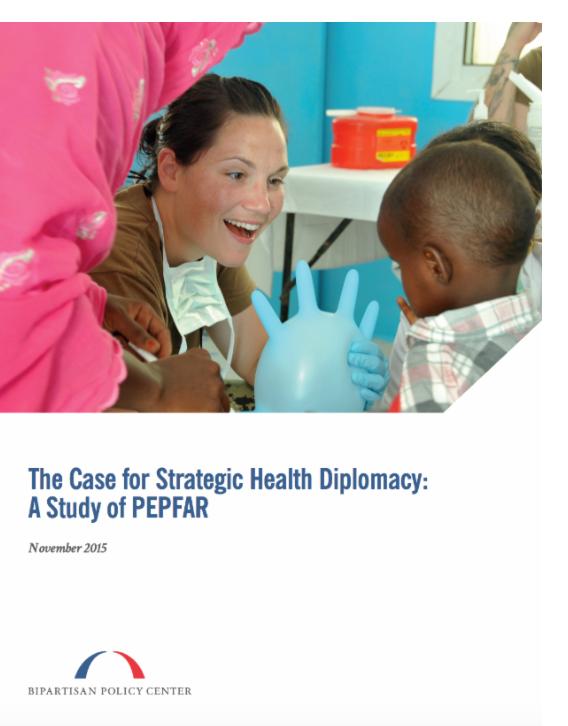
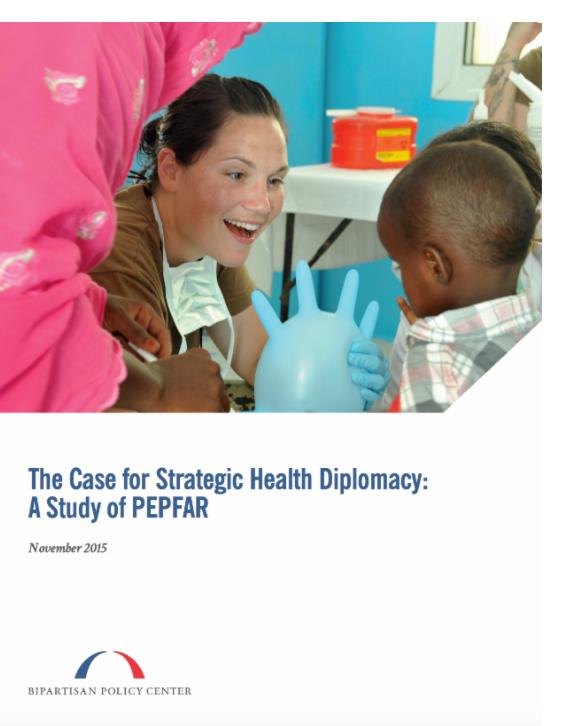
A new US bipartisan study (available at http://bit.ly/1NxehhC) advocates promoting global health to both "do the right thing" and advance wide-ranging foreign policy interests.
Written by former Senate Majority Leaders Tom Daschle (Democrat) and Bill Frist, (Republican), the report urges US policy-makers to expand "Strategic Health Diplomacy," pointing to malaria and hepatitis C among the most promising targets for a broader US role in global health.
Video of a High Level conference on the report, held in Washington, DC Nov. 9, is now available online: http://bit.ly/1WCHz4h. Participants included experts and senior officials from the US State Department, Georgetown and Harvard universities, the African Development Bank, the report authors — former Senator Majority Leaders Tom Daschle and Bill Frist.
The report presented highlights that in African countries where an American program has been working for 12 years to address HIV/AIDS:
- Anti-retroviral treatment has been provided to more than 7.7 million men, women, and children, improving health dramatically in target countries
- An index of stability and lack of violence has increased 40% (vs. 3% in similar countries where the program is not operating)
- Rule of law ratings have increased 31% (vs. 7%)
- The US had an average approval rating of 68% (vs. the global average of 46%) and
- Average output per worker increased by a third (vs. stagnant growth)
The study calls PEPFAR, the President's Emergency Plan for AIDS Relief, established in 2003 by President George W. Bush with strong bipartisan support in Congress, "the greatest ever example of humanitarian action by a single country." When PEPFAR was launched, more than 30% of sub-Saharan Africans were living with HIV or AIDS. Only 50,000 were receiving treatment and 16 countries were facing the prospect of losing more than 10% of their population to the disease. Since then, PEPFAR has dramatically reduced HIV/AIDS-related mortality and morbidity, created access to anti-retroviral treatments for more than 7.7 million men, women and children, and halted the growth of the worldwide epidemic. Congress renewed PEPFAR in 2008 with a nearly tripled budget, and again in 2013. PEPFAR now reaches 65 countries worldwide.
Says James K. Glassman, Former US Under Secretary for Public Diplomacy and Public Affairs, now a leader of the Strategic Health Diplomacy initiative: "While it's impossible to say that PEPFAR alone has produced the entire improvement in the many indicators of national security and stability in PEPFAR countries, the weight of evidence is very strong."
Considerations for future Strategic Health Diplomacy programs
The report calls for future global health programs to be designed for maximum health impact and strategic benefit. Such programs should:
- have clear goals and identify policies needed to achieve them
- address real needs with visible effect
- be sensitive to local contexts
- remain long-term
- build capacity
- be transparent and accountable
As well, future initiatives should be selected using three main criteria:
- prevalence of a disease
- its treatment potential
- the strategic value of stricken areas
Says the report: "As policymakers debate how to engage the world — and how to secure U.S. interests and mitigate foreign threats under budgetary constraints — strategic health diplomacy should be considered an effective tool to meet these challenges."
###
Video of a high level conference on the report, held in Washington, DC Nov. 9, is now available online: http://bit.ly/1WCHz4h. Participants included experts and senior officials from the US State Department, Georgetown and Harvard universities, the African Development Bank, the report authors — former Senator Majority Leaders Tom Daschle and Bill Frist.