A reversed-phase high-performance liquid chromatography assay has been developed and validated to simultaneously measure two antitumor compounds, doxorubicin and ent-11α-hydroxy-15-oxo-kaur-16-en-19-oic-acid, in KM mouse plasma following intravenous administration. The analytical method was established to support pharmacokinetic investigations of both therapeutic agents when delivered together in nanoliposome formulations.
To evaluate the co-delivery system, researchers prepared nanoliposomes co-loaded with doxorubicin and 5F using a thin-film hydration method. The dual-agent nanoliposomes were then administered intravenously to KM mice to provide biological samples for subsequent chromatographic testing and pharmacokinetic evaluation.
Isolating the two active compounds from the biological matrix required sample preparation prior to instrument analysis. The team utilized liquid-liquid extraction with methanol as the extraction solvent to separate doxorubicin and 5F from the collected mouse plasma specimens.
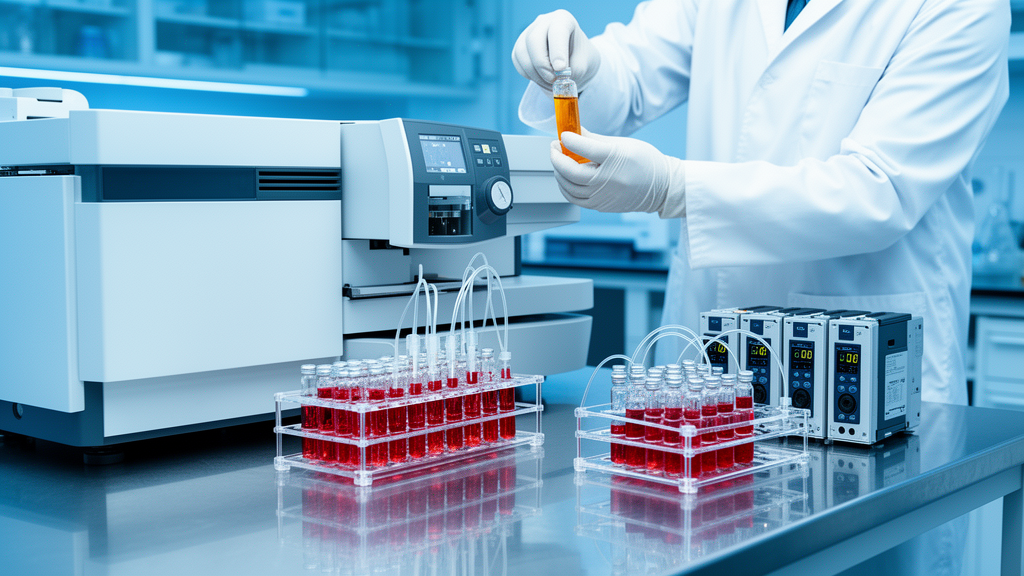
Chromatographic separation was conducted on an Agilent 1260 series liquid chromatography system fitted with a Hypersil ODS C18 column. The mobile phase consisted of a 40:60 volume-to-volume mixture of methanol and 1% glacial acetic acid delivered at a flow rate of 1.0 mL min−1. Column temperature was maintained at 30 °C ± 2 °C, ultraviolet detection was performed at a wavelength of 242 nm, and naproxen served as the internal standard.
Specificity and matrix effects were evaluated in both pharmaceutical and biological environments in accordance with International Council for Harmonisation guidelines. Blank liposome formulations spiked with doxorubicin and 5F were disrupted using methanol and analyzed by liquid chromatography. In parallel, matrix effects in plasma were evaluated across six individual blank plasma lots spiked post-extraction at three quality control concentrations of 0.125, 0.25, and 0.5 μg mL−1 for both compounds, revealing no significant interference with separation or detection under the established conditions.
The validated assay demonstrated linear concentration ranges of 0.125 to 2.0 μg mL−1 for doxorubicin and 0.0625 to 0.6 μg mL−1 for 5F, with both analytes yielding correlation coefficients exceeding 0.998. Extraction recoveries from quality control samples spanned 84.2% to 85.5% for doxorubicin and 86.2% to 87.1% for 5F, while intra-day and inter-day precisions remained below 10% across all evaluated control concentrations. The limits of quantitation were established at 60 ng mL−1 for doxorubicin and 20 ng mL−1 for 5F.
The authors concluded that the analytical protocol achieved satisfactory precision, accuracy, and acceptable limits of quantitation for biological monitoring. Under the reported experimental parameters, the validated reversed-phase assay provides an analytical foundation suitable for evaluating the pharmacokinetic profiles of doxorubicin and 5F in mice.
Subject of Research: Simultaneous RP-HPLC determination of doxorubicin and 5F in mouse plasma
Article Title: Validated RP-HPLC method for simultaneous determination of doxorubicin and 5F: application in nanoliposome formulation development and pharmacokinetic studies
Article References: Duan, Z., Zheng, C., Yu, Z., Fu, H., Zhou, Y., & Huang, Y. (2026). Validated RP-HPLC method for simultaneous determination of doxorubicin and 5F: application in nanoliposome formulation development and pharmacokinetic studies. Frontiers in Chemistry, 14, Article 2005154. https://doi.org/10.3389/fchem.2026.2005154
Image Credits: AI Generated
DOI: 10.3389/fchem.2026.2005154
Keywords: RP-HPLC, doxorubicin, 5F, pharmacokinetics, nanoliposomes, liquid-liquid extraction, KM mice, Validated, method, simultaneous, determination, application
News Source: Bethany Barker. (November 10, 2026). Validated RP-HPLC Method Measures Doxorubicin and 5F in Mouse Plasma. Scienmag.