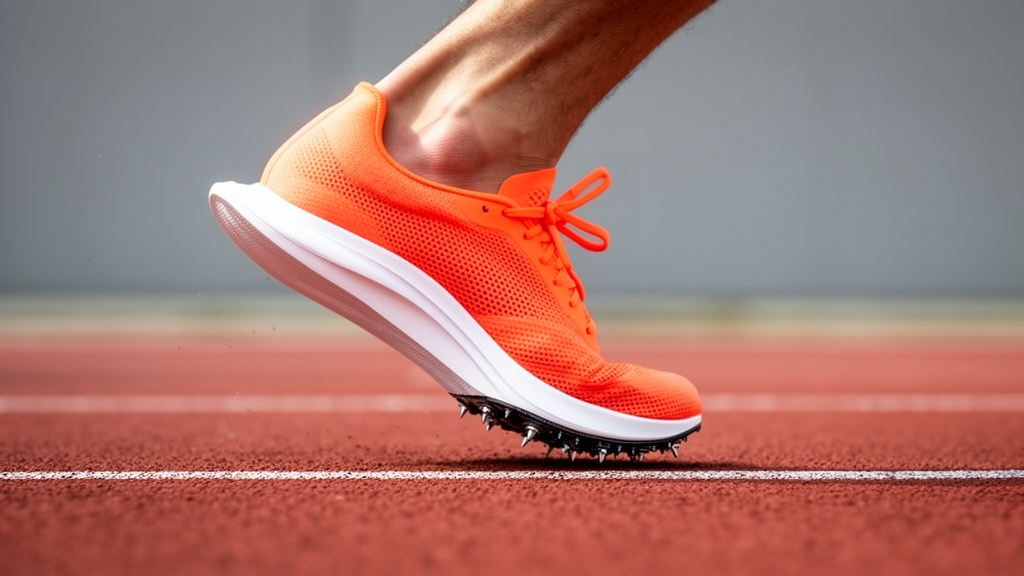
A systematic review and meta-analysis published in BMC Sports Science, Medicine and Rehabilitation has evaluated whether advanced footwear technology (AFT) spikes improve running economy and event-relevant performance compared with traditional track spikes. The study, led by Libing Sun and colleagues, synthesised evidence from eight reports to summarise associated biomechanical, loading, perceptual, and physiological outcomes in trained track athletes.
The research team searched PubMed, Web of Science, Scopus, and SPORTDiscus from inception to 7 July 2026 to identify eligible studies. Only studies that directly compared AFT spikes with traditional track spikes in trained athletes were included. The analysis focused on paired effects within participant cohorts, using shared-control covariances to aggregate data.
Statistical analysis employed task-specific restricted maximum likelihood (REML) random-effects models with Wald confidence intervals to assess the magnitude of the effects. To ensure the robustness of the findings, the researchers also examined standard Hartung–Knapp–Sidik–Jonkman (HKSJ) intervals in sensitivity analyses using identical inputs. Risk of bias was assessed using the RoB 2 tool, and the certainty of the evidence was evaluated using the GRADE framework, ranging from moderate to very low across the seven task-specific outcomes.
The results indicated that AFT spikes were associated with lower fixed-speed metabolic power, with a mean difference of −0.52 W·kg⁻¹ and a Wald 95% confidence interval of −0.85 to −0.19. Additionally, the study found a 1.93% higher self-paced 200-m speed, with a confidence interval ranging from 0.55% to 3.32%, indicating a potential improvement in sprint performance over shorter distances.
Biomechanical analysis revealed that AFT spikes were associated with a 1.52% lower fixed-speed cadence, with a confidence interval of 0.30% to 2.73% lower. However, the HKSJ intervals included no difference for both metabolic power and cadence, suggesting that these specific findings may be sensitive to the statistical method used. In contrast, the HKSJ intervals did not include no difference for self-paced 200-m speed, providing stronger support for the observed speed advantage in that specific task.
Findings for 30-metre acceleration and flying-sprint results were reported separately, highlighting the task-specific nature of the benefits. The evidence for 3000-m and 50-m performance remained inconclusive, indicating that the advantages of AFT spikes may not extend uniformly to all track events.
The authors conclude that AFT spikes may offer a modest metabolic advantage, but the inference for metabolic power and cadence depends on the interval method used in the analysis. The evidence for self-paced 200-m speed is described as very uncertain and does not establish improved performance in longer events such as the 800-m or 1500-m races.
Stronger event-specific evidence is needed before competitive benefits can be generalised across all track disciplines.
Subject of Research: Impact of advanced footwear technology on running economy and performance in track athletes
Article Title: Advanced footwear technology spikes versus traditional track spikes in track athletes: a systematic review and meta-analysis of running economy and performance
Article References: Sun, L., Zhao, S., Zhu, M., Yang, L., & Xiong, Z. (2026). Advanced footwear technology spikes versus traditional track spikes in track athletes: a systematic review and meta-analysis of running economy and performance. BMC Sports Science, Medicine and Rehabilitation. https://doi.org/10.1186/s13102-026-02245-z
Image Credits: AI Generated
DOI: 10.1186/s13102-026-02245-z
Keywords: track and field, footwear technology, running economy, meta-analysis, biomechanics, sports science, metabolic power, sprint performance, Advanced, footwear, technology, spikes
News Source: Ophelia Keating. (November 10, 2026). Advanced Track Spikes Linked to Lower Metabolic Cost. Scienmag.