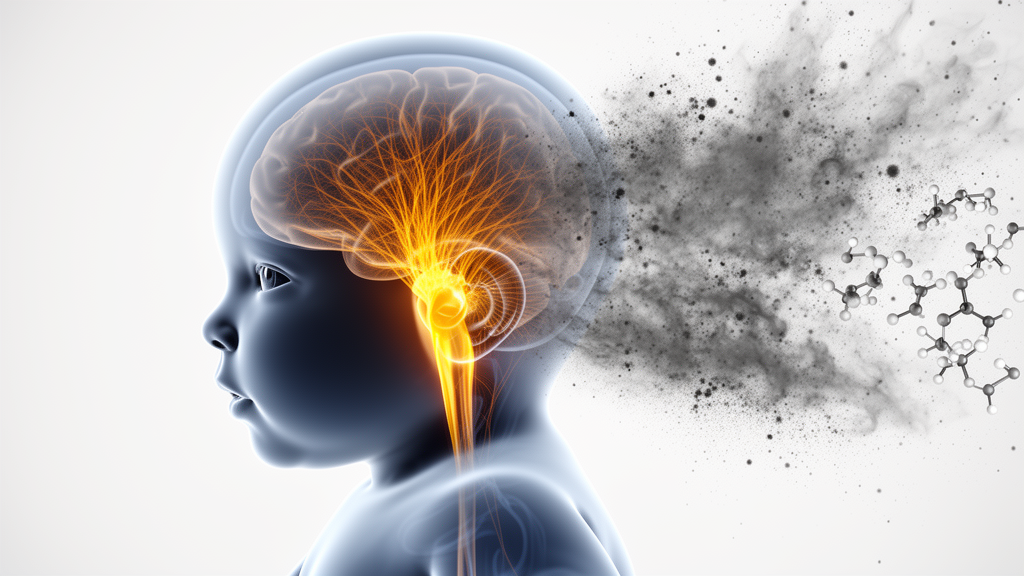
A critical narrative review published in Pediatric Research indicates that atmospheric air pollution may act as an aggravating biological cofactor that heightens infant vulnerability to sudden unexpected death in infancy through neurotoxic pathways. Authored by Emeline Charon, Emmanuel Bourdet, Rémi Béranger, Nadia Benturquia, and David Boels, the investigation evaluates how airborne pollutants disrupt immature physiological regulatory networks during early life. Sudden unexpected death in infancy, or SUDI, serves as an overarching clinical category describing any sudden demise of an infant younger than one year. When comprehensive post-mortem examinations—consisting of death scene investigations, clinical history evaluations, and complete autopsies—fail to reveal an attributable cause, these deaths are subclassified as sudden infant death syndrome (SIDS). Although epidemiological surveys have previously linked ambient air pollution with elevated infant mortality, biological mechanisms have remained largely unclarified. The investigative team addresses this gap by analyzing how inhaled environmental toxicants could impair brainstem and autonomic control centers regulating breathing and arousal.
To conceptualize how environmental hazards interact with infant vulnerability, the authors frame their analysis around the triple risk model formulated by Filiano and Kinney. This classic pathophysiological model proposes that sudden infant death occurs when three factors coincide: an underlying biological vulnerability, a critical developmental period, and an external stressor. Documented intrinsic vulnerabilities predisposing infants to SIDS include male sex, premature birth, intrauterine growth restriction, genetic abnormalities, and maternal tobacco smoke exposure during pregnancy. The critical developmental window encompasses the first six months of life, accounting for approximately ninety percent of all SIDS mortalities. External stressors typically involve physical sleep challenges, such as the prone sleeping position, unsafe sleep surfaces, or environmental tobacco smoke. The authors propose that air pollution operates across multiple facets of this triple risk paradigm, serving as a chronic stressor amplifying pre-existing vulnerability while also triggering acute crises during sleep across both SIDS and broader SUDI categories.
The research methodology comprised a targeted critical narrative review designed specifically to construct mechanistic hypotheses rather than an exhaustive systematic compilation governed by formal PRISMA protocols. The authors executed literature searches across MEDLINE between April and October 2025 without historical date limits. Their search architecture combined Boolean operators with specific terms encompassing air pollution components, including particulate matter (PM2.5 and PM10), ground-level ozone, and nitrogen dioxide, alongside neurobiological queries focused on neurotoxicity, neurotransmitters, the central nervous system, and the brainstem. These queries were intersected with clinical identifiers for sudden infant death syndrome and sudden unexpected death in infancy. Reviewer Emeline Charon conducted structured screenings of titles, abstracts, and full texts, identifying 208 relevant publications. Following detailed appraisal by toxicologists David Boels and Emeline Charon, 42 primary studies were cited in the manuscript to construct a conceptual model inspired by the adverse outcome pathway framework, mapping environmental inhalation to lethal central nervous system disruptions.
The review demonstrates that an infant’s vulnerability to airborne toxins stems directly from the physiological immaturity of organ systems during early postnatal life. In the opening months following birth, the central nervous system undergoes an intensive developmental surge characterized by rapid brain growth, synaptogenesis, progressive myelination, and the assembly of functional neuronal networks. Although the blood-brain barrier is functional early in development, its permeability characteristics and molecular transport mechanisms differ from adults, providing incomplete defense against circulating xenobiotics. Concurrently, the infant autonomic nervous system displays functional instability, with sympathetic activity dominating before gradually transitioning toward parasympathetic regulation. This autonomic immaturity undermines cardiorespiratory control during sleep, leaving infants vulnerable to hypoxic insults. Exacerbating these neurological factors, endogenous detoxification pathways in the liver remain markedly underdeveloped; infant hepatic tissue displays reduced activity of cytochrome P450 enzymes and conjugation systems, specifically UDP-glucuronosyltransferases and glutathione S-transferases, restricting toxicant elimination and escalating internal exposure.
These developmental characteristics converge to form a critical window of maximal physiological vulnerability between two and four months of age, directly mirroring the epidemiological peak in SIDS incidence. During this window, autonomic regulatory remodeling occurs alongside accelerated synaptogenesis, myelination, and constrained xenobiotic clearance. Contextualizing this vulnerability, the authors cite World Health Organization estimates indicating that ambient air pollution caused approximately 4.2 million premature deaths worldwide in 2019, alongside the International Agency for Research on Cancer’s classification of outdoor air pollution as a human carcinogen since 2013. Atmospheric pollution consists of complex mixtures of airborne particles, gases, toxic metals, and biological constituents derived from natural sources and human activities like vehicular traffic, industrial manufacturing, and waste processing. Monitored pollutants include particulate matter, ground-level ozone, nitrogen dioxide, sulfur dioxide, and carbon monoxide. In addition to infant mortality, airborne contaminants are associated with premature birth, intrauterine growth restriction, autism spectrum disorders, and neurodegenerative diseases.
Postnatal exposure occurs principally via inhalation, which represents the quantitatively dominant physiological pathway delivering fine particles into systemic circulation. Inhaled fine particulates penetrate pulmonary alveoli, traverse the alveolar-capillary barrier, and enter the bloodstream to distribute systemically across multiple organs, including the brain. Secondary translocation routes include the olfactory pathway, wherein inhaled particulates bypass the blood-brain barrier through the olfactory bulb, and the gastrointestinal route, where swallowed particles stimulate the gut-brain axis through vagal nerve afferents. Additionally, maternal inhalation during pregnancy constitutes a transplacental pathway, crossing the placental boundary and inducing systemic inflammation that alters placental permeability and fetal development. Upon contact with the infant respiratory epithelium, inhaled pollutants provoke cellular immune responses and oxidative stress. This interaction triggers an excessive production of reactive oxygen species (ROS) and reactive nitrogen species (RNS), accompanied by the release of circulating pro-inflammatory cytokines, specifically tumor necrosis factor-alpha (TNF-alpha), interleukin-6 (IL-6), and interleukin-1beta (IL-1beta).
Systemic release of cytokines and reactive oxygen species compromises blood-brain barrier integrity, initiating downstream neuroinflammation within cerebral tissue. The authors explicitly emphasize that these vascular and glial mechanisms are inferred from general neurotoxicology studies in adult, rodent, and in vitro models, as direct infant tissue verification in SIDS remains absent. Circulating TNF-alpha, IL-6, IL-1beta, and ROS activate brain capillary endothelial cells via MAPK cascades and transcription factor NF-kB signaling. This intracellular signaling degrades barrier selectivity by downregulating crucial tight-junction proteins, such as zonula occludens-1 (ZO-1), causing elevated microvascular permeability that permits xenobiotics and inflammatory molecules to infiltrate brain parenchyma. Infiltrating molecules prompt resident microglia and astrocytes—which perform homeostatic surveillance and barrier support under baseline conditions—to adopt a pro-inflammatory reactive gliosis phenotype. These reactive glial cells release additional cytokines, ROS, RNS, and glial fibrillary acidic protein (GFAP), establishing a self-reinforcing inflammatory loop that exacerbates barrier breakdown and amplifies central tissue stress.
Persistent neuroinflammation and oxidative damage directly disrupt neuronal function and vital neurotransmission pathways. Elevated ROS concentrations induce oxidative stress that damages neuronal cellular architecture, including lipids, proteins, and nuclear DNA, producing marked increases in biological stress markers such as malondialdehyde (MDA) and 8-hydroxy-2′-deoxyguanosine (8-OHdG). Concurrently, severe oxidative insults induce mitochondrial dysfunction and endoplasmic reticulum stress, impairing ATP energy generation and disrupting protein folding, which triggers pro-apoptotic signaling cascades that promote neuronal death. Beyond structural injury, air pollutant exposure alters essential neurotransmission systems. Impaired glial clearance and abnormal release of glutamate lead to extracellular glutamate accumulation, resulting in overstimulation of NMDA receptors and cytotoxic excitotoxicity. Concurrently, pollutant-induced oxidative and neuroinflammatory processes disrupt central monoaminergic and cholinergic signaling pathways, diminishing the cerebral availability of serotonin, dopamine, and acetylcholine. Because these specific neurotransmitters regulate autonomic function and sleep architecture, their functional depletion disrupts sleep-wake cycles, cardiorespiratory reflexes, and nocturnal arousal mechanisms in developing infants.
These neurotoxic consequences converge critically on the brainstem, where vital centers govern cardiorespiratory control and protective arousal reflexes. Peripheral inflammatory cascades can reach brainstem nuclei via systemic circulation or direct transmission through vagus nerve afferents, generating an autonomic imbalance between sympathetic and parasympathetic networks. The authors note that post-mortem examinations of SIDS victims have documented neuropathological changes in the medulla oblongata, notably altered expression of serotonin and its corresponding receptor subtypes. Furthermore, post-mortem studies have revealed alterations in cholinesterase enzyme activity, particularly acetylcholinesterase (AChE) and butyrylcholinesterase (BChE), which govern the enzymatic breakdown of acetylcholine within the parasympathetic nervous system. Deceased infants also display distinct abnormalities within the hypothalamic orexinergic system, which produces orexin (hypocretin) neuropeptides that regulate wakefulness and respiratory drive. Disruptions across these serotonergic, cholinergic, and orexinergic pathways impair critical cardiorespiratory reflexes, blunting protective waking responses when infants encounter severe hypercapnia or hypoxia during sleep, directly supporting prevailing brainstem failure hypotheses.
While these biological mechanisms present plausible pathways linking air pollution to infant mortality, the authors emphasize that current scientific evidence remains largely inferential and subject to substantial limitations. Epidemiological studies evaluating air pollution and SIDS exhibit significant inconsistencies; while meta-analyses report associations for specific contaminants such as PM2.5 and carbon monoxide, other investigations detect null associations after adjusting for confounding factors like maternal smoking and socioeconomic status. Moreover, toxicological evidence relies overwhelmingly on adult, rodent, or in vitro models that cannot fully capture acute postnatal infant dynamics, and direct toxicological proof establishing causality in SUDI is absent. Additional constraints include the omission of non-cerebral pathways, lack of computational modeling, and international discrepancies in case definitions. Ultimately, the authors conclude that air pollution acts not as an isolated cause of death, but as an aggravating cofactor within the triple risk framework. Future research must prioritize standardized diagnostic criteria, large-scale perinatal cohorts, and experimental investigations utilizing infant-relevant animal models or organoids focusing on brainstem cholinesterase, serotonergic, and orexinergic biomarkers.
Subject of Research: Potential neurotoxic mechanisms linking air pollution exposure to sudden unexpected death in infancy
Article Title: Air pollution and sudden unexpected death in infancy: a critical review of potential neurotoxic mechanisms
Article References: Charon, E., Bourdet, E., Béranger, R., Benturquia, N., & Boels, D. (2026). Air pollution and sudden unexpected death in infancy: a critical review of potential neurotoxic mechanisms. Pediatric Research. https://doi.org/10.1038/s41390-026-05622-z
Image Credits: AI Generated
DOI: 10.1038/s41390-026-05622-z
Keywords: Sudden Unexpected Death in Infancy, Sudden Infant Death Syndrome, Air Pollution, Neurotoxicity, Neuroinflammation, Brainstem Dysfunction, Autonomic Nervous System, Pediatric Research, pollution, sudden, unexpected, death
News Source: Harold Sullivan. (November 9, 2026). Air Pollution May Heighten Infant Vulnerability Through Potential Brainstem Neurotoxic Pathways. Scienmag.