• HOME
  • NEWS
  • EXPLORE
    • CAREER
      • Companies
      • Jobs
    • EVENTS
    • iGEM
      • News
      • Team
    • PHOTOS
    • VIDEO
    • WIKI
  • BLOG
  • COMMUNITY
    • FACEBOOK
    • INSTAGRAM
    • TWITTER
Saturday, March 28, 2026
BIOENGINEER.ORG
No Result
View All Result
  • Login
  • HOME
  • NEWS
  • EXPLORE
    • CAREER
      • Companies
      • Jobs
        • Lecturer
        • PhD Studentship
        • Postdoc
        • Research Assistant
    • EVENTS
    • iGEM
      • News
      • Team
    • PHOTOS
    • VIDEO
    • WIKI
  • BLOG
  • COMMUNITY
    • FACEBOOK
    • INSTAGRAM
    • TWITTER
  • HOME
  • NEWS
  • EXPLORE
    • CAREER
      • Companies
      • Jobs
        • Lecturer
        • PhD Studentship
        • Postdoc
        • Research Assistant
    • EVENTS
    • iGEM
      • News
      • Team
    • PHOTOS
    • VIDEO
    • WIKI
  • BLOG
  • COMMUNITY
    • FACEBOOK
    • INSTAGRAM
    • TWITTER
No Result
View All Result
Bioengineer.org
No Result
View All Result
Home Headlines

Andalusian experts discover new procedures for DNA stability

Bioengineer.org by Bioengineer.org
January 19, 2018
in Headlines, Health, Science News
Reading Time: 2 mins read
0
Share on FacebookShare on TwitterShare on LinkedinShare on RedditShare on Telegram
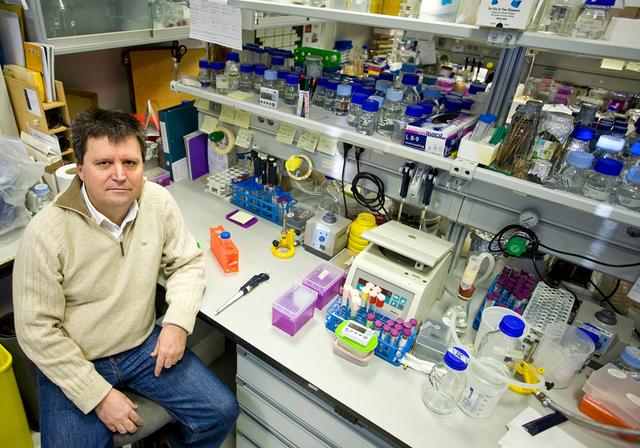
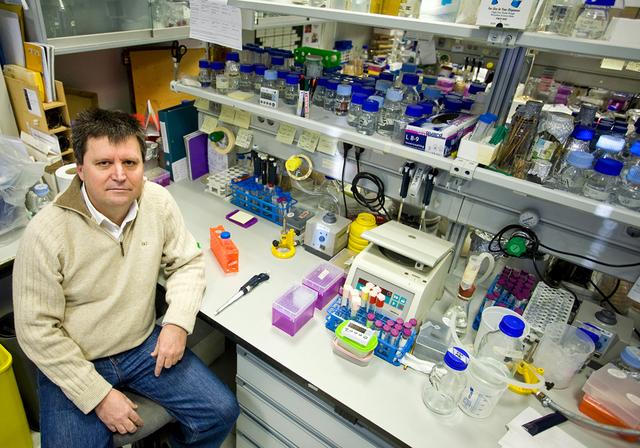
IMAGE

Credit: University of Seville

Researchers from the University of Seville at the Andalusian Centre for Molecular Biology and Regenerative Medicine (Centro Andaluz de Biología Molecular y Medicina Regenerativa – Cabimer) have discovered that in eukaryotic cells the proximity of the genes to the nuclear pores, which are found in the nuclear membrane, contributes to maintaining the integrity of the genome. This is due to the fact that the anchoring of DNA to the pore during transcription avoids the formation of DNA-RNA hybrids, which are a natural source of DNA breaks and genome instability.

The proximity and anchoring of the genes to the nuclear pores during transcription has been known of for more than a decade. It makes it possible for the nascent RNA to be carried out of the nucleus. "In this work, we have seen that if DNA is located in the interior of the nucleus and removed from the nuclear pore, the formation of DNA-RNA hybrids are more likely. That is to say, the anchoring of DNA to the pore contributes to preserving the integrity of the genome by avoiding the formation of these structures", explains the University of Seville professor and director of Cabimer, Andrés Aguilera.

The work was carried out on a model eukaryotic organism, the yeast Saccharomyces. In this a genetic count was made of new genes involved in the prevention of DNA-RNA hybrids, which cause genetic instability. From one collection of mutations of protein coding genes, they identified the nuclear components Mlp1 and Mlp2 of the macrocomplex that form the nuclear pores, preserved in all the eukaryotes, including the human ones. The molecular analysis of the null mutations (totally non-functioning) of these genes allowed it to be observed that DNA-RNA hybrids accumulated (detected via a specific anti-hybrid antibody) and increased the genetic instability that they caused. However, when the DNA in these mutations was again returned to the nuclear pore by means of a genetically-engineered artificial anchoring system, the hybrids and the instability were suppressed.

"It was particularly relevant that this system of artificial anchoring was also tested in THO-complex mutations, which also see increased DNA-RNA hybrids and the associated genetic instability, and we successfully managed to prevent the formation of DNA-RNA hybrids and instability", Aguilera highlighted.

The accumulation of RNA-DNA hybrids in the genome is a source of genome instability in all organisms and has been associated with neurodegenerative diseases and cancer. The results of the research open new possibilities for understanding the cellular mechanisms responsible for genome instability and for being able to explore new therapeutic approaches.

###

The work is part of the doctoral thesis of Francisco García Benítez, directed by the teachers Hélène Gaillard y Andrés Aguilera.

Media Contact

Andrés Aguilera
[email protected]
@unisevilla

http://www.us.es

Original Source

http://www.pnas.org/content/114/41/10942.abstract http://dx.doi.org/10.1073/pnas.1707845114

Share12Tweet8Share2ShareShareShare2

Related Posts

Starburst Winds Drain Supernova Energy Quickly

Starburst Winds Drain Supernova Energy Quickly

March 26, 2026
Decoding the Phosphorus Puzzle: How Microplastics and Hydrochar Transform Nutrient Dynamics in Rice Paddies

Decoding the Phosphorus Puzzle: How Microplastics and Hydrochar Transform Nutrient Dynamics in Rice Paddies

March 26, 2026

Microtubules Found to Actively Ensure Accurate Chromosome Distribution During Cell Division

March 25, 2026

Aversive Learning Hijacks Brain Sugar Sensor

March 25, 2026
Please login to join discussion

POPULAR NEWS

  • blank

    Revolutionary AI Model Enhances Precision in Detecting Food Contamination

    96 shares
    Share 38 Tweet 24
  • Imagine a Social Media Feed That Challenges Your Views Instead of Reinforcing Them

    1003 shares
    Share 397 Tweet 248
  • Uncovering Functions of Cavernous Malformation Proteins in Organoids

    54 shares
    Share 22 Tweet 14
  • Promising Outcomes from First Clinical Trials of Gene Regulation in Epilepsy

    51 shares
    Share 20 Tweet 13

About

We bring you the latest biotechnology news from best research centers and universities around the world. Check our website.

Follow us

Recent News

In-Sensor Cryptography Links Physical Process to Digital Identity

Can Psychosocial Factors Influence Cancer Risk?

Depression Factors in Elderly: Pre vs. Post-COVID Analysis

Subscribe to Blog via Email

Success! An email was just sent to confirm your subscription. Please find the email now and click 'Confirm' to start subscribing.

Join 78 other subscribers
  • Contact Us

Bioengineer.org © Copyright 2023 All Rights Reserved.

Welcome Back!

Login to your account below

Forgotten Password?

Retrieve your password

Please enter your username or email address to reset your password.

Log In
No Result
View All Result
  • Homepages
    • Home Page 1
    • Home Page 2
  • News
  • National
  • Business
  • Health
  • Lifestyle
  • Science

Bioengineer.org © Copyright 2023 All Rights Reserved.