While experimental solid organ xenotransplantation has achieved extended survival in living human recipients receiving genetically modified kidney and heart grafts, the liver has resisted clinical progress primarily because hemostatic mechanisms collapse when human blood contacts porcine tissue. In a narrative synthesis published in Frontiers in Transplantation, researchers Veysel Umman, Selin Uzun, and Ezo Elif Takmaz from Yeditepe University in Turkey evaluated the biological and technical causes of severe coagulation dysfunction during ex vivo normothermic machine perfusion of gene-edited pig livers. Unlike renal or cardiac grafts that serve predominantly as passive vascular surfaces, a transplanted or perfused liver is a synthetic organ that continuously produces species-specific proteins while simultaneously filtering circulating blood. Clinical and experimental models indicate that xenograft failure or severe recipient decline occurs as a direct result of rapid hemostatic breakdown long before classical immunologic rejection can emerge, demonstrating that species-incompatible hematologic interactions represent the primary translational barrier.
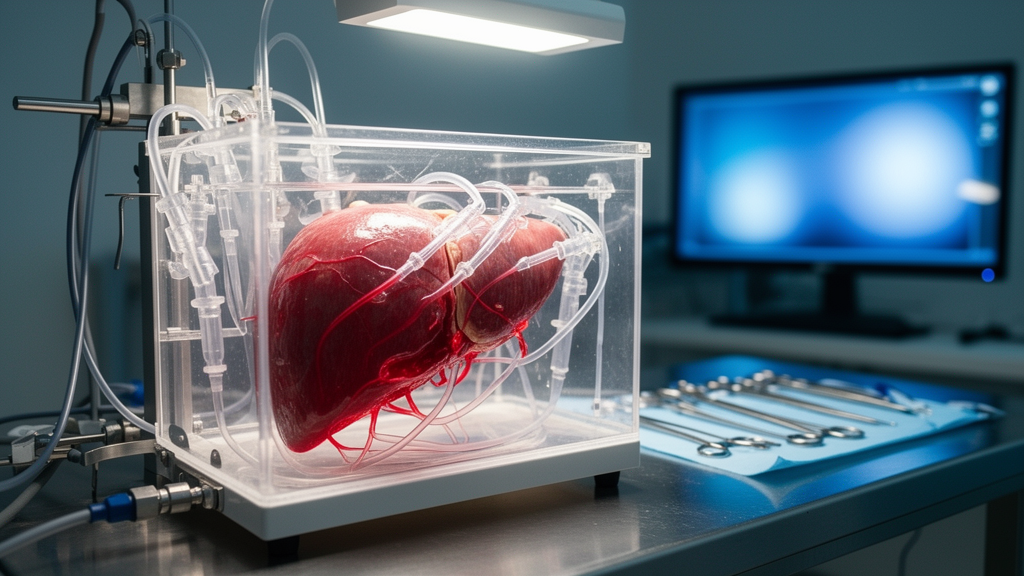
The procedural framework of liver xenoperfusion spans three related laboratory and clinical configurations that produce fundamentally different hematologic readouts and cannot be evaluated as interchangeable models. In isolated normothermic machine perfusion, an excised pig liver is maintained in a closed circuit using human whole blood or reconstituted blood without an attached patient, providing a controlled test of the species barrier where no cellular or humoral factors are replenished. In contrast, extracorporeal liver cross-circulation draws blood from a living patient or brain-dead human decedent and continuously circulates it through an external organ maintained on a normothermic perfusion platform before returning it to the vascular system. This arrangement was historically applied in clinical bridge trials during the nineteen-nineties using wild-type or transgenic porcine livers and has returned to clinical investigation following the clearance of a phase one trial in patients suffering from acute-on-chronic liver failure. Cross-circulation delivers continuous streams of recipient platelets and human factors into the circuit, so measured platelet loss reflects ongoing cellular sequestration, consumption, and donor-driven destruction rather than isolated circuit trapping.
Published animal models and recent human decedent procedures demonstrate that coagulation derangements occur across two entirely distinct and chronologically disconnected timescales. The initial timescale is characterized by immediate, profound thrombocytopenia developing across minutes to hours following the initiation of perfusion. In experimental perfusions with human blood, platelets adhere to sinusoidal endothelial cells within fifteen minutes, and degraded cellular fragments accumulate inside porcine hepatocytes within one to two hours without evidence of immunoglobulin-mediated opsonization. In a published cross-circulation decedent cohort supported by genetically modified livers, between eighty percent and ninety percent of circulating and transfused human platelets were eliminated from circulation in less than one hour across three evaluated decedents. Conversely, the second timescale operates over several days to weeks, manifesting as consumptive coagulopathy and xenotransplantation-associated thrombotic microangiopathy. In an auxiliary pig-to-human xenotransplantation conducted in a living patient with hepatocellular carcinoma and cirrhosis, graft function was preserved for approximately one month until thrombotic microangiopathy mandated surgical explantation, with the patient later dying from recurrent gastrointestinal hemorrhage.
Recent mechanistic investigations identify graft-derived porcine von Willebrand factor as the primary biological driver responsible for initiating the first timescale of acute thrombocytopenia. Porcine von Willebrand factor binds directly and spontaneously to human platelet glycoprotein Ib in a constitutive gain-of-function interaction that requires neither fluid shear stress nor chemical modulators such as ristocetin. Structural analysis indicates that this aberrant binding affinity resembles human type 2B von Willebrand disease, caused by altered O-linked glycosylation patterns located within the porcine A1 domain. When human plasma harvested from decedent cross-circulation circuits was incubated with naive human platelets, it provoked immediate platelet activation documented through flow cytometric detection of elevated PAC-1 binding and CD62P expression. In static and microfluidic culture chambers, human platelets adhered spontaneously to porcine endothelial monolayers without requiring antibody binding or complement activation. Circuit duration exacerbated this pathology, as the functioning porcine xenograft continuously synthesized and secreted native von Willebrand factor into the circulating human perfusate, progressively building a potent prothrombotic substrate.
Platelet elimination within the xenoperfused liver is further amplified through distinct receptor-mediated clearance pathways operating across the hepatic sinusoidal architecture in parallel with glycoprotein Ib binding. Independent laboratory assays confirm that porcine liver sinusoidal endothelial cells capture passing human platelets through asialoglycoprotein receptor 1, which directly executes xenogeneic platelet phagocytosis. Experimental knockouts targeting asialoglycoprotein receptor 1 in porcine liver tissue successfully attenuate human platelet uptake, confirming that hepatic parenchymal and endothelial clearance operates through established molecular recognition pathways. In primate perfusion preparations, blocking macrophage-1 antigen, von Willebrand factor, or glycoprotein IIb/IIIa partially diminished sinusoidal uptake, illustrating that cellular clearance relies on redundant, cooperative receptors. Resident porcine Kupffer cells also participate directly in cellular destruction through CD18-dependent recognition of activated human platelets. This phagocytic response is heightened by species mismatch between porcine signal regulatory protein alpha and human CD47, which fails to transmit the necessary inhibitory signal that normally prevents resident macrophages from ingesting circulating human cells.
Compounding active platelet destruction, the vascular lining of the porcine xenograft fails to maintain essential anticoagulant functions when exposed to human coagulation factors. Porcine endothelial thrombomodulin binds circulating human thrombin with normal affinity but displays markedly defective activation of human protein C, thereby preventing the local transformation of a procoagulant enzyme into an active anticoagulant signal. Similarly, native porcine tissue factor pathway inhibitor fails to effectively inhibit human tissue factor-mediated activation of the extrinsic coagulation cascade. Because of these reciprocal molecular incompatibilities, the endothelial surface of a porcine liver functions as an inherently procoagulant platform even when post-perfusion histological examinations show structurally intact hepatic parenchyma with minimal immune cell infiltration or antibody deposition. Introducing transgenic human thrombomodulin into donor pigs partially mitigates this defect by enhancing activated protein C generation, while auxiliary transgenes like endothelial protein C receptor supply supplementary enzymatic support, yet these additions have not completely prevented systemic thrombin generation and subsequent microvascular clotting.
A critical challenge specific to liver xenoperfusion involves the synthetic capacity of the donor organ, which steadily manufactures porcine coagulation proteins directly into human recipient plasma. Chimeric circulation contains porcine fibrinogen, factor VIII, factor IX, protein C, antithrombin, and acute-phase reactants mixed alongside native human plasma constituents. In multiomic assessments of decedent cross-circulation, porcine-derived coagulation and complement factors increased over time, while circulating human complement proteins declined through unresolvable combinations of consumption, circuit dilution, and absent human hepatic synthesis. Furthermore, standard diagnostic assays calibrated solely against human reference plasmas and human normal plasma pools yield misleading measurements when applied to mixed interspecies samples. Standard international normalized ratio calculations and conventional fibrinogen assays cannot accurately distinguish human from porcine molecular activity, particularly because porcine and human proteins share extensive sequence homologies, such as eighty-nine percent identity between their respective von Willebrand factor A1 domains. Consequently, reassuring coagulation numbers obtained from clinical laboratories during perfusions may mask underlying biological derangements.
The technical architecture of the normothermic machine perfusion circuit introduces mechanical variables that alter perfusate coagulation independent of cross-species biological incompatibilities. In non-xenogeneic liver perfusions, human donor livers maintained on machine perfusion platforms consistently demonstrate the accumulation of coagulation factors in the circulating perfusate irrespective of donor history or ischemic injury. A major limitation of historical xenoperfusion literature is the complete absence of matched allogeneic or human liver control experiments conducted on identical machine platforms. In an isolated perfusion study evaluating multiple porcine genotypes, platelet counts declined rapidly across wild-type and gene-edited organs, yet the lack of a human control liver prevented investigators from determining what proportion of platelet loss resulted from machine-induced shear rather than species-specific biological clearance.
Genetic engineering constructs currently evaluated in clinical-grade porcine donors have prioritized complement inhibition and anti-inflammatory pathways while leaving the primary drivers of platelet clearance unedited. The multi-transgenic EGEN-5784 Yucatan minipig utilized in recent human decedent cross-circulation protocols features knockouts of alpha-1,3-galactosyltransferase, cytidine monophosphate-N-acetylneuraminic acid hydroxylase, and beta-1,4-N-acetylgalactosaminyltransferase 2, combined with seven human transgenes and inactivated porcine endogenous retroviruses. Although this platform expresses human CD46, CD55, CD47, thrombomodulin, endothelial protein C receptor, tumor necrosis factor alpha-induced protein 3, and heme oxygenase 1, eighty to ninety percent of circulating platelets were still destroyed within the first hour of decedent support. The ten-edit Diannan miniature pig used in a living recipient incorporated human CD39 to hydrolyze extracellular adenosine diphosphate and adenosine triphosphate, yet thrombotic microangiopathy still emerged after one month. To date, neither clinical construct targets the porcine von Willebrand factor A1 domain or asialoglycoprotein receptor 1, leaving the two primary mechanisms driving early thrombocytopenia functionally intact.
To guide clinical translation during upcoming phase one studies of extracorporeal liver cross-circulation in acute-on-chronic liver failure, clinical researchers require standardized operational stopping rules and species-specific analytical protocols. Because patients with end-stage chronic liver failure display fragile baseline hemostasis with elevated bleeding risks, systemic administration of antiplatelet agents like caplacizumab carries significant hemorrhagic hazards, emphasizing the necessity of resolving hematologic incompatibilities through donor pig editing rather than systemic patient anticoagulation. The authors advocate establishing pre-agreed clinical trial stopping thresholds based on refractory platelet drops below twenty to thirty times ten to the ninth per liter, excessive thrombin-antithrombin generation, or overt hemorrhage. Furthermore, experimental xenoperfusions should adopt a rigorous minimum coagulation dataset featuring serial arterial and venous platelet counts, viscoelastic testing using rotational thromboelastometry or thromboelastography, flow cytometric platelet activation profiling, and species-resolved factor assays. Applying standardized analytical metrics alongside matched human control circuits will allow future investigators to differentiate hardware artifacts from xenogeneic mechanisms and advance safe clinical implementation.
Subject of Research: Coagulation dysregulation mechanisms during normothermic machine perfusion of genetically engineered porcine livers
Article Title: Dysregulated coagulation in normothermic machine perfusion of gene-edited pig liver ex vivo: molecular mechanisms, genetic engineering strategies and implications for clinical translation
Article References: Umman, V., Uzun, S., & Takmaz, E. E. (2026). Dysregulated coagulation in normothermic machine perfusion of gene-edited pig liver ex vivo: molecular mechanisms, genetic engineering strategies and implications for clinical translation. Frontiers in Transplantation, 5, Article 2007992. https://doi.org/10.3389/frtra.2026.2007992
Image Credits: AI Generated
DOI: 10.3389/frtra.2026.2007992
Keywords: xenotransplantation, liver xenoperfusion, coagulation dysregulation, thrombocytopenia, von Willebrand factor, normothermic machine perfusion, acute-on-chronic liver failure, asialoglycoprotein receptor 1, Dysregulated, coagulation, normothermic, machine
News Source: Ophelia Keating. (November 9, 2026). Pig Liver Perfusion Coagulation Breakdown Examined for Human Clinical Support. Scienmag.