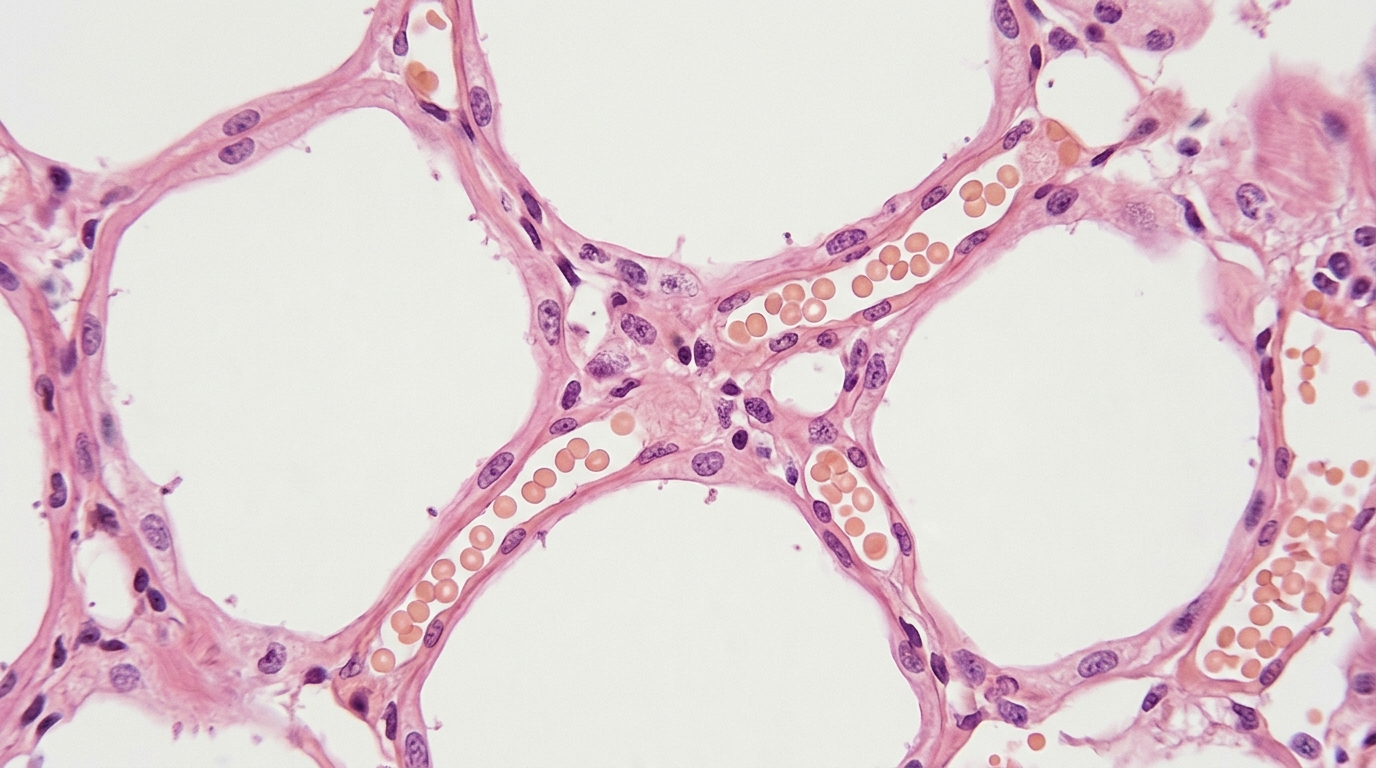
The study, published in Arthritis Research & Therapy, evaluated the therapeutic efficacy and underlying mechanisms of interleukin-2 in C57BL/6J mice subjected to pristane-induced lupus-like disease. The findings indicate that the treatment not only alleviates physical symptoms of lung bleeding but also corrects specific imbalances in T cell subsets, offering a potential mechanistic pathway for treating systemic lupus erythematosus-related lung complications.
In this experimental setup, mice received intraperitoneal injections of pristane to trigger the disease state. The investigators then administered interleukin-2 at varying doses to assess its impact on disease progression.
To evaluate the efficacy of the treatment, the study employed a comprehensive array of analytical methods. The researchers assessed disease severity, histopathological alterations, inflammatory infiltration, cytokine profiles, T cell subsets, and apoptosis using hematoxylin and eosin staining, immunohistochemistry, flow cytometry, enzyme-linked immunosorbent assays, and terminal deoxynucleotidyl transferase dUTP nick end labeling assays. Additionally, transcriptomic sequencing of lung tissue was performed to identify molecular pathways associated with interleukin-2 treatment.
The results showed that interleukin-2 treatment reduced the incidence and severity of diffuse alveolar hemorrhage in a dose-dependent manner, with the 100,000 unit dose achieving the best therapeutic effect. Mice receiving this treatment exhibited improved weight maintenance and reduced lung weight, indicators of reduced disease burden. Survival rates were also enhanced in the treated groups compared to controls. Histopathological analysis revealed ameliorated damage in the lungs, specifically a decreased pulmonary infiltration of F4/80+ macrophages.
Further analysis of bronchoalveolar lavage fluid and peripheral blood revealed lowered levels of several pro-inflammatory cytokines and chemokines. Specifically, the treatment resulted in decreased concentrations of tumor necrosis factor-alpha, interleukin-6, interleukin-10, macrophage inflammatory protein-1, and stromal cell-derived factor-1. The reduction in these molecules indicates that interleukin-2 effectively suppresses the inflammatory signaling networks that drive lung injury in this model.
At the cellular level, the study found that interleukin-2 treatment increased the population of CD4+ regulatory T cells while reducing the number of effector T cells. This shift improved the ratio of regulatory T cells to conventional T cells and corrected the imbalance between Th1 and Th2 subsets.
Transcriptomic analysis provided further insight into the molecular mechanisms underlying these improvements. The sequencing data revealed that interleukin-2 therapy corrected widespread gene expression abnormalities in the lung tissue. The treatment suppressed pathways associated with inflammation, chemotaxis, adhesion, and innate immunity. Notably, the analysis showed downregulation of signaling pathways involving interleukin-6, tumor necrosis factor, interleukin-1, and Toll-like receptors. The transcriptomic findings confirm that the therapeutic effects of interleukin-2 are mediated through broad modulation of immune-related gene networks.
The study also observed a reduction in the accumulation of apoptotic cells in the lungs of treated mice.
The authors conclude that interleukin-2 treatment improves murine lupus-associated diffuse alveolar hemorrhage by restoring T cell homeostasis, suppressing inflammatory cascades, and regulating apoptosis and transcriptomic networks. These findings underscore the potential of interleukin-2 as a therapeutic candidate for systemic lupus erythematosus-related diffuse alveolar hemorrhage. While the study was conducted in a murine model, the detailed mechanistic insights provided offer a strong foundation for further investigation into the translation of this therapy to human patients. The results suggest that targeting immune imbalance with interleukin-2 could be a viable strategy for managing this severe complication of lupus.
Subject of Research: Therapeutic efficacy and mechanism of interleukin-2 in a murine model of lupus-associated diffuse alveolar hemorrhage
Article Title: Interleukin-2 treatment ameliorates murine lupus diffuse alveolar hemorrhage with improvement in T cell subset imbalance
Article References: Bai, Y., Wang, Y., Zeng, X., Zhou, H., Zhao, X., Cao, S., Xu, C., Jiang, J., Zhang, W., Jie, H., Sun, E., & Sun, X. (2026). Interleukin-2 treatment ameliorates murine lupus diffuse alveolar hemorrhage with improvement in T cell subset imbalance. Arthritis Research & Therapy. https://doi.org/10.1186/s13075-026-03898-4
Image Credits: AI Generated
DOI: 10.1186/s13075-026-03898-4
Keywords: interleukin-2, lupus, diffuse alveolar hemorrhage, T cell subsets, murine model, immunology, cytokines, transcriptomics, inflammation, systemic lupus erythematosus, treatment, ameliorates
News Source: Ophelia Keating. (November 9, 2026). Interleukin-2 Reduces Lupus Lung Bleeding in Mice. Scienmag.