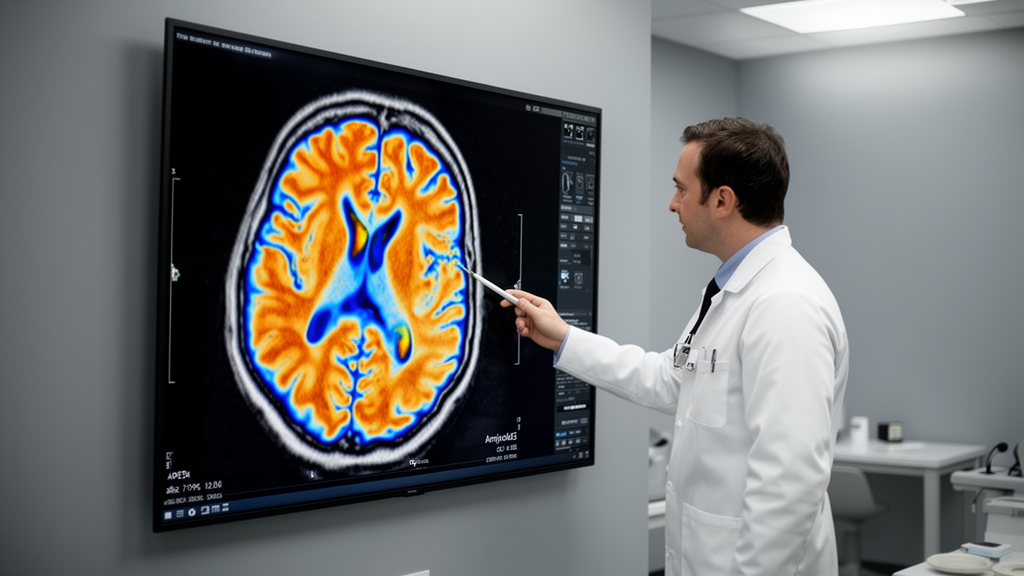
Visual interpretations of amyloid PET scans performed by local radiologists and nuclear medicine physicians in routine practice show strong agreement with evaluations conducted by expert specialists, according to a study published in The Journal of Nuclear Medicine. The findings demonstrate that visual interpretations of these diagnostic scans conducted in community settings are highly reliable for identifying amyloid pathology.
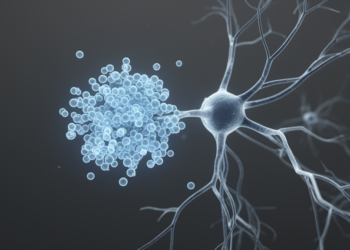
Amyloid PET imaging detects the accumulation of amyloid plaques in the brain, which represents one of the earliest physiological signs of Alzheimer’s disease. The development of amyloid-specific radiotracers has enabled physicians to identify this build-up at early stages, transforming clinical approaches to detecting and monitoring the condition.
Clinical demand for amyloid PET imaging has expanded with the introduction of novel disease-modifying therapies for Alzheimer’s disease alongside widening coverage from third-party payers. As amyloid PET plays an increasing role in patient care, evaluating the consistency of visual scan interpretations across routine clinical environments has become an important clinical priority.
Dr. Gil Rabinovici, professor of neurology and radiology at the University of California San Francisco, noted that amyloid PET was primarily confined to research protocols and clinical trials for many years, leaving real-world clinical experience relatively limited. He emphasized that as the imaging modality enters widespread routine use, establishing how reliably community physicians interpret scans in daily practice is essential.
To address this question, researchers analyzed imaging records from the Imaging Dementia—Evidence for Amyloid Scanning, or IDEAS, study. The IDEAS registry originally gathered more than 18,000 clinical amyloid PET scan interpretations completed by local radiologists and nuclear medicine physicians across medical facilities in the United States.
From the larger registry cohort, investigators selected a representative sample of approximately 1,500 scans to undergo independent expert re-evaluation. This sample included roughly 500 scans for each of the three radiotracers approved by the U.S. Food and Drug Administration: 18F-florbetaben, 18F-florbetapir, and 18F-flutemetamol.
The study team assigned the selected scans to dedicated panels of three radiologists or nuclear medicine physicians possessing extensive specialized experience in visual amyloid PET interpretation, with one panel assigned to each specific radiotracer. The majority consensus from each three-reader expert panel was then formally compared against the original local clinical interpretation.
In the original community readings across the 1,500 evaluated scans, local clinicians classified 60.9 percent of the scans as positive for amyloid plaque build-up and 39.1 percent as negative.
When comparing local assessments to majority expert consensus, the researchers observed good overall agreement across all three radiotracers. Specifically, local and expert readers achieved 86.6 percent concordance on scans interpreted as positive and 91.5 percent concordance on scans interpreted as negative.
The level of diagnostic agreement remained consistent regardless of which FDA-approved radiotracer was utilized, showing no significant variation across the three imaging agents. Furthermore, comparisons between local readers and individual expert readers also demonstrated good agreement.
Dr. Rabinovici stated that the high degree of concordance between community and expert interpretations provides reassuring evidence that patients and referring clinicians can place confidence in the real-world performance of this high-stakes diagnostic tool.
The investigation, titled “Comparison of Expert Reads Versus Local Clinical Reads of Amyloid PET Scans in the IDEAS Study,” was led by Dr. Konstantinos Chiotis of the University of California San Francisco and Karolinska Institutet, alongside senior author Dr. Rabinovici and co-investigators from Washington University School of Medicine, the American College of Radiology, the Alzheimer’s Association, and Brown University.
Subject of Research: Reliability of real-world amyloid PET scan interpretations compared with expert consensus
Article Title: Real-world interpretations of amyloid PET scans demonstrate strong agreement with those of amyloid PET experts
Article References: Real-world interpretations of amyloid PET scans demonstrate strong agreement with those of amyloid PET experts. Original publication (Bibliographic details unavailable.)
Image Credits: AI Generated
DOI: Not provided
Keywords: amyloid PET, Alzheimer's disease, IDEAS study, diagnostic imaging, radiology, nuclear medicine, clinical reliability, Journal of Nuclear Medicine, Real-world, interpretations, amyloid, scans
News Source: Ophelia Keating. (November 9, 2026). Community Amyloid PET Scan Interpretations Closely Match Expert Panel Assessments. Scienmag.