In a retrospective observational study conducted at a tertiary pediatric referral center in Eastern India, flexible bronchoscopy identified abnormal airway findings in 81.3% of children with persistent pneumonia. The five-year study, published in the Egyptian Pediatric Association Gazette, evaluated the bronchoscopic findings, microbiological profile, and clinical impact of the procedure in 75 children. The results suggest that the procedure offers valuable diagnostic and therapeutic information while maintaining a high safety profile, with no major complications observed during the study period.
Persistent pneumonia in children is characterized by respiratory symptoms and unresolved radiological abnormalities that continue despite appropriate medical therapy. This condition poses significant diagnostic and therapeutic challenges, particularly in low- and middle-income countries where data on advanced diagnostic tools remain limited. The study aimed to evaluate the spectrum of bronchoscopic findings, the yield of bronchoalveolar lavage microbiology, therapeutic interventions, procedural safety, and the subsequent impact on clinical management. The research was conducted at the Institute of Child Health in Kolkata, a tertiary pediatric referral center, between January 2019 and December 2024.
The study included 75 children aged 1 month to 14 years who underwent flexible bronchoscopy during inpatient admission. The mean age of the participants was 4.5 years, with 60% of the cohort being male. The median duration of symptoms prior to bronchoscopy was 5.2 weeks. Most children had received at least one course of antibiotics before referral. The most common radiological indications for the procedure were persistent lobar consolidation, segmental or lobar collapse, recurrent localized infiltrates, and persistent diffuse infiltrates. The study was approved by the Institutional Research Advisory Committee and Institutional Ethics Committee, with informed consent waived due to the retrospective design.
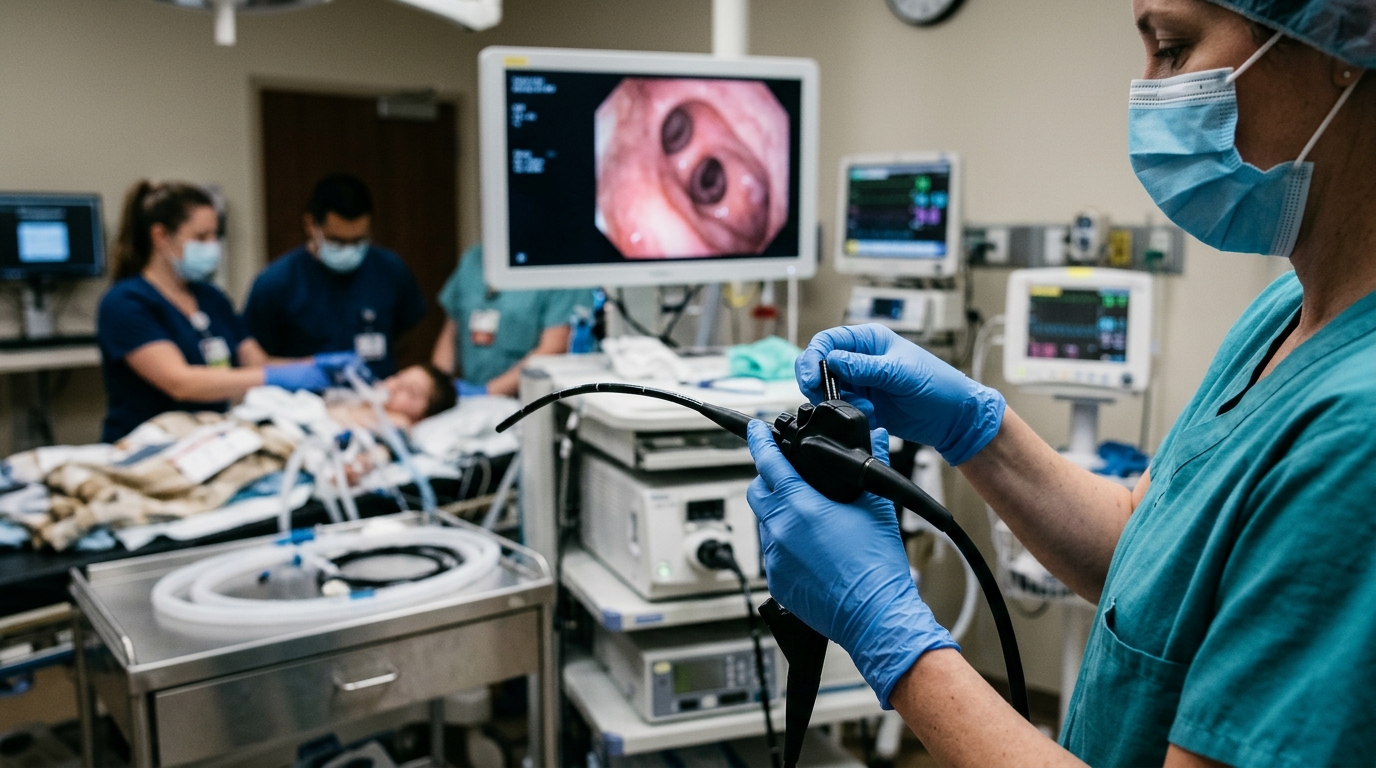
Flexible bronchoscopy was performed by experienced pediatric pulmonologists using a slim flexible bronchoscope under conscious sedation. A systematic airway examination was conducted to assess the supraglottic structures, vocal cords, trachea, and bronchi. Bronchoalveolar lavage was performed in the most radiologically affected segment using sterile normal saline. The specimens were analyzed for Gram stain, bacterial culture, acid-fast bacilli, fungal microscopy, and multiplex respiratory polymerase chain reaction. This comprehensive approach allowed for both direct visualization of the airways and detailed microbiological analysis of lower respiratory tract specimens.
Abnormal bronchoscopic findings were identified in 61 of the 75 children, representing 81.3% of the study population. The most common abnormalities included mucus plugging or thick secretions, observed in 30.7% of patients, followed by airway malacia in 17.3% and endobronchial inflammation in 14.7%. Foreign body aspiration was identified in six children, accounting for 8.0% of the cases. Structural airway anomalies and external airway compression were each identified in four children. Airway malacia was more frequently observed among younger children, particularly those below five years of age, highlighting the importance of dynamic airway assessment in this demographic.
The microbiological evaluation revealed that conventional bacterial culture was positive in only 12.0% of patients. In contrast, multiplex respiratory polymerase chain reaction detected pathogens in 29.3% of the children. The overall microbiological yield, including both culture and PCR results, was 32.0%. Mycoplasma pneumoniae was the most frequently identified organism through PCR testing. These findings underscore the enhanced diagnostic utility of molecular techniques in identifying atypical and viral pathogens that may not be detected by conventional culture methods, thereby supporting more targeted treatment strategies.
Bronchoscopic procedures resulted in direct therapeutic intervention in 35 children, or 46.7% of the cohort. The most common interventions were mucus plug removal and airway toileting using saline lavage and suctioning. In children with foreign body aspiration, flexible bronchoscopy was used to establish the diagnosis and localize the foreign body, which was subsequently removed via rigid bronchoscopy. The presence of mucus plugging was significantly associated with post-procedure radiological improvement, suggesting a therapeutic role for bronchoscopy in selected children with persistent collapse or unresolved consolidation.
The clinical impact of the procedure was evident in 33 children, where bronchoscopic findings resulted in modification of subsequent clinical management. These changes included adjustments in antimicrobial therapy, implementation of airway clearance strategies, and referral for further intervention. Children with lobar collapse on imaging had significantly higher odds of requiring bronchoscopic intervention. The study also noted that while management remained unchanged in 42 children, bronchoscopy provided useful information by excluding significant airway obstruction and other endobronchial pathology, thereby increasing diagnostic confidence and avoiding unnecessary escalation of investigations.
The safety profile of the procedure was excellent, with no major procedure-related complications observed. All adverse events were minor and self-limited. This finding is consistent with previous reports confirming the safety of pediatric flexible bronchoscopy when performed by experienced teams under appropriate monitoring conditions.
The study has several limitations, including its retrospective single-center design, which may limit generalizability and depends on the completeness of medical records. Detailed information regarding underlying comorbidities and long-term outcomes was not consistently available. The respiratory PCR panel was limited to selected pathogens, and the absence of a comparison group precluded assessment of long-term outcomes attributable to bronchoscopy. Despite these limitations, the study provides important data from a tertiary pediatric referral center in Eastern India, demonstrating the value of flexible bronchoscopy in the evaluation of children with persistent pneumonia.
The findings suggest that flexible bronchoscopy should be considered in appropriately selected children with persistent radiological abnormalities, recurrent localized disease, suspected airway obstruction, or failure to respond to standard therapy. The procedure offers clinically meaningful diagnostic, microbiological, and therapeutic information, contributing to clinical decision-making by identifying airway abnormalities and excluding important alternative causes of persistent respiratory disease.
The results contribute to the growing body of evidence supporting the clinical utility of bronchoscopy in the management of persistent pneumonia in children.
By combining bronchoscopic visualization with advanced microbiological testing, clinicians can better identify the underlying causes of persistent respiratory symptoms. This approach not only aids in diagnosis but also facilitates therapeutic interventions that can lead to clinical improvement.
Subject of Research: Clinical impact and diagnostic yield of flexible bronchoscopy in pediatric persistent pneumonia
Article Title: Bronchoscopic findings, microbiological profile, and clinical impact of flexible bronchoscopy in children with persistent pneumonia: a five-year experience from an Eastern Indian tertiary care centre
Article References: Mandal, G., Halder, P. P., Ranjit, P., & Das, B. (2026). Bronchoscopic findings, microbiological profile, and clinical impact of flexible bronchoscopy in children with persistent pneumonia: a five-year experience from an Eastern Indian tertiary care centre. Egyptian Pediatric Association Gazette, 74(1), Article 105. https://doi.org/10.1186/s43054-026-00602-8
Image Credits: AI Generated
DOI: 10.1186/s43054-026-00602-8
Keywords: pediatric pneumonia, flexible bronchoscopy, bronchoalveolar lavage, multiplex PCR, airway abnormalities, clinical management, tertiary care, retrospective study, Mycoplasma pneumoniae, foreign body aspiration, Bronchoscopic, findings
News Source: Ophelia Keating. (November 8, 2026). Bronchoscopy aids diagnosis in children with persistent pneumonia. Scienmag.