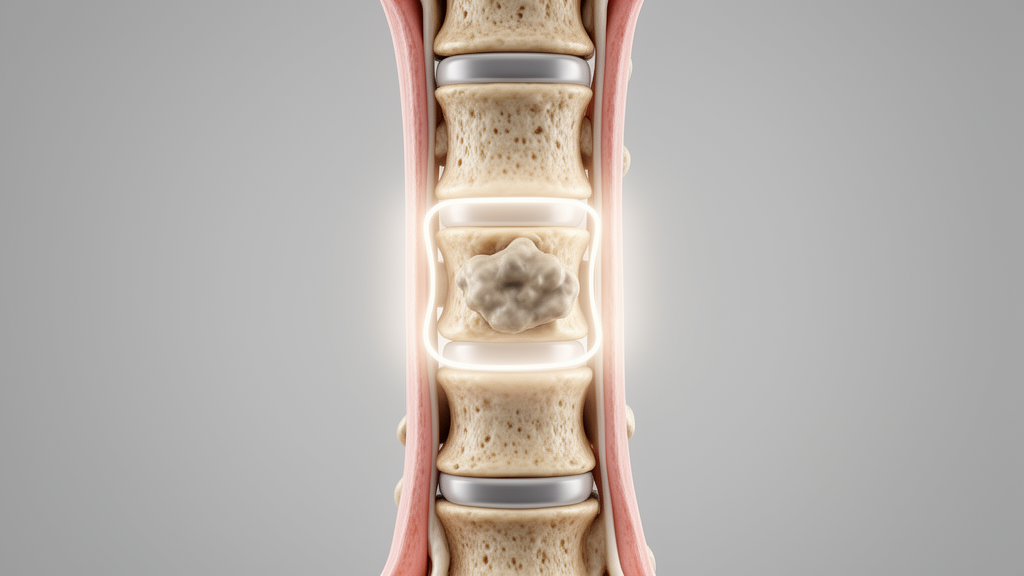
A deep learning architecture termed the multi-scale deep residual network achieved 92.0 percent accuracy and an area under the receiver operating characteristic curve of 0.921 in differentiating benign from malignant spinal tumors on magnetic resonance imaging, according to a retrospective study published in Frontiers in Oncology.
Accurate differentiation between benign and malignant spinal tumors is critical for clinical treatment planning, yet manual interpretation of T2-weighted fat-suppressed MRI remains subjective and exhibits substantial inter-observer variability among clinicians. To address these diagnostic challenges, researchers developed the automated multi-scale deep residual network, designated MSDR-Net, aimed at performing objective benign–malignant classification directly from radiological scans.
The MSDR-Net framework incorporates multi-branch residual blocks that combine parallel multi-scale convolutional paths with efficient channel attention modules, designed to extract discriminative tumor features across varying spatial scales. Benchmark comparisons were conducted against six established deep learning architectures, with the final MSDR-Net model comprising 55.4 million parameters and delivering an inference time of 12.3 milliseconds per image.
The study analyzed a total of 500 T2-weighted fat-suppressed MR images representing pathologically confirmed spinal tumors, consisting of 389 benign and 111 malignant cases collected retrospectively from two medical centers. The dataset was divided into a training cohort of 70 percent, a validation cohort of 20 percent, and an independent test cohort of 10 percent, supported by five-fold cross-validation. To assess generalizability across clinical settings, the authors also executed a leave-one-center-out external validation using 300 cases from Institution A for model development and 200 cases from Institution B for independent evaluation.
On the internal independent test set of 50 cases, which contained 12 malignant tumors, MSDR-Net achieved 92.0 percent accuracy, 91.7 percent sensitivity, 92.1 percent specificity, and an AUC of 0.921, representing the highest point estimates observed across all tested architectures. The model demonstrated strong calibration with a Brier score of 0.072 and provided net clinical benefit over treat-all strategies across decision probability thresholds between 0.10 and 0.60.
In the external validation cohort from Institution B, MSDR-Net attained an accuracy of 86.5 percent and an AUC of 0.875. Ablation experiments indicated that removing either the multi-scale paths or the channel attention mechanisms degraded classification performance with a modest super-additive interaction; however, the researchers highlighted that because single-path variants possessed substantially smaller capacity, their performance drop cannot be attributed solely to the absence of multi-scale processing.
Because the primary test metrics were derived from a small cohort of 50 images, the reported estimates carry substantial uncertainty, highlighted by a wide 95 percent confidence interval for sensitivity ranging from 61.5 percent to 99.8 percent. The authors concluded that confirmation in larger prospective cohorts is required, while noting the model shows promise for potential deployment as an auxiliary diagnostic tool for radiologists and orthopedic surgeons.
Subject of Research: Deep learning classification of benign and malignant spinal tumors using T2-weighted fat-suppressed MRI
Article Title: Multi-scale convolution with efficient channel attention improves benign–malignant classification of spinal tumors on T2-weighted fat-suppressed MRI
Article References: Ma, Z., Duan, X., Ma, X., Yan, C., Wang, X., & Niu, N. (2026). Multi-scale convolution with efficient channel attention improves benign–malignant classification of spinal tumors on T2-weighted fat-suppressed MRI. Frontiers in Oncology, 16, Article 1951483. https://doi.org/10.3389/fonc.2026.1951483
Image Credits: AI Generated
DOI: 10.3389/fonc.2026.1951483
Keywords: spinal tumors, deep learning, magnetic resonance imaging, MSDR-Net, medical image analysis, oncology, T2-weighted MRI, computer-aided diagnosis, Multi-scale, convolution, efficient, channel
News Source: Nathaniel Bowman. (November 8, 2026). Deep Learning Model Improves Spinal Tumor Classification on Fat-Suppressed MRI Scans. Scienmag.