Surgical intervention combining annular decalcification with pericardial patch reconstruction provided durable valve function and acceptable long-term survival for high-risk patients suffering from severe mitral annular calcification, according to a clinical study published in Frontiers in Cardiovascular Medicine. In evaluating patients who survived the immediate perioperative period, the investigation demonstrated sustained functional valve competence alongside significant reductions in cardiac chamber dimensions and transvalvular pressure gradients over extended follow-up. However, the researchers emphasized that perioperative mortality within this surgical cohort remained substantial.
The study evaluated consecutive clinical records from 112 high-risk patients who underwent surgical treatment between 2012 and 2022 for severe mitral annular calcification accompanied by mitral stenosis, mitral regurgitation, or both conditions. The cohort included 67 women and 45 men, presenting with a mean age of 66.5 ± 13.6 years at the time of surgery. Across the entire longitudinal investigation, surviving participants were monitored over a mean follow-up duration of 97 ± 48 months to assess clinical progress and structural cardiac changes.
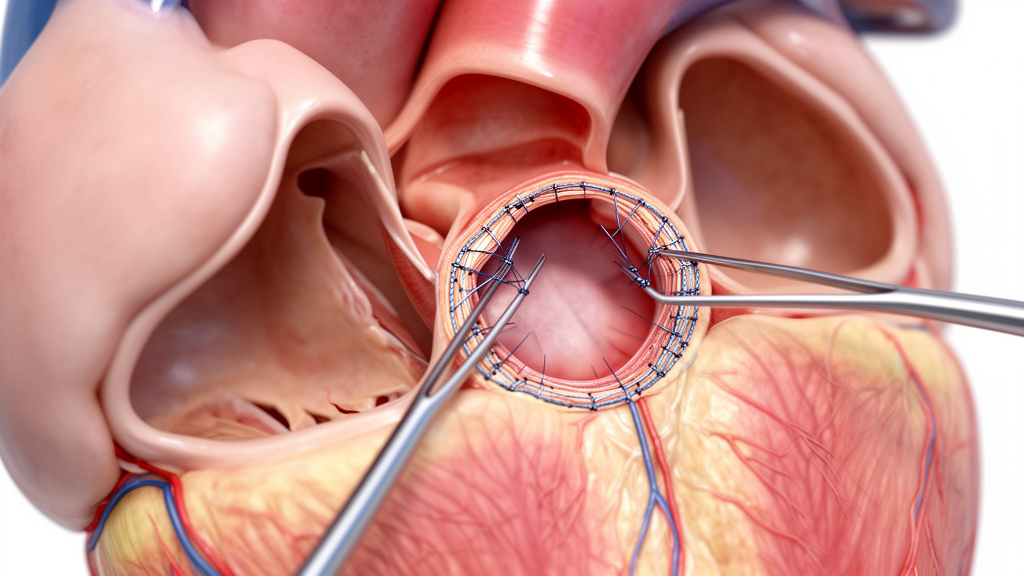
Surgical management varied across the patient cohort, with 55 patients (49 percent) undergoing mitral valve repair and 57 patients (51 percent) receiving mitral valve replacement following annular decalcification and pericardial patch reconstruction. In addition to primary mitral valve procedures, surgeons performed concomitant operations in 65 patients, representing 58 percent of the study group. The surgical technique utilized pericardial patch material to reconstruct the decalcified annulus and re-establish stable valvular mechanics.
Survival data documented clear distinctions between immediate operative risk and long-term postoperative prognosis. Early mortality following the procedure was 6.3 percent (7 patients), while late mortality reached 23.2 percent (26 patients). Cumulative survival estimates among the cohort stood at 89.3 percent at 60 months, 77.2 percent at 96 months, and 64.1 percent at 144 months, detailing the survival trajectory of patients who navigated the initial perioperative phase.
Durability of the reconstructive surgical technique was reflected in low re-intervention rates throughout postoperative monitoring. Freedom from reoperation was recorded at 98.3 percent at 60 months and 93.3 percent at 96 months. Furthermore, echocardiographic evaluations at follow-up showed that no surviving patient had more than grade III mitral regurgitation, with grade III regurgitation identified in 3 patients (4 percent) and no patient exhibiting grade IV regurgitation.
Postoperative measurements demonstrated significant anatomical and hemodynamic improvements relative to baseline status before surgery. Surviving patients showed significant reductions in left atrial diameter, left ventricular end-diastolic diameter, and mean transvalvular gradient compared with preoperative levels. The authors concluded that annular decalcification and pericardial patch reconstruction offer durable valve performance and acceptable long-term survival in high-risk patients who survive the perioperative period, even though perioperative mortality remains substantial.
Subject of Research: Long-term clinical and echocardiographic outcomes of mitral valve surgery for severe mitral annular calcification
Article Title: Long-term clinical and echocardiographic outcomes after mitral valve surgery for severe mitral annular calcification
Article References: Dharuman, Y., Kalmykov, E., & Doss, M. (2026). Long-term clinical and echocardiographic outcomes after mitral valve surgery for severe mitral annular calcification. Frontiers in Cardiovascular Medicine, 13, Article 1881651. https://doi.org/10.3389/fcvm.2026.1881651
Image Credits: AI Generated
DOI: 10.3389/fcvm.2026.1881651
Keywords: mitral annular calcification, annular decalcification, pericardial patch reconstruction, mitral valve surgery, mitral valve repair, mitral valve replacement, mitral stenosis, mitral regurgitation, heart valve disease, cardiovascular medicine, echocardiographic outcomes, transvalvular gradient, left atrial diameter, left ventricular end-diastolic diameter, perioperative mortality, freedom from reoperation, long-term survival
News Source: Ophelia Keating. (November 13, 2026). Mitral Annular Reconstruction Delivers Durable Valve Function Despite Substantial Perioperative Mortality. Scienmag.