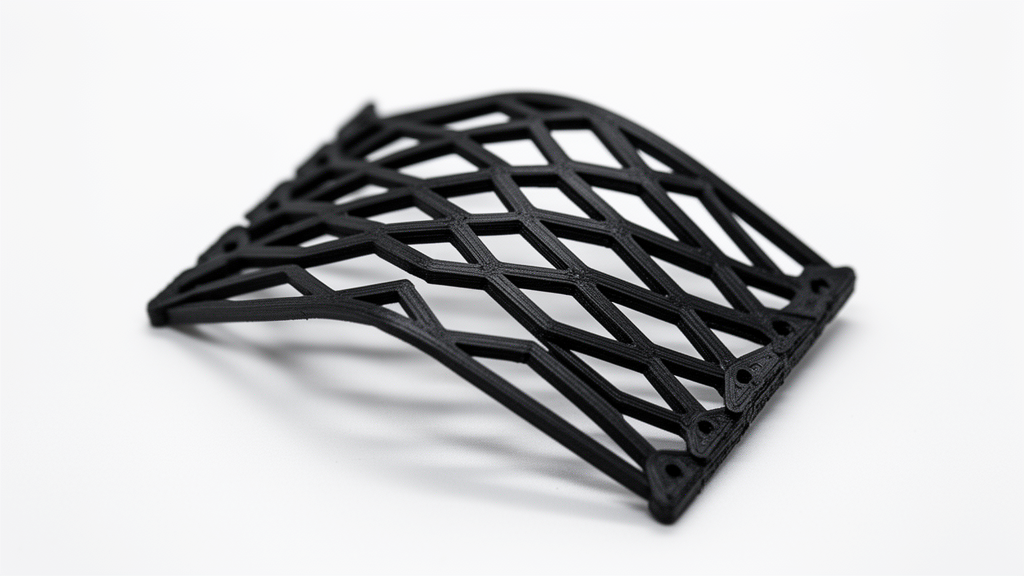
By employing Response Surface Methodology (RSM) with an I-optimal design, the team quantified the complex interplay between geometric parameters and sensor performance, offering a reproducible pathway for producing high-quality strain sensors using fused deposition modeling (FDM).
The investigation focused on three distinct kirigami patterns, designated as Designs A, B, and C, each adapted from previous literature to target specific mechanical properties. Design A was selected for its high stretchability, Design B for its optimized sensitivity, and Design C for its linearity and durability. The sensors were fabricated using a conductive thermoplastic polyurethane (TPU) filament blended with carbon and graphene fillers, printed on either a 3D-printed TPU substrate or a commercial TPU film.
A primary challenge in FDM fabrication is the inherent dimensional deviation caused by the sequential deposition of filaments, which can compromise the precision of fine slit features required for kirigami structures. The study systematically evaluated how variables such as slit ratio, film thickness, and substrate type influence both the manufacturability and the electromechanical response of the sensors. The researchers identified that the relationship between these geometric parameters and sensor performance is not linear, necessitating a statistical approach to navigate the trade-offs between build time, dimensional accuracy, gauge factor, and elongation.
Using an I-optimal design, the team conducted 18 experimental runs, each replicated five times to ensure statistical reliability. The independent factors included the pattern type, the interval-to-slit ratio ranging from 0.05 to 0.15, the sensing film thickness from 0.2 to 0.8 mm, and the substrate material. The dependent responses measured were build time, dimensional deviation, gauge factor, and maximum elongation. This comprehensive design allowed the researchers to isolate the effects of individual factors and their interactions, providing a detailed map of the design space for FDM-printed kirigami sensors.
The statistical analysis revealed that pattern geometry and thickness are the dominant parameters influencing both printability and performance. For build time, thickness was the most significant factor, with a nearly linear increase in duration as the number of deposited layers grew. Dimensional deviation exhibited a nonlinear, wavelike trend, peaking at intermediate thicknesses and specific slit ratios where the feature size approached the resolution limits of the 0.4 mm nozzle. This finding highlights the importance of aligning geometric features with the practical resolution constraints of the FDM process to minimize fabrication errors.
In terms of sensing performance, the gauge factor was primarily governed by the pattern geometry, with Design B exhibiting the highest sensitivity due to localized strain concentration at its narrow slit regions. This strain localization promotes micro-crack initiation in the conductive coating, leading to a sharp increase in electrical resistance. Conversely, Design A and C distributed strain more uniformly, resulting in lower sensitivity but higher elongation. The substrate type also played a role, with sensors on commercial TPU film demonstrating superior elongation due to the film’s consistent elasticity and ability to accommodate large deformations without delamination.
The multi-response optimization yielded an optimal configuration consisting of Pattern C, a slit ratio of 0.09, a film thickness of 0.2 mm, and a TPU film substrate. This combination achieved an overall desirability value of 0.94, indicating a strong balance between the competing objectives. These results suggest that simpler geometries with moderate ratios can achieve competitive performance without the fabrication challenges associated with more intricate designs.
Validation experiments confirmed the predictive accuracy of the RSM model, with percentage errors between predicted and experimental values remaining below 5.62% for all responses. The coefficient of variation for the validation replicates was below 0.15%, demonstrating excellent repeatability. The electrical response of the optimized sensor showed strong linearity and minimal variation across the five replicates, confirming the reliability of the design for practical applications in motion tracking and wearable health monitoring.
Morphological characterization using Scanning Electron Microscopy (SEM) and Energy-Dispersive X-ray Spectroscopy (EDS) provided insights into the material structure of the sensing film. The application of a conductive paint coating increased the surface roughness and carbon concentration, enhancing inter-particle contact and creating additional conductive pathways. This post-printing modification was crucial for improving the gauge factor while maintaining the mechanical flexibility of the TPU matrix. The EDS analysis confirmed a significant increase in carbon content after coating, supporting the hypothesis that the conductive layer facilitates better charge transport under strain.
The study also highlighted the limitations of treating thickness as a single continuous factor in the RSM model, as the internal architectural configuration changes between single-layer and multi-layer specimens. Single-layer specimens exhibit more homogeneous in-plane mechanical behavior, while multi-layer specimens introduce interlayer bonding zones and anisotropic load transfer pathways. Acknowledging this transition is essential for interpreting the statistical coefficients and understanding the physical mechanisms behind the observed trends in dimensional deviation and elongation.
Compared to other fabrication methods such as laser cutting or screen printing, the FDM-based approach offers greater design flexibility and scalability for complex architectures. While screen-printed sensors can achieve extremely high sensitivities, they often lack the geometric versatility and ease of customization provided by additive manufacturing. The FDM-kirigami design presented in this study delivers a balanced performance that is particularly suitable for applications requiring moderate sensitivity, high deformability, and scalable fabrication, such as soft robotics and structural deformation monitoring.
This work provides practical design guidelines for developing FDM-printed kirigami strain sensors with balanced performance, offering a scalable pathway toward application-oriented flexible sensing systems. Future research will focus on evaluating cyclic fatigue behavior, long-term durability, and environmental stability, as well as exploring multi-material printing and finer nozzle diameters to further enhance the resolution and performance of these additively manufactured devices.
The fabrication process relied on a Creality Ender 3 Max printer equipped with a standard 0.4 mm nozzle, operating with a layer height of 0.2 mm. The sensing film was printed using a conductive TPU filament containing carbon and graphene fillers, with a nozzle temperature of 220 °C and a bed temperature of 30 °C. To ensure stable extrusion and adequate interlayer adhesion, the print speed was set to 40 mm/s, with an infill pattern of alternating 0° and 90° lines. For the FDM-printed TPU substrates, slightly modified parameters were used, including a 10% infill density and a print speed of 50 mm/s. After printing, the sensing film was coated with a conductive paint containing 47 wt% carbon black, applied in a single horizontal stroke to achieve uniform coverage. The coated film was then bonded to the substrate using a flexible silicone-based adhesive, and the assembled sensors were allowed to cure at room temperature for at least 12 hours before testing.
Mechanical and electrical characterizations were conducted simultaneously using a universal testing machine integrated with a digital multimeter. The sensors were subjected to uniaxial tensile loading at a crosshead speed of 20 mm/min until failure, while resistance changes were recorded in real time. The gauge factor was calculated based on the relative change in resistance divided by the applied strain. Because the non-standard kirigami geometry did not align with specific ASTM or ISO tensile testing standards, all tests were conducted under consistent and controlled conditions to ensure comparability across the 90 specimens. The multimeter used had a resistance resolution of 0.1 Ω in the 200 Ω range, which was deemed adequate for capturing the resistance variations required for gauge factor evaluation, as the sensing films exhibited initial resistance values ranging from single to tens of ohms.
The statistical framework employed Response Surface Methodology to model the relationship between design factors and sensor performance. An I-optimal design was selected to minimize prediction variance across the design space, resulting in 18 experimental runs. This approach allowed for the inclusion of intermediate factor levels, such as specific ratio values, which are algorithmically determined to improve model accuracy without requiring a full factorial design. Analysis of Variance was conducted to quantify the significance of each factor, with data normality verified using the Ryan–Joiner test and homogeneity of variance examined using Bartlett’s and Levene’s tests. Logarithmic transformations were applied where necessary to stabilize variance and improve the reliability of the statistical analysis. The multi-response optimization utilized a desirability function approach, aiming to maximize gauge factor and elongation while minimizing dimensional deviation and build time.
Dimensional accuracy was assessed by comparing the printed geometry to the CAD design using a digital caliper with a precision of 0.02 mm. The observed mean dimensional deviation ranged from 1.72% to 35.28% across the experimental runs, with an overall mean of 9.06%. These values substantially exceed the instrument uncertainty, confirming that the reported trends reflect genuine geometric variation rather than measurement artifacts. Thinner sensors, particularly those with a thickness of 0.2 mm, tended to exhibit higher dimensional deviation due to the limitations of the FDM process at very low thicknesses. In these single-layer specimens, the printed structure is more susceptible to extrusion variability and thermal fluctuations, whereas thicker multi-layered sensors benefit from greater structural stability and improved dimensional consistency.
The study acknowledges that the residual degrees of freedom for the elongation model was limited to two, an inherent constraint of the I-optimal design with 18 experimental runs when fitting a full quadratic model with categorical factors. Despite this limitation, the predictive adequacy of the model was confirmed through validation experiments. The optimized configuration effectively captured the near-maximum stretchability achievable under FDM processing constraints while maintaining superior dimensional stability. The electrical response trend in the validation tests showed nearly overlapping resistance-strain curves across the five replicates, demonstrating strong linearity and minimal variation under increasing strain. This consistency confirms that the optimized parameters integrate material and geometric factors to produce a reliable and repeatable flexible strain sensor.
Subject of Research: Multi-response optimization of 3D printed kirigami designs for enhancing flexible strain sensors
Article Title: Multi-response optimization of 3D printed kirigami designs for enhancing flexible strain sensors
Article References: Sari, W. P., Pujanarto, S. R., Atsani, S. I., Mastrisiswadi, H., Rifai, A. P., Ghazali, I., & Herianto, H. (2026). Multi-response optimization of 3D printed kirigami designs for enhancing flexible strain sensors. Discover Sensors, 2(1), Article 39. https://doi.org/10.1007/s44397-026-00072-y
Image Credits: AI Generated
DOI: 10.1007/s44397-026-00072-y
Keywords: Multi-response, optimization, printed, kirigami, designs, enhancing, flexible, strain, sensors, scientific research
News Source: Denise Maddox. (November 8, 2026). 3D-Printed Kirigami Sensors Balance Sensitivity and Stretchability. Scienmag.