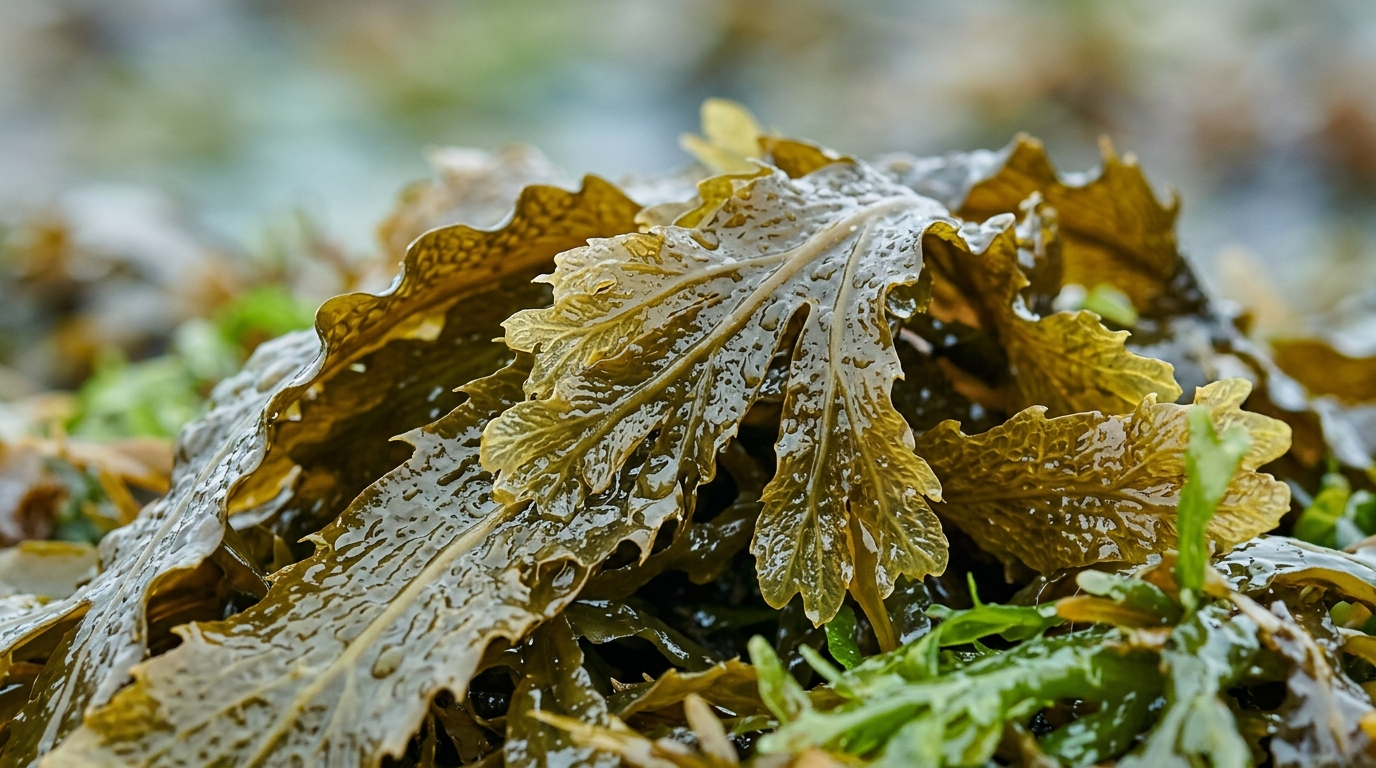
Investigating the brown macroalga Saccharina latissima harvested in May 2024 from the Brittany region of France, researchers evaluated an integrated sequential process aimed at fractionating water-soluble carbohydrates, structural polysaccharides, and delicate lipophilic pigments. In theoretical thermodynamic models, the system was anticipated to spontaneously pull hydrophobic fucoxanthin into a fatty-acid phase while retaining hydrophilic alginate in an adjacent betaine-urea phase. Instead, experimental trials demonstrated that the biphasic solvent loosened the recalcitrant cellular architecture of the seaweed, leaving the bulk of the pigment accessible for high-yield, chemically preserved recovery during a subsequent alkaline extraction step.
Conventional macroalgal biorefineries typically focus on alginate as their primary commercial product, relying on intensive processing steps that require concentrated mineral acids, harsh alkaline digestions, and substantial energy inputs. These aggressive treatments frequently degrade or discard other biologically active constituents naturally present in brown seaweeds, such as the sulphated polysaccharide fucoidan, the sugar alcohol mannitol, and the carotenoid fucoxanthin. To address these operational constraints, deep eutectic solvents, commonly termed DES, have emerged as tuneable and potentially sustainable alternatives formed through the complexation of hydrogen bond acceptors and hydrogen bond donors. Because their polarity, viscosity, and chemical interactions can be tailored, researchers designed a biphasic system capable of running contrasting polar and non-polar solvent phases simultaneously in a unified contactor.
To establish the molecular foundation of the biphasic configuration, the investigators paired a hydrophobic fatty-acid DES composed of dodecanoic acid and octanoic acid with a hydrophilic DES formulated from betaine, urea, and water. Thermodynamic screening conducted using the Conductor-like Screening Model for Real Solvents, known as COSMO-RS, indicated that fucoxanthin possessed an exceedingly high theoretical affinity for the hydrophobic fatty-acid phase, with a predicted solubility capacity of 2.1 × 10³ and a partition coefficient of 3.8 × 10¹² relative to the betaine-urea phase containing 45 percent water. Conversely, fucoxanthin exhibited negligible affinity for the hydrophilic phase, where predicted solubility capacities dropped from 2.1 × 10⁻⁸ at 25 percent water down to 3.3 × 10⁻¹¹ at 65 percent water.
Before conducting full extraction experiments, the physical compatibility of the two solvent phases was evaluated across varying hydration levels to determine phase separation boundaries. When the fatty-acid mixture was blended with betaine-urea containing 25, 45, or 65 percent water by weight, all mixtures formed distinct phases following centrifugation. However, the formulation containing only 25 percent water underwent partial crystallisation within the hydrophilic layer, indicating that a critical hydration threshold is required to maintain the fluidity of the betaine-urea hydrogen-bonded network. The researchers attributed this crystallisation to competitive hydrogen bonding between the carboxyl groups of the fatty acids and the betaine-urea components, which disturbed the solvent network alongside water redistribution between the two phases. Because the formulations prepared with 45 and 65 percent water remained completely liquid, the 45 percent water system was selected for sequential extraction trials on the dried macroalgal feedstock.
The experimental biorefinery sequence commenced with an initial aqueous washing step applied to milled S. latissima biomass to capture readily soluble cytoplasmic and cell-wall components prior to solvent contact. Mild aqueous extractions using either pure water or 50 millimolar citric acid at 35 degrees Celsius for one hour recovered 58.5 to 59.3 milligrams of mannitol per gram of dry biomass and approximately 3.1 to 3.2 milligrams of fucose per gram, which served as a proxy for fucoidan. Because mannitol is a low-molecular-weight polyol localized in the cytoplasm and vacuoles, it readily diffused into the aqueous phase without requiring severe cellular disruption, achieving approximately 80 percent total recovery relative to initial biomass content. Fucoidan recovery remained modest at approximately 32 percent, as the mild acidic conditions avoided elevated temperatures or harsher acid concentrations that could otherwise damage sensitive pigment molecules targeted in subsequent stages.
Following aqueous pretreatment, the de-sugared biomass was exposed to the biphasic FABU system at a solid-to-liquid ratio of 1:60 at 35 degrees Celsius for one hour under constant agitation. When the separated phases were analysed, the results sharply diverged from the thermodynamic predictions generated by COSMO-RS. Fucoxanthin recovery directly within the hydrophobic fatty-acid phase reached only 41.4 to 58.2 micrograms per gram of dry biomass, representing only about 12 percent of the pigment recovered by standard methanolic extraction benchmarks. These observations indicated that despite strong theoretical affinity, mass-transfer resistance and physical compartmentalisation inside the algal tissue severely restricted the direct migration of compounds across the solid-solvent and liquid-liquid interfaces.
The mechanistic nature of this extraction barrier became apparent when the residual biomass pellet remaining after biphasic extraction was subjected to a subsequent alkaline digestion using 0.1 molar sodium carbonate at 55 degrees Celsius. Instead of yielding only the residual alginate fraction, the alkaline extract produced an intensely yellow mixture that yielded 563.3 ± 7.7 micrograms of fucoxanthin per gram of dry biomass upon liquid-liquid separation with ethyl acetate. By comparison, when raw, untreated S. latissima biomass was subjected directly to an identical sodium carbonate extraction without prior FABU exposure, it produced only a pale organic extract containing negligible amounts of fucoxanthin. This stark contrast confirmed that contact with the biphasic solvent system induced profound changes within the algal matrix, making previously entrapped pigments readily accessible for rapid release during mild alkaline washing.
Microscopic and structural examinations supported this permeabilisation mechanism by demonstrating selective alterations across the macroalgal cell walls. Confocal laser scanning microscopy revealed that while hydrated control tissues retained prominent outer cell-wall structures, tissues pretreated with the FABU system exhibited a marked reduction in outer cell-wall thickness and an altered cellular morphology. Because mannuronate-rich alginate domains are predominantly concentrated in the outer surface and intercellular spaces of brown algae, the betaine-urea solvent selectively solubilised these accessible fractions, swelling the carbohydrate framework and loosening the dense structural matrix. This progressive loosening exposed internal thylakoid membranes, where hydrophobic fucoxanthin is embedded in protein-lipid complexes, without allowing the viscous fatty-acid phase to directly penetrate the hydrated, water-rich environment during the initial contact period.
In addition to dramatically improving accessibility, the biphasic pretreatment preserved the chemical integrity of the extracted fucoxanthin far better than conventional extraction workflows. High-performance liquid chromatographic profiles of fucoxanthin recovered after FABU and alkaline extraction displayed a predominant, clean peak corresponding to all-trans-fucoxanthin with only minor secondary degradation signals. In contrast, extracts recovered from conventional acid-alkaline processing followed by methanol extraction exhibited multiple degradation and isomerisation peaks accounting for 39.5 ± 0.5 percent of the total chromatographic area, accompanied by a noticeable hypsochromic shift toward 420 to 430 nanometres.
The investigators concluded that the true utility of biphasic deep eutectic solvent platforms in macroalgal biorefineries lies in their capacity to serve as protective, matrix-conditioning pretreatments rather than standalone separation media. The authors emphasized that future developments must focus on demonstrating simultaneous closed-loop recycling of both solvent phases, refining continuous phase separation methods, and conducting detailed techno-economic and life cycle assessments to validate whether the enhanced product quality justifies the operational complexities of integrated bioprocessing.
Subject of Research: Integrated seaweed biorefineries using biphasic deep eutectic solvent systems
Article Title: Disruption or partitioning? Deep eutectic solvent biphasic systems for integrated seaweed biorefineries
Article References: Hiemstra, I. S. A., Reynaga-Navarro, W., Wijffels, R. H., Eppink, M. H. M., & Kazbar, A. (2026). Disruption or partitioning? Deep eutectic solvent biphasic systems for integrated seaweed biorefineries. Bioresources and Bioprocessing, 13(1), Article 141. https://doi.org/10.1186/s40643-026-01139-9
Image Credits: AI Generated
DOI: 10.1186/s40643-026-01139-9
Keywords: deep eutectic solvents, Saccharina latissima, fucoxanthin, alginate, seaweed biorefinery, biomass permeabilisation, green chemistry, bioprocessing, Disruption, partitioning, Deep, eutectic
News Source: Gregory Coleman. (November 8, 2026). Biphasic Deep Eutectic Solvents Unlock Seaweed Biorefineries by Enhancing Biomass Permeability. Scienmag.