The University of Texas MD Anderson Cancer Center and P-Cure Ltd. announced a strategic alliance on November 9, 2026, to advance the development and clinical validation of a next-generation particle therapy platform. This collaboration aims to establish the clinical value of helium ion therapy while advancing a compact upright treatment system capable of delivering both proton and helium ions from a single modality. The partnership combines UT MD Anderson’s expertise in radiation oncology, particle therapy, and translational cancer research with P-Cure’s innovative, FDA-cleared compact proton therapy platform. Together, the institutions intend to evaluate the clinical, biological, and operational potential of a dual-modality approach that could enable physicians to select either proton or helium ions based on the specific characteristics of each patient’s disease.
Particle therapy has become an increasingly important component of precision radiation oncology due to its ability to deliver highly conformal radiation while minimizing exposure to surrounding healthy tissues. While proton therapy has demonstrated meaningful clinical benefits across multiple cancer types, helium ions are emerging as a promising next-generation modality. These ions may offer improved dose conformity, reduced lateral scattering, and enhanced biological effectiveness. The collaboration seeks to determine how these physical and biological characteristics can be translated into improved outcomes for patients undergoing cancer treatment.
Initially, the alliance will focus on the clinical value, patient benefits, and operational advantages of P-Cure’s compact upright proton therapy solution. Building on this foundation, UT MD Anderson and P-Cure will collaborate on preclinical and clinical programs to investigate helium ion therapy. These programs aim to establish the therapeutic potential of helium ions and generate the evidence required to support future clinical adoption, regulatory approvals, and reimbursement pathways. If successful, this initiative would represent the first helium particle system in North America.
As part of the strategic alliance, researchers from both institutions will collaborate on clinical utility studies, translational research programs, and technology development initiatives. These efforts are designed to establish the scientific and clinical foundation for helium ion therapy. The collaboration will include the clinical evaluation of P-Cure’s proton therapy platform, preclinical studies investigating the biological advantages of helium ions, and future clinical studies intended to define optimal treatment applications. These studies also aim to support broader clinical adoption of the technology.
The central objective of the alliance is to explore a new level of flexibility in particle therapy delivery. Unlike conventional systems designed around a single particle type, the long-term vision is a compact upright platform capable of delivering either proton or helium ion therapy from the same treatment system. This approach could provide physicians with greater flexibility to tailor treatment based on tumor location, disease characteristics, and therapeutic objectives.
Steven J. Frank, M.D., executive director of technology and innovation for Radiation Oncology at UT MD Anderson, stated that the collaboration provides an opportunity to evaluate an innovative particle therapy platform. He noted that the initiative allows the institution to advance its understanding of the potential role of helium ion therapy in cancer treatment. Frank emphasized that clinicians and researchers are committed to exploring technologies that have the potential to improve outcomes and expand access to advanced cancer care.
Michael Marash, chief executive officer of P-Cure, described helium therapy as having the potential to become the next major advancement in particle therapy. He stated that the company aims to establish the clinical evidence for helium ions while creating a practical path to make both proton and helium therapy accessible to far more patients worldwide.
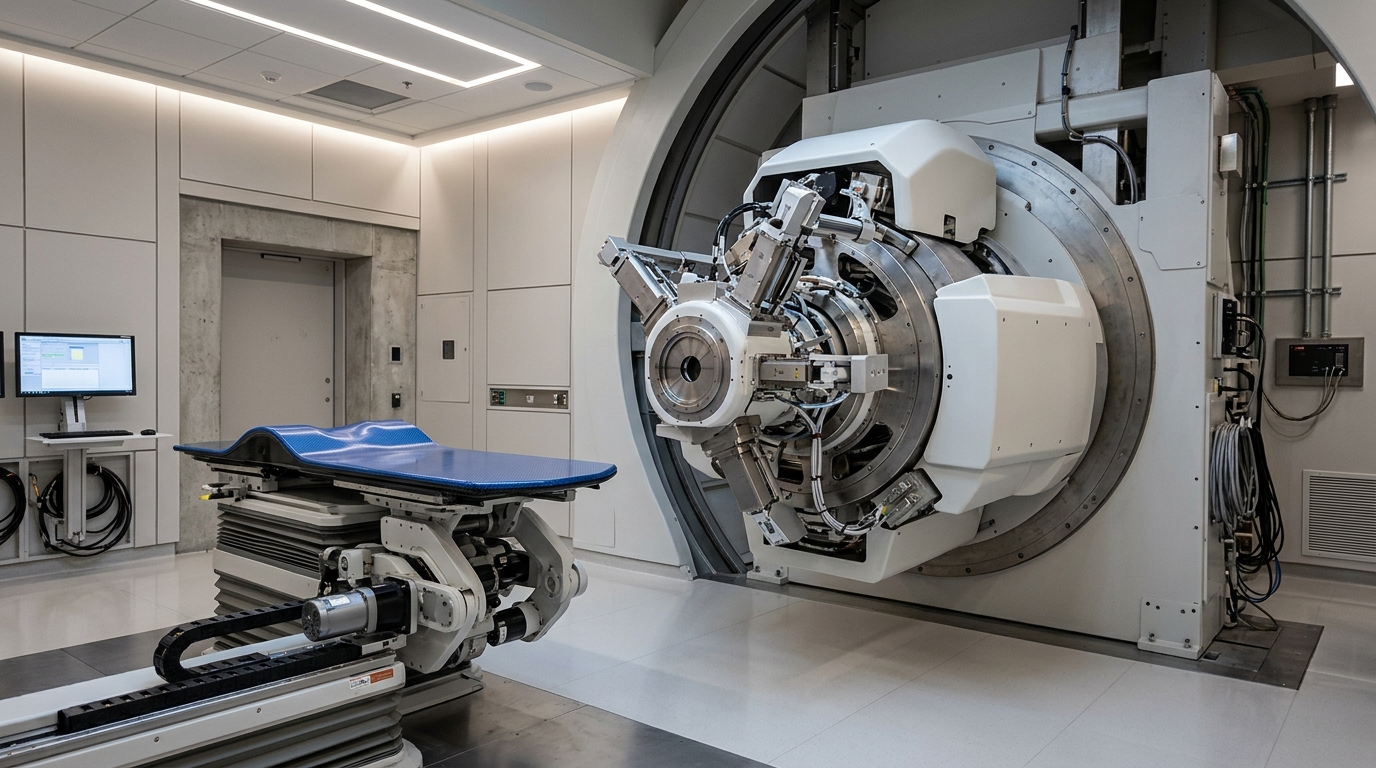
P-Cure’s FDA-cleared proton therapy platform utilizes an innovative upright treatment architecture designed to significantly reduce the size, cost, complexity, and infrastructure requirements associated with traditional particle therapy facilities. By combining compact system design with the future capability to deliver multiple particle types, the collaborators believe advanced particle therapy can become accessible to a much broader range of hospitals and cancer centers worldwide.
Under the terms of the agreement, UT MD Anderson and P-Cure will collaborate on research, development, clinical validation, and translational studies designed to advance dual-modality particle therapy. These efforts aim to support the future integration of helium ion therapy into clinical practice. UT MD Anderson is eligible to receive payments based on the achievement of certain clinical milestones and commercial sales.
The partnership is grounded in the shared goal of establishing the clinical, regulatory, and economic foundations necessary to support the broader adoption of proton and helium ion therapy. By working together, the institutions aim to help bring the benefits of precision particle therapy to more patients globally.
UT MD Anderson, located in Houston, ranks as one of the world’s most respected centers focused on cancer patient care, research, education, and prevention. The institution became one of the nation’s first National Cancer Institute-designated comprehensive cancer centers in 1971. It is ranked No. 1 for cancer in U.S. News & World Report’s “Best Hospitals” rankings and has been named one of the nation’s top two hospitals for cancer since the rankings began in 1990. The center receives a cancer center support grant from the NCI of the National Institutes of Health.
P-Cure is a global developer and provider of compact, synchrotron-based adaptive proton therapy systems for the treatment of cancer. Headquartered in Jerusalem, Israel, the company’s FDA-cleared platform is engineered to expand access to advanced radiation therapy by lowering the footprint, complexity, and cost barriers traditionally associated with particle therapy. P-Cure is advancing a dual-modality proton and helium synchrotron platform to further extend the clinical capabilities available to its customers. The company’s systems are in clinical use internationally, with a growing commercial presence globally.
UT MD Anderson has an institutional conflict of interest with P-Cure, and this relationship will be managed according to a UT MD Anderson Institutional Conflict of Interest Management and Monitoring Plan.
Subject of Research: Development of a dual-modality proton and helium ion therapy platform
Article Title: UT MD Anderson and P-Cure collaborate to advance first compact upright dual-modality proton and helium ion therapy platform
Article References: UT MD Anderson and P-Cure collaborate to advance first compact upright dual-modality proton and helium ion therapy platform. Original publication (Bibliographic details unavailable.)
Image Credits: AI Generated
DOI: Not provided
Keywords: particle therapy, helium ion therapy, proton therapy, cancer treatment, radiation oncology, MD Anderson, P-Cure, medical technology, clinical validation, precision medicine, Anderson, collaborate
News Source: Nathaniel Bowman. (November 8, 2026). MD Anderson, P-Cure Advance Dual-Modality Particle Therapy Platform. Scienmag.