Researchers at Capital Medical University have identified a specific long non-coding RNA, designated LncRNA-IH, as a key driver of cardiac fibrosis following a myocardial infarction. Published in the journal Cell Regeneration, this study demonstrates that LncRNA-IH, which is upregulated by chronic intermittent hypoxia, promotes the proliferation and migration of cardiac fibroblasts. The findings suggest that this molecular mechanism contributes to adverse cardiac remodeling and dysfunction in the weeks following a heart attack, identifying a potential target for future therapeutic interventions aimed at preserving heart function.
The study was conducted by a team led by Chaowei Hu and Yanwen Qin, utilizing a C57BL/6 mouse model to investigate the role of LncRNA-IH in post-infarction pathology. Cardiac fibrosis, characterized by the excessive deposition of extracellular matrix and the activation of fibroblasts, is a critical determinant of progressive cardiac dysfunction. While revascularization therapies have improved survival rates, the clinical management of post-infarction fibrosis remains limited, underscoring the need to identify novel regulatory targets that can mitigate this pathological process.
The research builds upon prior work by the same group, which established that chronic intermittent hypoxia, a condition often associated with sleep-disordered breathing, exacerbates cardiac fibrosis. In the current study, the researchers sought to determine the specific role of LncRNA-IH in this process. Using fluorescence in situ hybridization and quantitative real-time polymerase chain reaction, they confirmed that LncRNA-IH is predominantly localized to cardiac fibroblasts in post-infarction hearts. Furthermore, exposure to chronic intermittent hypoxia significantly increased the expression of LncRNA-IH in both primary cardiac fibroblasts and the PA12 cell line.
To evaluate the in vivo effects of LncRNA-IH, the researchers constructed an adeno-associated virus vector for cardiac-specific overexpression. Two weeks after inducing myocardial infarction in mice, the virus was injected via the tail vein. Four weeks later, histological analysis revealed that overexpression of LncRNA-IH significantly exacerbated cardiac structural remodeling. Specifically, the left ventricular cavity volume increased, and ventricular wall thickness was enhanced compared to control groups. Echocardiographic analyses further demonstrated that cardiac dysfunction was more severe in the overexpression group, evidenced by decreased left ventricular ejection fraction and fractional shortening.
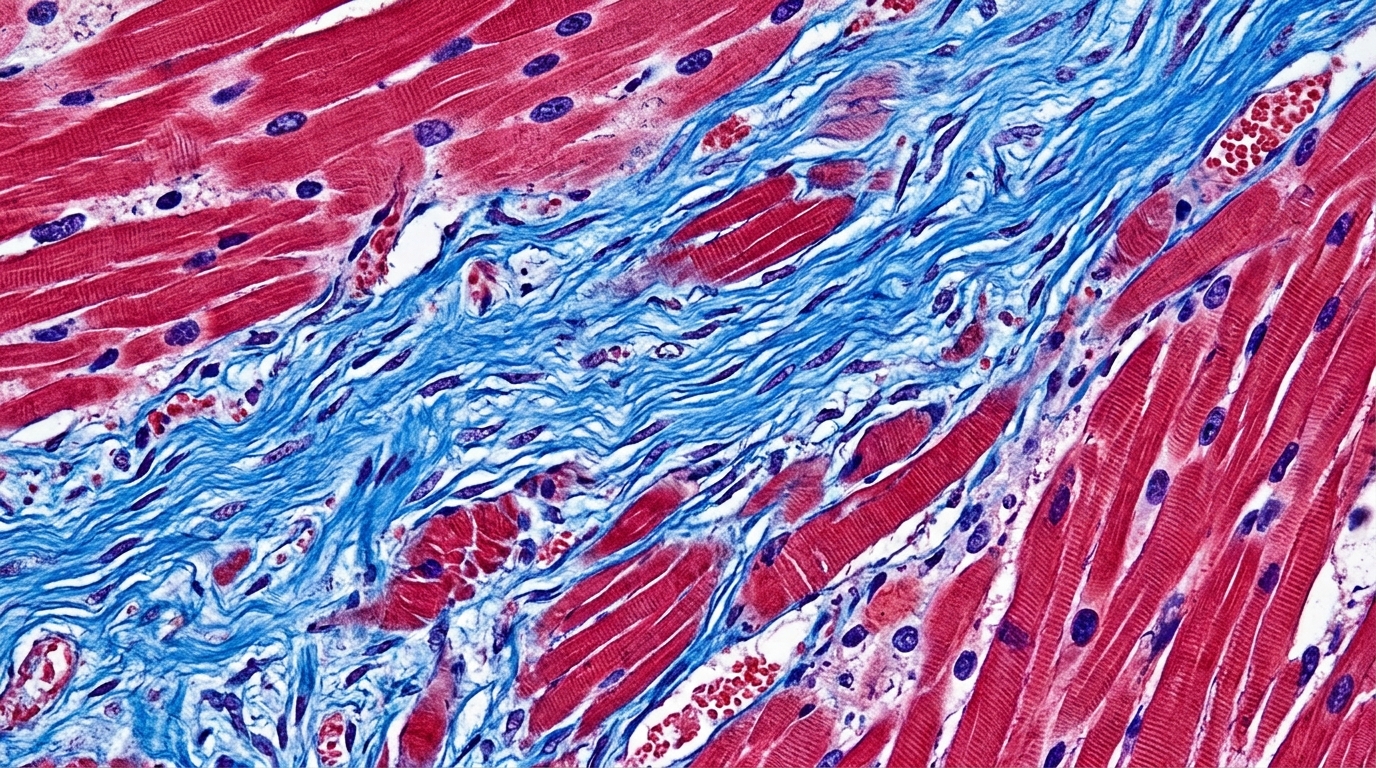
The study also provided detailed evidence that LncRNA-IH promotes myocardial fibrosis. Masson’s trichrome staining showed that the collagen-positive area was markedly enlarged in mice overexpressing LncRNA-IH, indicating more severe extracellular matrix deposition. At the molecular level, quantitative real-time PCR and Western blotting confirmed that the expression of key fibrosis markers, including alpha-smooth muscle actin, collagen type I, and collagen type III, was significantly upregulated in the overexpression group. These findings suggest that LncRNA-IH enhances the activation of myofibroblasts and the synthesis of structural components of the extracellular matrix.
In vitro experiments further elucidated the direct regulatory effects of LncRNA-IH on cardiac fibroblasts. Functional assays revealed that overexpression of LncRNA-IH significantly enhanced the proliferation and migration capacities of primary cardiac fibroblasts and PA12 cells. Conversely, when LncRNA-IH was knocked down using small interfering RNA, these pro-fibrotic effects were abrogated. The knockdown resulted in suppressed cell migration and proliferation, as well as downregulated mRNA expression of fibrotic markers. This functional reciprocity supports the conclusion that LncRNA-IH acts as a critical driver of cardiac fibrosis through the direct regulation of fibroblast behavior.
To understand the underlying molecular mechanisms, the researchers performed transcriptomic profiling on cardiac tissues from sham-operated, infarcted, and LncRNA-IH overexpressing mice. Principal component analysis revealed distinct clustering patterns among the groups, indicating significant transcriptional differences. Differential gene expression analysis identified 24 candidate genes that were co-dysregulated in both the infarcted and LncRNA-IH overexpressing contexts. These genes, including Spon2 and Ctxn3, are implicated in extracellular matrix remodeling and cell adhesion, processes relevant to fibroblast activation and fibrotic progression.
KEGG pathway enrichment analyses identified pathways closely associated with the TGF-beta1 signaling pathway, including ECM-receptor interaction and calcium signaling. The researchers found that overexpression of LncRNA-IH significantly increased the protein expression of TGF-beta1 in cardiac tissues. Additionally, ZEB1, a downstream target of the TGF-beta1 pathway, was upregulated at both the protein and mRNA levels. Enzyme-linked immunosorbent assay results further showed that serum TGF-beta1 levels were significantly increased in the LncRNA-IH overexpression group, suggesting that this lncRNA may promote the systemic activation of the TGF-beta1 signaling pathway.
The study acknowledges several limitations that should be considered when interpreting the results. First, the adeno-associated virus used for in vivo overexpression is not strictly fibroblast-specific and can infect both cardiomyocytes and fibroblasts. However, supplementary experiments showed significantly higher expression in fibroblasts, supporting their dominant role in the observed phenotype. Second, the transcriptomic analysis did not directly identify significant enrichment of the TGF-beta1 pathway itself, but rather its downstream or synergistic pathways. The direct molecular mechanism by which LncRNA-IH activates the TGF-beta1 pathway remains to be fully elucidated.
Despite these limitations, the study provides a comprehensive view of LncRNA-IH as a hypoxia-responsive driver of fibroblast activation. The identification of the LncRNA-IH to TGF-beta1 to ZEB1 axis offers a new perspective on the regulation of post-infarction cardiac remodeling. By targeting this pathway, future therapies may be able to mitigate fibrosis and preserve cardiac function in patients with comorbid hypoxia. The researchers suggest that antisense oligonucleotides or small interfering RNAs targeting LncRNA-IH could be a promising approach to counteract the pro-fibrotic effects of chronic intermittent hypoxia.
The findings have significant implications for the management of post-infarction heart failure. Current treatments often focus on symptom management, and targeted therapies for fibrosis are scarce. LncRNA-IH’s fibroblast specificity and its role in activating the TGF-beta1 pathway make it an attractive candidate for therapeutic intervention. Combining LncRNA-IH inhibition with existing therapies, such as ACE inhibitors or SGLT2 inhibitors, could potentially synergistically preserve cardiac function and improve long-term outcomes for patients recovering from a heart attack.
Future research should focus on clarifying the direct interaction between LncRNA-IH and TGF-beta1 pathway components. Investigating the long-term effects of LncRNA-IH inhibition in animal models and assessing the clinical relevance of its expression in human post-infarction samples will be essential steps. This study not only identifies a novel regulatory axis in cardiac fibrosis but also highlights the importance of environmental stressors, such as intermittent hypoxia, in the progression of post-infarction cardiac disease.
The study utilized male C57BL/6 mice aged eight to ten weeks, with body weights ranging from 22 to 25 grams, to establish the myocardial infarction model. The surgical procedure involved ligating the left anterior descending coronary artery to induce infarction, while sham-operated controls underwent thoracotomy without ligation. For the chronic intermittent hypoxia exposure, mice were subjected to a specific protocol beginning 24 hours after surgery. This regimen consisted of alternating cycles of five minutes of hypoxia at 5% oxygen and ten minutes of normoxia at 21% oxygen, repeated for eight hours daily over a four-week period. This controlled environmental stressor was designed to mimic the physiological conditions associated with sleep-disordered breathing, allowing the researchers to observe the specific impact of hypoxia on cardiac tissue remodeling and gene expression patterns.
In the in vitro experiments, primary cardiac fibroblasts were isolated from the hearts of one- to three-day-old C57BL/6 mouse pups. The isolation process involved digesting the minced heart tissue with collagenase II and trypsin-EDTA at 37 degrees Celsius. The resulting cells were cultured in Dulbecco’s Modified Eagle Medium supplemented with 10% fetal bovine serum and antibiotics, and were used at passages two through four to ensure consistent biological behavior. The PA12 cell line was maintained under identical culture conditions. For the hypoxia treatments in the laboratory setting, both primary fibroblasts and PA12 cells were exposed to a modified intermittent hypoxia protocol involving 8% oxygen for five minutes and 21% oxygen for ten minutes, sustained for 72 hours.
Transcriptomic profiling was conducted on cardiac tissues from the sham, myocardial infarction, and LncRNA-IH overexpression groups, with three mice per group. Total RNA was extracted and sequenced using the Illumina NovaSeq X Plus system, generating 150-base-pair paired-end reads. The raw sequencing data were filtered to remove low-quality reads and adapter sequences before being mapped to the mouse genome using the Hisat2 algorithm. Differentially expressed genes were identified using the DESeq2 statistical package, applying thresholds of an absolute log2 fold change greater than one and an adjusted p-value less than 0.05. Functional enrichment analyses, including Gene Ontology and Kyoto Encyclopedia of Genes and Genomes pathway mapping, were performed using the clusterProfiler package in R. This comprehensive bioinformatics pipeline enabled the identification of specific transcriptional networks altered by LncRNA-IH overexpression, providing a detailed molecular landscape of the fibrotic response.
Statistical analyses were performed using GraphPad Prism 9.0 and SPSS 22.0 software. Data are presented as the mean plus or minus the standard error of the mean. Differences between multiple experimental groups were evaluated using one-way analysis of variance, followed by Tukey’s post-hoc test for pairwise comparisons. A p-value of less than 0.05 was considered statistically significant for all analyses. For the Masson’s trichrome staining quantification, a power analysis indicated that a sample size of six mice per group provided 91% to 99% statistical power, assuming a 5% significance level with a two-sided test.
The raw data generated in this study, including quantitative PCR raw Ct values, original Western blot images, and histological staining quantification data, are available from the corresponding authors upon reasonable request. The RNA sequencing dataset has been deposited in the National Center for Biotechnology Information database under the accession number PRJNA1298696. The study was approved by the Institutional Animal Care and Use Committee of Capital Medical University and conducted in accordance with the National Institutes of Health Guide for the Care and Use of Laboratory Animals.
Subject of Research: LncRNA nonnmmut065573 promotes post-myocardial infarction cardiac fibrosis and activates the TGF-β1/ZEB1 pathway
Article Title: LncRNA nonnmmut065573 promotes post-myocardial infarction cardiac fibrosis and activates the TGF-β1/ZEB1 pathway
Article References: Hu, C., Han, L., Du, Z., Yu, H., Du, Y., Li, L., Sun, H., Wang, Y., Gao, X., Sun, X., Zhang, Z., Liu, L., Zhang, Y., & Qin, Y. (2026). LncRNA nonnmmut065573 promotes post-myocardial infarction cardiac fibrosis and activates the TGF-β1/ZEB1 pathway. Cell Regeneration, 15(1), Article 5. https://doi.org/10.1186/s13619-025-00275-5
Image Credits: AI Generated
DOI: 10.1186/s13619-025-00275-5
Keywords: LncRNA, nonnmmut065573, promotes, post-myocardial, infarction, cardiac, fibrosis, activates, TGF-, ZEB1, pathway, scientific research
News Source: Gregory Coleman. (November 8, 2026). Mouse Study Links LncRNA-IH to Heart Scarring. Scienmag.