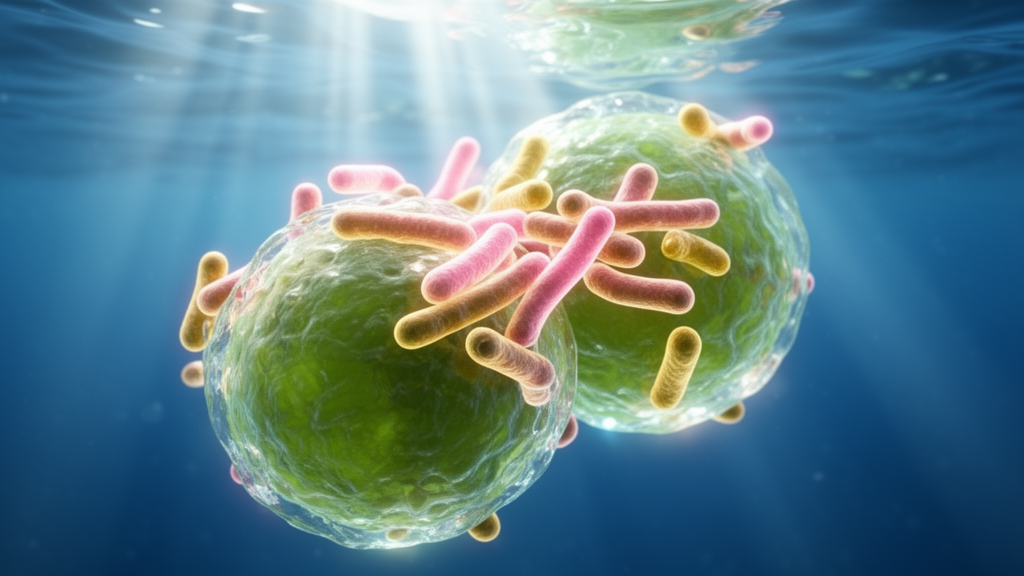
In aquatic ecosystems, microalgae and bacteria maintain intimate ecological interactions within the surrounding microenvironment known as the phycosphere. While researchers have long recognized that microalgae harbor host-specific bacterial communities, these microbiomes have typically been investigated only as whole assemblages. Consequently, it remained unclear whether host specificity was distributed evenly across diverse resident bacteria or concentrated within particular bacterial lineages displaying distinct ecological strategies.
To resolve how host specificity is organized, researchers led by Soo Hwan Jhin and Bum Soo Park characterized the microbiomes associated with eleven microalgal species. The examined hosts encompassed nine dinoflagellates and two green algae, spanning both marine and freshwater environments. To capture microbial dynamics over time, the team profiled the associated bacterial communities across three distinct algal growth stages: the lag phase, the exponential phase, and the stationary phase.
The investigators utilized full-length 16S ribosomal RNA gene sequencing to profile the microalgal microbiomes at high taxonomic resolution. Applying Bray–Curtis dissimilarity metrics, the researchers systematically decomposed the host-associated community structures by individual bacterial class. This analytical decomposition revealed a distinct bipartite architecture governing the microbial assemblages within the phycosphere, demonstrating contrasting ecological behaviors between the two dominant proteobacterial groups.
The class Gammaproteobacteria exhibited only weak associations with specific microalgal hosts alongside substantial within-host variation. Statistical testing confirmed this variability, yielding a PERMDISP F-statistic of 10.755. This observation suggests that members of the Gammaproteobacteria class do not form a stable, host-defining signature across the sampled algae, displaying shifting compositions rather than reproducible host fidelity across growth phases.
In sharp contrast, bacteria belonging to the class Alphaproteobacteria formed a remarkably stable, host-discriminating structural core across the tested microalgal species. A permutational multivariate analysis of variance yielded an R-squared value of 0.773 for Alphaproteobacteria alone, which was nearly identical to the whole-community R-squared value of 0.760. This statistical congruence indicated that this single bacterial lineage effectively captured the entire host-specificity signal present in the phycosphere.
Further bioinformatic dissection via linear discriminant analysis effect size and network hub analyses pinpointed the Roseobacter group as the critical taxonomic component underpinning this Alphaproteobacteria core. To test the predictive power of these bacteria, the researchers trained a Random Forest machine learning classifier using only four genera from the Roseobacter group. Under group cross-validation, this model successfully predicted host identity with a mean accuracy of 0.787 plus or minus 0.127.
These findings demonstrate that the Roseobacter group acts not merely as an abundant microbial constituent, but as an informative biological signature that cleanly differentiates phylogenetically diverse microalgal hosts. Rather than being distributed evenly across the entire bacterial assemblage, microalgal host specificity is concentrated within a dedicated lineage. This structural insight deepens ecological understanding of phycosphere organization across marine and freshwater habitats.
Subject of Research: Host specificity and structural differentiation in microalgal bacterial communities
Article Title: Host-Driven Community Differentiation in Microalgal Microbiomes: Key Role of the Roseobacter Group within Alphaproteobacteria
Article References: Jhin, S. H., Han, K. H., Kim, J.-H., Kim, J. H., Shin, H. H., & Park, B. S. (2026). Host-Driven Community Differentiation in Microalgal Microbiomes: Key Role of the Roseobacter Group within Alphaproteobacteria. Microbial Ecology. https://doi.org/10.1007/s00248-026-02930-z
Image Credits: AI Generated
DOI: 10.1007/s00248-026-02930-z
Keywords: Microalgal microbiomes, Phycosphere, Alphaproteobacteria, Gammaproteobacteria, Roseobacter group, Host specificity, Dinoflagellates, Green algae, 16S rRNA gene sequencing, Bray–Curtis dissimilarity, PERMANOVA, PERMDISP, Random Forest classifier, LEfSe analysis, Network hub analysis, Bacterial community structure, Aquatic ecosystems
News Source: Drew Townsend. (November 17, 2026). Roseobacter Lineage Drives Host Specificity Across Diverse Microalgal Microbiomes. Scienmag.