A comprehensive review published in Aquaculture Science and Management on September 15, 2025, examines the recent advancements in the establishment and characterization of fish muscle cell lines. The study, led by Gowhar Iqbal and colleagues, highlights how these in vitro models have evolved from simple explant cultures to sophisticated systems capable of studying muscle growth, disease mechanisms, and biotechnological applications. The authors argue that fish muscle cells provide valuable insights into the mechanisms underlying muscle function, offering a replicable alternative to live animal models for investigating gene function, virology, and toxicology. This review synthesizes current knowledge on the development of these cell lines, emphasizing their role in enhancing aquaculture sustainability and improving fish muscle health.
The history of fish cell culture dates back to the mid-20th century, with early efforts focusing on primary cell cultures from various tissues, including muscle. During the 1960s and 1970s, researchers primarily developed stable cell lines from epithelial and fibroblast tissues due to their relative ease of culture. The successful creation of fish muscle cell lines coincided with growing interest in fish physiology and aquaculture, leading to preliminary research on satellite cells, which are muscle precursor cells responsible for regeneration. Myogenic cell lines from rainbow trout were among the first to be established, providing early insights into muscle fiber development and proliferation through the use of enzymatic digestion methods and specialized growth media.
Significant progress occurred in the 2000s and 2010s, as researchers shifted focus toward establishing authentic muscle-lineage cell lines from different fish species. This transition moved beyond the broad fibroblast-like features that had dominated initial fish cell lines toward more specialized, tissue-type cultures. The review notes that the growing interest in cellular agriculture and sustainable protein production has further accelerated the creation of muscle cell lines with commercial viability. Recent advancements include the use of protein extracts as replacements for fetal bovine serum, which is a nonsustainable component in traditional media formulations, thereby aiming to minimize production costs and maximize scalability for mass production.
Several specific cell lines have been established and characterized in recent years, contributing to the field’s resources. For instance, Xue et al. isolated and developed a muscle stem cell line from the brown-marbled grouper, a significant advancement in the field. Additionally, the National Repository of Fish Cell Lines in India maintains four muscle-based cell lines that serve as valuable resources for the scientific community. Xu et al. documented the creation of muscle satellite cell lines in the giant yellow croaker, demonstrating the viability of producing cultured meat with these cells. Other notable examples include a myofibroblast precursor cell line derived from the tail muscle of the Australasian snapper and a novel cell line obtained from the muscular tissue of the humpback grouper.
Modern cell culture systems are increasingly replacing traditional animal models, offering a more controlled and ethical approach to research in immunology, virology, and physiology. The development of continuous fish muscle cell culture has been driven by innovative techniques used for vaccine development, virus propagation, and stem cell research. With modern cellular aquaculture techniques, the development of cell-based seafood production via closed-system bioreactor production is now possible. Although no cell culture-based seafood products are currently commercially available, approximately 20 companies are optimizing product development processes, and nearly 156 companies have been established to manufacture cultivated meat. In 2022, Umami Meats revealed a prototype of a fish ball made of cultured fish cells and plant-derived proteins, marking a milestone in the industry.
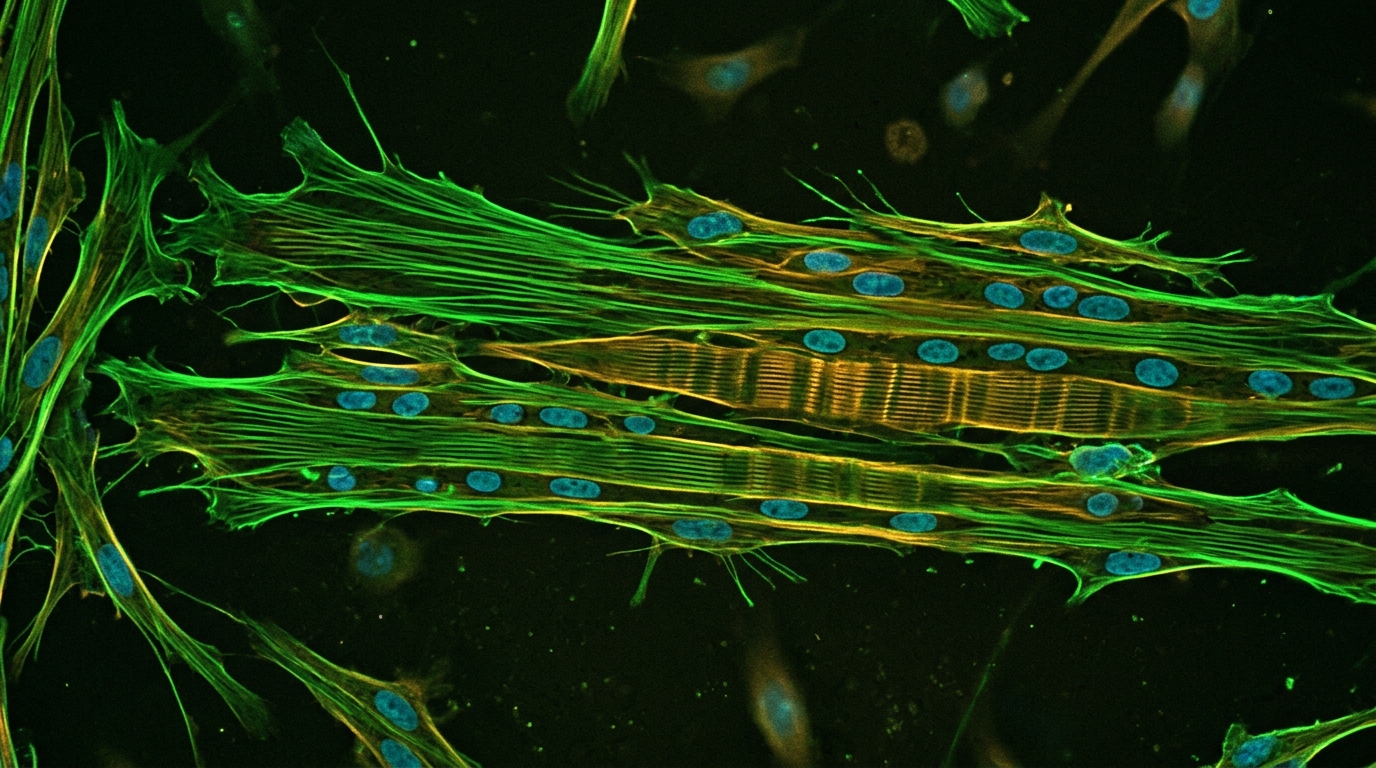
The review details the establishment of a continuous fish muscle cell line from the Atlantic mackerel, which has been maintained for over 130 subcultures. These cells exhibit both myogenic and adipogenic-like phenotypes, confirmed through lipid accumulation assays and immunostaining for markers such as PAX7 and myosin heavy chain. The authors also describe the isolation of muscle progenitor cells from zebrafish, which were cultured in both monolayers and three-dimensional collagen-based tissue-engineered constructs. The study found that compared with monolayer cultures, the three-dimensional constructs showed greater design positivity, fusion growth, myotube maturity, and hypertrophic growth, suggesting their utility in drug screening and disease modeling.
Coculture systems and three-dimensional models represent potential advancements in tissue engineering and cellular aquaculture. For example, a coculture system for carp kidney hematopoietic cells was developed using fin cell lines as feeder layers, revealing that only T-cell marker genes were highly expressed after the third passage. Similarly, a coculture of Atlantic salmon hepatocytes and monocytes was developed for toxicological studies, proving to be a more sensitive model than monocultures. The development of three-dimensional culture models offers advantages over two-dimensional cultures, including better ability to mimic living tissues, improved cell-to-cell interactions, and superior grafting ability. Bioengineering protocols have been used to develop coculture systems that improve mature muscle tissue formation and functionality.
Three-dimensional scaffolds play a crucial role in cell attachment and tissue growth by mimicking the physical, chemical, and mechanical properties of the natural environment. These porous structures aid in the exchange of oxygen, nutrients, and metabolites and can be made from various naturally derived sources, including fish-derived gelatin methacrylate, hydrogels, and fish scales. Self-curling three-dimensional oriented scaffolds made from tilapia fish scales have shown promise in restoring muscle function in models of volumetric muscle loss. The lower immunogenicity of fish-derived biomaterials is identified as a significant advantage for tissue engineering applications. Additionally, red snapper skin-derived collagen was modified with methacrylate to create a three-dimensional scaffold that potentially supports neural cell survival and facilitates neuromuscular junction formation via coaxial printing.
Despite these advancements, technical hurdles remain in integrating these models into mainstream research. The review highlights challenges such as the tissue-tissue interface, the mechanical microenvironment, and the spatiotemporal distributions of oxygen, nutrients, and metabolic waste. These issues are particularly significant in fish cell culture systems where adequate oxygenation and nutrient delivery become challenging with increasing tissue construct size. Organoids and spheroids, while useful for modeling tissues, lack tissue-to-tissue interfaces and organ-level architecture, which is critical for the development of fish muscle tissue requiring correct fiber orientation. The absence of vasculature or immune cells in three-dimensional assembloids makes preventing central necrosis difficult, thereby complicating the scaling of fish tissue constructs.
Fish muscle cell lines are valuable models for studying muscle growth, development, and stress responses, as well as for investigating diseases and bioengineering applications. Stressors such as temperature, oxygen levels, and water flow can significantly impact fish muscle quality and growth, and cell lines allow for the examination of these effects at the cellular level. In vitro models provide insights into the molecular mechanisms regulating myogenesis, hypertrophy, and muscle degradation. For instance, zebrafish muscle cell lines are commonly employed to study muscle development due to their genetic similarity to primary muscle cells. Research on muscle cell growth and differentiation under the effects of growth hormone, insulin-like growth factor, and myostatin has been carried out in fish cell lines, with myostatin identified as a potential target for manipulation in aquaculture species.
The review also discusses the use of fish muscle cell lines in studying diseases, including neuromuscular disorders and cancer. These cell lines provide insights into gene expression and the molecular mechanisms underlying disease progression. The rainbow trout muscle cell line is frequently used to study viral pathogens such as viral hemorrhagic septicemia virus and infectious pancreatic necrosis virus. RNA-seq analysis has revealed dynamic regulation of proteasomal and autophagic degradation pathways in skeletal muscle infected with infectious pancreatic necrosis virus, illustrating the application of muscle cell lines in studying cellular reactions to viral infection. Additionally, the yellow river carp muscle cell line has been developed as a faster and more efficient experimental resource for fish immunology research, allowing for the preliminary exploration of immune responses.
Challenges and limitations hinder the widespread application of fish muscle cell culture systems. There is difficulty in establishing and maintaining stable cell lines, as fish myocytes exhibit species-specific variations in growth rates, metabolic requirements, and differentiation potential. Myogenic satellite cells have limited proliferative capacity in vitro, leading to early senescence and loss of differentiation ability. Fish muscle cells require specific temperatures, osmolarities, and nutrient compositions that vary widely among species, necessitating customized media formulations. For example, Atlantic salmon, a cold-adapted species, requires low-temperature media rich in amino acids and insulin-like growth factors, whereas zebrafish thrive at higher temperatures in media supplemented with glucose and growth factors. Maintaining appropriate oxygen levels is crucial, as hypoxia or oxidative stress can induce apoptosis in fish myocytes.
Future directions for fish cell line development include the use of genetic engineering to improve proliferation, stability, and function. Technologies such as CRISPR-Cas9, transcription activator-like effector nucleases, and zinc-finger nucleases facilitate stable modifications to the native genome, enhancing cell line engineering. These tools allow for targeted gene alterations to enhance myogenic differentiation, eliminate senescence pathways, or introduce stress resistance characteristics. Transgenic overexpression and knockout models are also used to alter cell lines for specific purposes, such as the production of therapeutic proteins or the creation of disease models. The review concludes that addressing current challenges in optimizing culture conditions and enhancing cell line stability will require ongoing innovations in cell line generation and experimental techniques, ultimately improving aquaculture efficiency and sustainability.
Subject of Research: Advances in fish muscle cell line development and applications in aquaculture and biotechnology
Article Title: Innovations in fish muscle cell lines: new frontiers in aquaculture and biotechnology
Article References: Iqbal, G., Singh, A., Piyushbhai, M. K., Quyoom, N., Singh, L. S., Yadav, S., & Dar, S. A. (2025). Innovations in fish muscle cell lines: new frontiers in aquaculture and biotechnology. Aquaculture Science and Management, 2(1), Article 17. https://doi.org/10.1186/s44365-025-00022-6
Image Credits: AI Generated
DOI: 10.1186/s44365-025-00022-6
Keywords: fish muscle cell lines, aquaculture, cell culture, biotechnology, cultured meat, tissue engineering, genetic engineering, muscle biology, Innovations, fish, muscle, cell
News Source: Gregory Coleman. (November 7, 2026). Review details progress in fish muscle cell line development. Scienmag.