• HOME
  • NEWS
  • EXPLORE
    • CAREER
      • Companies
      • Jobs
    • EVENTS
    • iGEM
      • News
      • Team
    • PHOTOS
    • VIDEO
    • WIKI
  • BLOG
  • COMMUNITY
    • FACEBOOK
    • INSTAGRAM
    • TWITTER
Saturday, November 7, 2026
BIOENGINEER.ORG
No Result
View All Result
  • Login
  • HOME
  • NEWS
  • EXPLORE
    • CAREER
      • Companies
      • Jobs
        • Lecturer
        • PhD Studentship
        • Postdoc
        • Research Assistant
    • EVENTS
    • iGEM
      • News
      • Team
    • PHOTOS
    • VIDEO
    • WIKI
  • BLOG
  • COMMUNITY
    • FACEBOOK
    • INSTAGRAM
    • TWITTER
No Result
View All Result
Bioengineer.org
No Result
View All Result
Home NEWS Science News Health

Generative Adversarial Network Restores Image Quality in Accelerated PSMA PET

by
November 7, 2026
in Health
Reading Time: 2 mins read
0
Generative Adversarial Network Restores Image Quality in Accelerated PSMA PET

Generative Adversarial Network Restores Image Quality in Accelerated PSMA PET

Share on FacebookShare on TwitterShare on LinkedinShare on RedditShare on Telegram

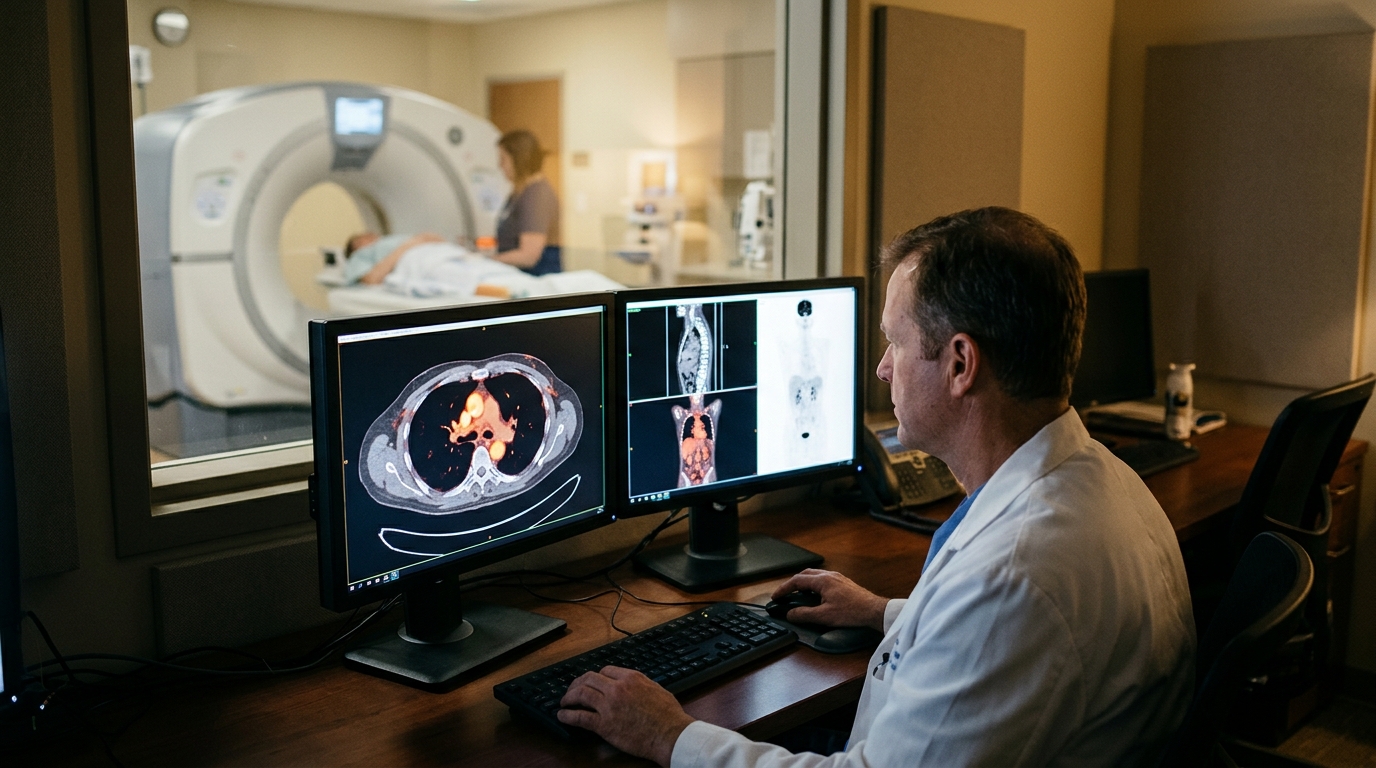
A deep learning framework termed a Channel Dense Dense U-Generative Adversarial Network (CDDU-GAN) significantly improved objective image quality and quantitative accuracy in four-fold accelerated prostate-specific membrane antigen (PSMA) positron emission tomography (PET) imaging across multiple radiotracers and hybrid imaging platforms, according to research published in BMC Medical Imaging.

The study evaluated 84 patients who underwent imaging with either 18F-PSMA or 68Ga-PSMA on hybrid PET/CT or PET/MR systems. Standard-dose list-mode acquisition protocols used 120 seconds per bed position for the PET/CT system and 240 seconds per bed position for the PET/MR system.

To simulate a rapid-scan acquisition protocol, the investigators retrospectively subsampled standard-dose list-mode data to the first quarter of the original counts. The CDDU-GAN framework was trained to transform these low-count acquisitions into standard-dose equivalent images.

Across the entire cohort, the CDDU-GAN significantly enhanced objective image quality, raising the mean Peak Signal-to-Noise Ratio (PSNR) from 46.8 ± 7.5 to 48.2 ± 6.6 (p < 0.0001) and the Structural Similarity Index (SSIM) from 0.980 ± 0.026 to 0.986 ± 0.020 (p < 0.0001). Performance gains varied by platform, with substantially larger improvements observed in the PET/CT cohort (ΔPSNR: 2.91 ± 0.70 dB) than in the PET/MR cohort (0.47 ± 1.08 dB, p < 0.0001).

Subjective evaluations conducted independently by two blinded nuclear medicine physicians using a 5-point Likert scale showed significant improvements in diagnostic confidence across all four cohorts (p = 0.031–0.042) alongside assessments of overall image quality and lesion conspicuity. In an evaluation of 84 lesions, maximum standardized uptake value (SUVmax) demonstrated stronger linear agreement and concordance between CDDU-GAN and standard-dose scans (y = 1.024x + 0.22, R² = 0.985, CCC = 0.992) compared to fast-scan data (R² = 0.944, CCC = 0.972), though the authors concluded that larger multi-center validation and task-based lesion detection assessments are required prior to clinical adoption.

The authors concluded that the findings provide preliminary evidence for the feasibility of deep learning-based acceleration in PSMA PET imaging, demonstrating that the CDDU-GAN framework effectively improves image quality and SUV accuracy in four-fold accelerated acquisitions across the evaluated tracers and hybrid scanners. However, the investigators noted that the magnitude of benefit varied substantially across imaging platforms, with objective improvements in peak signal-to-noise ratio being substantially smaller in the PET/MR cohort than in the PET/CT cohort.

Before this deep learning framework can be considered for clinical adoption, the authors specified that several validation requirements must be addressed.

Additionally, the researchers highlighted that task-based assessments specifically evaluating lesion detection are required prior to clinical adoption.

Subject of Research: Deep learning restoration of accelerated PSMA PET image quality across imaging platforms

Article Title: Restoring image quality in accelerated PSMA PET across scanners and tracers using a generative adversarial network

Article References: Cheng, C., Pan, B., Zhong, L., Xu, L., Guo, Z., Yang, Q., Pan, G., Liang, S., Gong, N.-J., & Zuo, C. (2026). Restoring image quality in accelerated PSMA PET across scanners and tracers using a generative adversarial network. BMC Medical Imaging. https://doi.org/10.1186/s12880-026-02872-5

Image Credits: AI Generated

DOI: 10.1186/s12880-026-02872-5

Keywords: PSMA PET, generative adversarial network, medical imaging, PET/CT, PET/MR, image restoration, radiotracers, deep learning, Restoring, image, quality, accelerated

News Source: Ophelia Keating. (November 7, 2026). Generative Adversarial Network Restores Image Quality in Accelerated PSMA PET. Scienmag.


Tags: accelerateddeep learninggenerative adversarial networkimageimage restorationMedical ImagingPET/CTPET/MRPSMA PETqualityradiotracersRestoring
Share12Tweet7Share2ShareShareShare1

Related Posts

Older Adults Facing Digital Divide Spend Less on Health Maintenance

Older Adults Facing Digital Divide Spend Less on Health Maintenance

November 7, 2026
Research report: Cerebral blood flow asymmetry in motor-related regions is associated with 30-day upper-limb motor recovery after acute ischemic stroke

Research report: Cerebral blood flow asymmetry in motor-related regions is associated with 30-day upper-limb motor recovery after acute ischemic stroke

November 7, 2026

Motivational Interviewing Improves Dyadic Stroke Self-Care in Randomised Controlled Trial

November 7, 2026

New Statistical Model Improves Microbiome Causal Analysis

November 7, 2026

POPULAR NEWS

  • Tomographic Study Assesses Interzonal Toric Stability Across Different Corneal Zones

    Tomographic Study Assesses Interzonal Toric Stability Across Different Corneal Zones

    29 shares
    Share 12 Tweet 7
  • Research report: Phytotoxic potential of Ranunculus testiculatus aqueous extract: physiological responses and molecular docking/putative ligand interactions with barley α-amylase

    29 shares
    Share 12 Tweet 7
  • High-fibre, fermented-food diet trial will test gut-brain route to easing adult ADHD symptoms

    29 shares
    Share 12 Tweet 7
  • Research report: Effects of a game-based exergame intervention on motor competence and balance in children with autism spectrum disorder: a multiple-baseline single-case experimental study

    29 shares
    Share 12 Tweet 7

About

We bring you the latest biotechnology news from best research centers and universities around the world. Check our website.

Follow us

Recent News

Older Adults Facing Digital Divide Spend Less on Health Maintenance

Research report: Cerebral blood flow asymmetry in motor-related regions is associated with 30-day upper-limb motor recovery after acute ischemic stroke

Motivational Interviewing Improves Dyadic Stroke Self-Care in Randomised Controlled Trial

Subscribe to Blog via Email

Enter your email address to subscribe to this blog and receive notifications of new posts by email.

Join 86 other subscribers
  • Contact Us

Bioengineer.org © Copyright 2023 All Rights Reserved.

Welcome Back!

Login to your account below

Forgotten Password?

Retrieve your password

Please enter your username or email address to reset your password.

Log In
No Result
View All Result
  • Homepages
    • Home Page 1
    • Home Page 2
  • News
  • National
  • Business
  • Health
  • Lifestyle
  • Science

Bioengineer.org © Copyright 2023 All Rights Reserved.