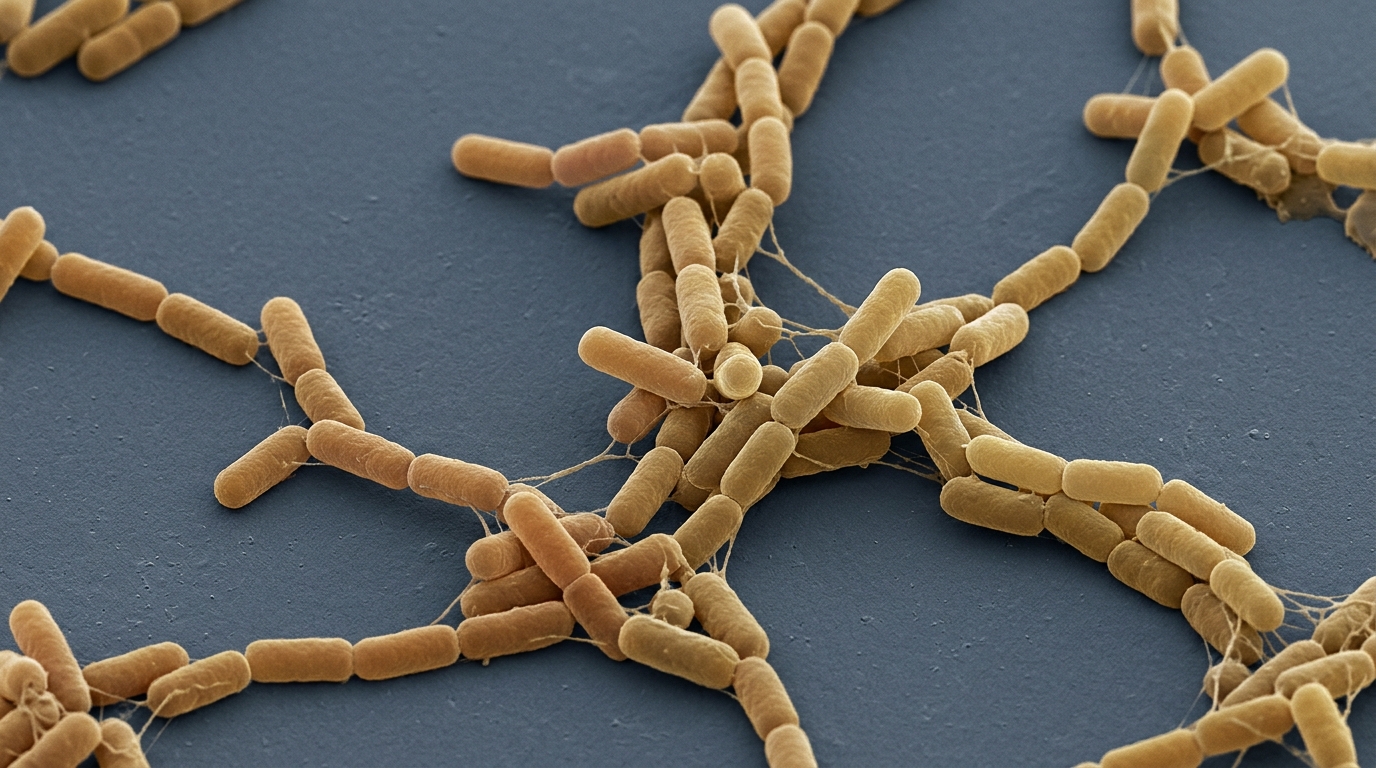
Researchers have successfully engineered the bacterium Bacillus subtilis to produce extracellular invertase at record-breaking levels, addressing a significant bottleneck in the industrial processing of soybeans. The study, published in BMC Biotechnology, demonstrates that by strategically boosting both the synthesis and secretion of the enzyme InvDz13, the recombinant strain can achieve activity levels previously unattained in this microbial host. This breakthrough offers a viable pathway for large-scale biotechnological applications aimed at improving the nutritional profile of soybean derivatives.
The motivation for this research stems from the presence of raffinose in soybeans, an agricultural product of global importance. When fermented by intestinal microorganisms, raffinose can cause flatulence. Invertase, specifically the variant InvDz13 derived from Microbacterium trichothecenolyticum, has the capacity to hydrolyze raffinose into melibiose, a prebiotic sugar. Converting raffinose into melibiose not only mitigates the negative digestive effects but also enhances the overall nutritional value and economic benefits of soybean-based products. However, its low yield limits industrial applications.
This study produced InvDz13 in Bacillus subtilis, resulting in a recombinant enzyme with the natural enzyme's excellent properties. Various extracellular protease-deficient chassis cells were constructed. It was found that Vpr and WprA enhance the extracellular InvDz13 activity.
The engineering strategy employed a multidimensional approach to further optimize production. The team sequentially engineered the promoter, screened for effective signal peptides, and regulated key elements within the secretion pathway.
The culmination of this engineering effort was the development of the recombinant strain WBSS142I4PA. This strain was constructed using the promoter PspoVG-PspoVG142 and the signal peptide SPYomL, while co-expressing signal peptide peptidases SppA. In shake flask experiments, this specific configuration resulted in a 10.02-fold increase in extracellular InvDz13 activity compared to baseline levels.
In this controlled bioreactor environment, the extracellular InvDz13 activity of WBSS142I4PA reached 568.86 U/mL. The authors noted that, to their knowledge, this represents the highest recombinant expression level of an exogenous invertase in Bacillus subtilis reported to date.
The study marks the first instance of expressing InvDz13 in Bacillus subtilis and developing a novel multidimensional combinatorial strategy to enhance its extracellular production. The results provide a theoretical foundation for the large-scale application of InvDz13 in soybean processing industries. The study paves novel avenues for protein production in B. subtilis.
Subject of Research: Enhanced extracellular invertase production in Bacillus subtilis
Article Title: Enhanced extracellular invertase production in Bacillus subtilis by boosting synthesis and secretion in a suitable chassis cell
Article References: Yao, D., Chen, Y., Que, L., Qi, J., Gu, F., Fang, W., Fang, Z., Liu, J., & Xiao, Y. (2026). Enhanced extracellular invertase production in Bacillus subtilis by boosting synthesis and secretion in a suitable chassis cell. BMC Biotechnology. https://doi.org/10.1186/s12896-026-01214-1
Image Credits: AI Generated
DOI: 10.1186/s12896-026-01214-1
Keywords: Bacillus subtilis, Invertase, Recombinant protein, Soybean processing, Biotechnology, Protein secretion, Metabolic engineering, Raffinose hydrolysis, Enhanced, extracellular, production, Bacillus
News Source: Gregory Coleman. (November 7, 2026). Engineered B. subtilis Sets Record for Invertase Production. Scienmag.