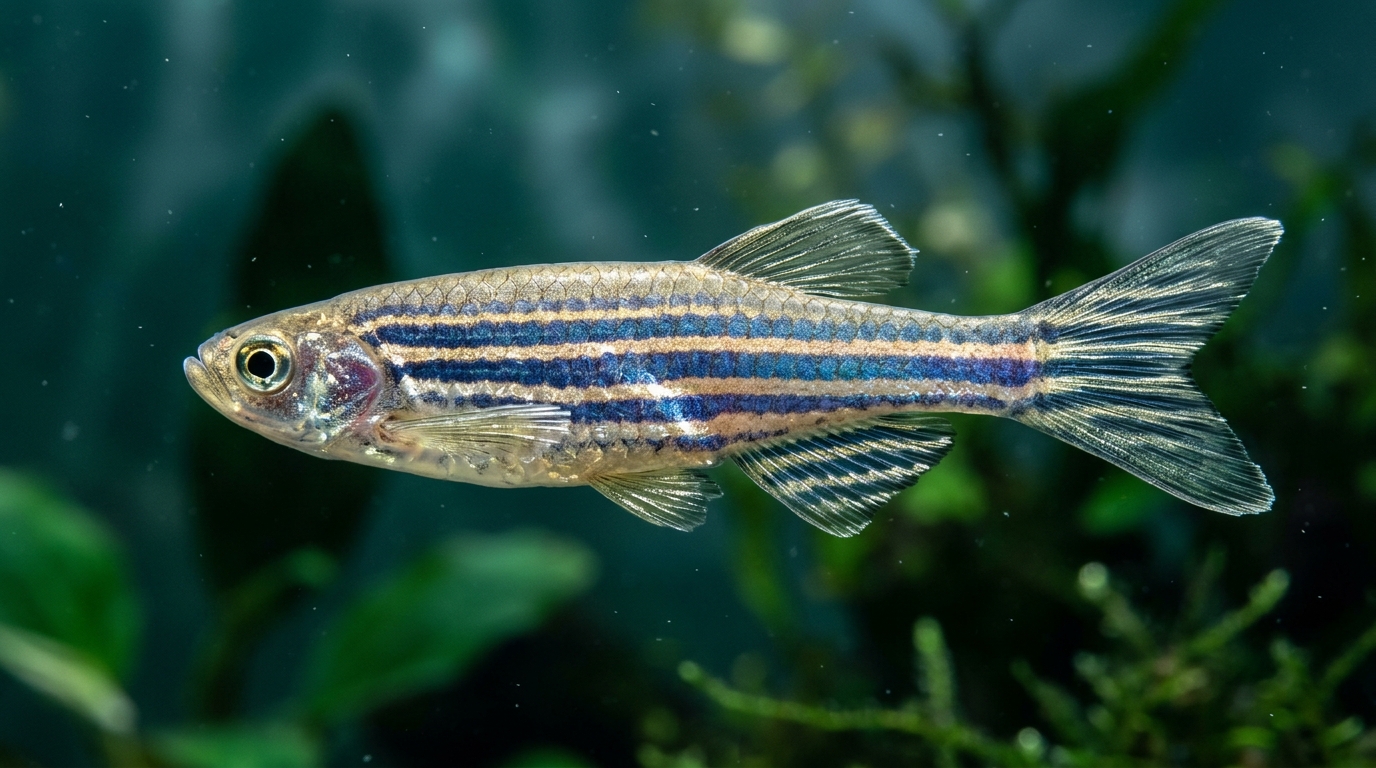
Researchers have provided new in vivo evidence that somatic variants in the TARDBP gene, identified in the brains of individuals with frontotemporal lobar degeneration with TDP-43 pathology type C (FTLD-TDP-C), can disrupt morphology and alter microglial numbers in zebrafish. Published in Acta Neuropathologica Communications, the study focuses on two specific somatic variants, L41F and R42H, located in the N-terminal domain of the TARDBP protein. This research addresses a significant gap in the field, as previous functional studies have predominantly concentrated on C-terminal variants, where most known pathogenic germline mutations are located.
The study, led by a team including Leslie E. Sanderson and John C. van Swieten, utilized zebrafish as a model organism to assess the pathogenicity of these somatic N-terminal variants in a living system. The researchers directly compared the effects of the somatic variants L41F and R42H against established germline TARDBP variants known to cause ALS and FTLD-TDP, specifically P112H, K263E, and I383V. This comparative approach allowed the team to evaluate whether the somatic variants identified in human brains exhibit similar toxic or loss-of-function properties to the germline mutations already established as disease-causing. The use of zebrafish provided a necessary in vivo context to test in silico predictions regarding the tolerance and impact of these specific amino acid changes.
The results indicated that the somatic variant L41F was poorly tolerated in in vivo toxicity assays, leading to a toxic gain-of-function when expressed ubiquitously in the zebrafish. This finding aligns with prior in silico predictions that suggested the variant might be deleterious. Furthermore, L41F demonstrated substantial loss-of-function in rescue experiments conducted in a tardbp-deficient background, indicating that the variant not only adds toxic effects but also impairs the normal function of the TDP-43 protein. In contrast, the germline variant K263E showed similar outcomes to L41F, while the somatic variant R42H and the germline variant I383V demonstrated lower levels of toxicity and loss-of-function in these specific assays, highlighting the variable impact of different mutations within the same gene.
An additional significant finding involved the immune response associated with these variants. The researchers detected an increase in microglia when R42H mRNA was overexpressed compared to wild-type. This observation indicates a potential immunogenic effect of the R42H variant.
To further investigate the role of the N-terminal domain, the team created a novel germline N-terminal tardbp single amino acid deletion, designated G37del, in zebrafish. This genetic modification resulted in severe morphological abnormalities in the zebrafish.
The study concludes that the data provide robust evidence for the pathogenicity of N-terminal variants, including L41F and R42H, which were found as somatic variants in FTLD-TDP-C. The findings reinforce the importance of considering somatic contributions in the etiology of FTLD-TDP, a field that has historically focused on germline mutations. The work suggests that the lack of N-terminal germline variants in patients may be due to their incompatibility with life, rather than a lack of pathogenic potential.
Subject of Research: Pathogenicity of somatic N-terminal TARDBP variants in FTLD-TDP-C using zebrafish models
Article Title: Somatic TARDBP variants identified in human brain with FTLD-TDP-C disrupt morphology and microglia numbers in zebrafish
Article References: Sanderson, L. E., Rajicic, A., van der Linde, H. C., Mol, M. O., Melhem, S., Barakat, T. S., van Rooij, J. G. J., van Ham, T. J., & van Swieten, J. C. (2026). Somatic TARDBP variants identified in human brain with FTLD-TDP-C disrupt morphology and microglia numbers in zebrafish. Acta Neuropathologica Communications. https://doi.org/10.1186/s40478-026-02417-5
Image Credits: AI Generated
DOI: 10.1186/s40478-026-02417-5
Keywords: TARDBP, FTLD-TDP-C, Somatic variants, Zebrafish model, Neurodegeneration, Microglia, TDP-43, Genetics, ALS, Frontotemporal lobar degeneration, Somatic, variants
News Source: Ophelia Keating. (November 7, 2026). Zebrafish Study Links Somatic TARDBP Variants to FTLD-TDP-C. Scienmag.