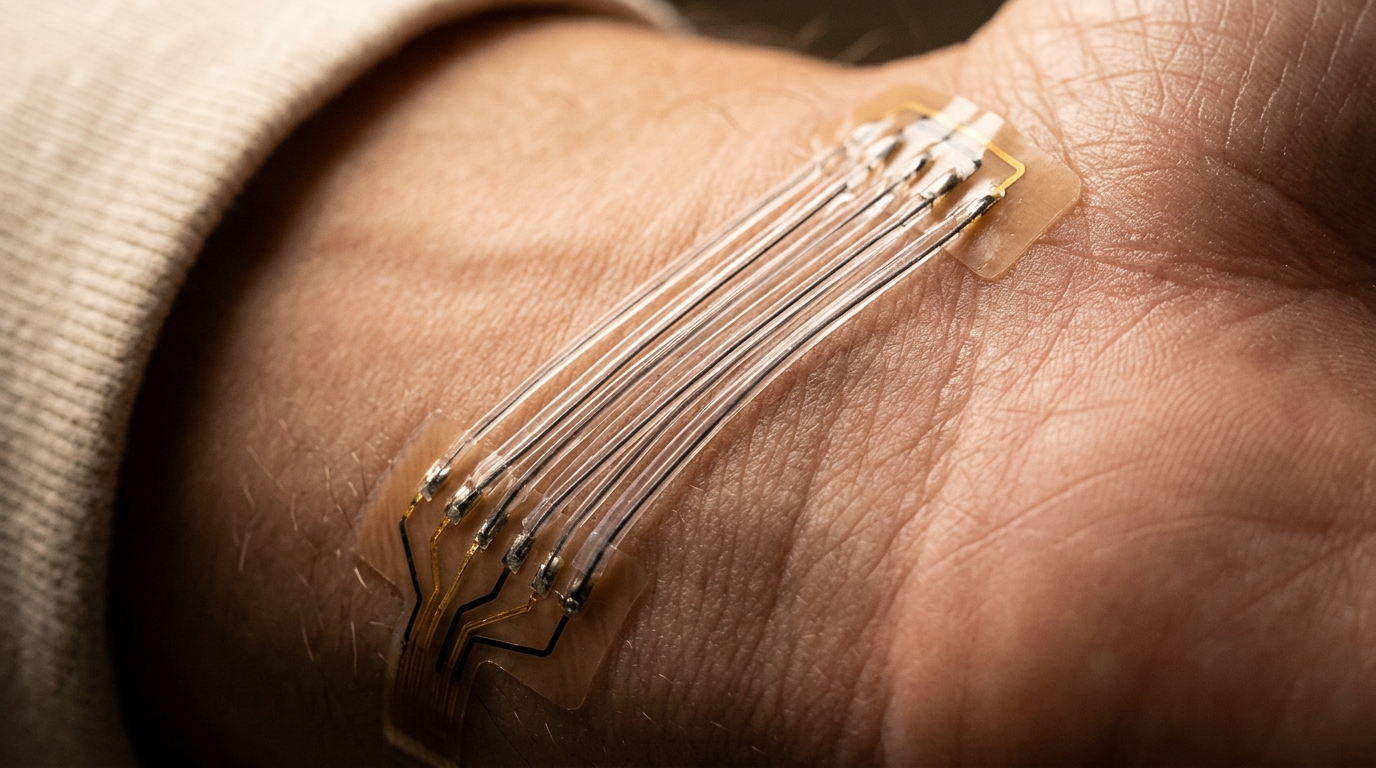
Researchers have fabricated core–shell structured conductive elastomeric fibers, designated as TGWs, to improve the mechanical stability and wearability of flexible textile strain sensors. The development addresses a persistent challenge in wearable sensing technology, where achieving desirable sensing performance often compromises the mechanical elasticity of highly elastic textile substrates. In the reported design, conductive coatings composed of graphene and waterborne polyurethane are applied onto thermoplastic polyamide elastomer fiber cores. The resulting composite fibers offer an integrated architecture intended to preserve flexibility while establishing reliable electrical pathways for strain detection.
The manufacturing strategy relies on surface modification and coating techniques to secure the conductive shell onto the elastomeric base. Specifically, thermoplastic polyamide elastomer fibers undergo an ethanol surface treatment followed by ultrasonic impregnation to deposit the graphene and waterborne polyurethane conductive layer. Following fiber fabrication, the team constructed a series of flexible strain sensors, labeled TGW1 through TGW5, by incorporating the core–shell conductive fibers into PGW-5 fabrics using stitching methods.
Systematic characterization showed that the TGW conductive elastomeric fibers retain high mechanical resilience and durability under repeated physical stress. At a constant tensile elongation of 50 percent, the fibers demonstrated an elastic recovery rate of 94.7 percent. The fibers also exhibited notable resilience against simulated laundering and mechanical abrasion, retaining more than 90 percent of their electrical conductivity after 20 washing cycles and enduring 200 friction cycles with resistance fluctuations remaining below 13 percent, confirming their initial operational stability.
When evaluated in integrated fabric assemblies, the stitched strain sensors delivered measurable improvements in mechanical performance relative to unmodified textiles. Notably, the TGW5 sensor configuration enhanced elastic recovery by 19.3 percent compared with the pristine fabric substrate after stitching.
In addition to improved elasticity, the sensor maintained functional moisture management necessary for practical wearable devices. The TGW5 fabric sensor exhibited a water vapor transmission rate of 5.06 kilograms per square meter per day, demonstrating that the inclusion of the TGW fibers does not significantly compromise breathability or wearability-related properties. The authors conclude that this core–shell fiber fabrication strategy provides a feasible engineering approach for designing textile-based strain sensors with potential utility in wearable sensing applications.
Subject of Research: Flexible strain sensors based on core–shell conductive elastomeric fibers
Article Title: Fabrication of flexible strain sensors based on core–shell conductive elastomeric fibers for improved mechanical stability and wearability-related properties
Article References: Zhao, W., Zhang, Z., Xie, X., & Zhang, X. (2026). Fabrication of flexible strain sensors based on core–shell conductive elastomeric fibers for improved mechanical stability and wearability-related properties. Journal of Materials Science. https://doi.org/10.1007/s10853-026-13967-3
Image Credits: AI Generated
DOI: 10.1007/s10853-026-13967-3
Keywords: flexible strain sensors, conductive fibers, core-shell fibers, wearable electronics, graphene, elastomeric textiles, smart fabrics, sensor durability, Fabrication, flexible, strain, sensors
News Source: Denise Maddox. (November 7, 2026). Core–Shell Elastomeric Fibers Improve Mechanical Stability in Wearable Strain Sensors. Scienmag.