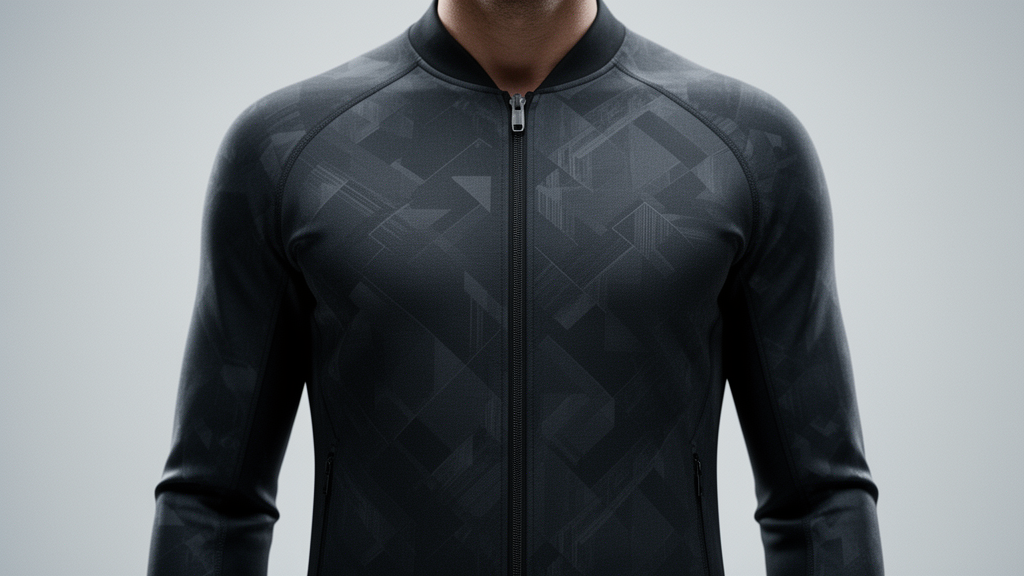
In an empirical investigation published in the journal Fashion and Textiles, researchers Shin Young Jang and Jisoo Ha evaluated how dynamic visual modifications in wearable technology influence consumer adoption decisions, discovering an unexpected psychological conflict between outward beauty and perceived utility. Smart clothing has steadily transitioned beyond utilitarian biosensing garments toward expressive garments capable of actively modifying their color, surface pattern, or physical silhouette through integrated responsive materials and electronic mechanisms. Grounding their research in established behavioral frameworks—specifically the Technology Acceptance Model, the Unified Theory of Acceptance and Use of Technology, and its extended consumer iteration UTAUT2—the authors tested how visual transformation shapes user attitudes. Rather than fostering immediate consumer enthusiasm, the experimental evaluation demonstrated that visually dynamic garments elicited a significant negative total effect on behavioral intention to use. This counterintuitive outcome emerged because the dynamic features triggered a statistical suppression pattern, in which a pronounced reduction in perceived usefulness effectively overpowered substantial gains in aesthetic appreciation.
To rigorously examine consumer responses to dynamic apparel, the investigators formulated a multidimensional theoretical model positioning visual transformation as the primary independent variable. Four psychological constructs were incorporated as potential mediators connecting dynamic garment features to behavioral intention: perceived aesthetics, perceived usefulness, hedonic motivation, and social influence. While traditional technology adoption models focus heavily on functional utility and effort expectations, the researchers omitted perceived ease of use because participants were assessing visual representations rather than engaging in physical handling of operational prototypes, a constraint validated through preliminary domain expert reviews. Perceived aesthetics was incorporated to capture subjective judgments of design creativity, visual harmony, and artistic appeal, attributes directly altered by shape-shifting or color-altering materials. Concurrently, hedonic motivation was included to capture experiential pleasure, playfulness, and emotional engagement, while social influence was evaluated to reflect peer validation and visible trendiness. The model hypothesized that while visual transformation would enrich sensory evaluations, its ultimate acceptance would hinge on whether functional evaluations remained intact.
A critical contribution of the research lies in establishing formal operational distinctions between two emerging garment classes: function-oriented smart clothing and expression-oriented smart clothing. Historically, academic literature treated electronic textiles as a uniform category, primarily emphasizing monitoring sensors or protective equipment. In this investigation, function-oriented garments were defined as apparel integrating technological utilities—such as physiological tracking or thermoregulation—while preserving a stable, conventional external appearance. In contrast, expression-oriented garments were defined as apparel that visibly alters appearance in response to external environmental cues or technological triggers through color transitions, dynamic pattern shifts, or silhouette reconfiguration. The authors highlighted recent material science developments, including heat-responsive tailoring systems, thermally induced shape deformation, electrochromic fibers capable of uniform chromatic shifts, and flexible textile displays. Although material scientists have developed advanced functional prototypes, commercial penetration remains limited, leaving consumer evaluations of dynamic aesthetic changes largely unexplored in real-world retail contexts.
The study evaluated these psychological mechanisms through a structured experimental survey administered to 350 female consumers in South Korea aged between 20 and 59 years. The researchers selected South Korea due to its advanced digital telecommunications infrastructure, high rate of wearable device adoption, and culturally prominent fashion market. Women were chosen as the sole target sample because market analyses identify female consumers as the primary demographic segment for design-led expressive fashion technologies, despite historically reporting lower overall technology adoption inclinations. To ensure baseline familiarity, participants were screened for prior awareness or direct usage of wearable items such as smartwatches, resulting in a sample where initial wearable usage was modest, with a mean of 0.700 and standard deviation of 0.459 on a binary scale. The sample age distribution was balanced across adult cohorts, comprising 23.7 percent in their twenties, 22.9 percent in their thirties, 23.1 percent in their forties, and 30.3 percent in their fifties. Statistical power calculations conducted a priori using G*Power software determined that a minimum of 263 respondents was required, confirming that the achieved sample of 350 participants provided robust analytical power.
Stimulus materials were developed and refined through a rigorous multistage validation protocol to guarantee unambiguous category classification. An initial online pretest involving 100 Korean women presented open-ended perception questions alongside 20 candidate product images representing varied smart apparel concepts. Participants classified images into functional or expressive categories based on provided operational definitions, allowing researchers to isolate items that generated consistent, non-overlapping agreement. From this process, four function-oriented stimuli—a T-shirt, a bodysuit, a sleeveless top, and outerwear—and four expression-oriented stimuli—two dresses featuring structural silhouette alterations and two garments exhibiting pattern or color changes—were selected. To eliminate uncontrolled confounding influences from personal chromatic preferences, all stimuli were standardized in grayscale, and transformative items were paired with before-and-after panels depicting the morphological changes. Seven independent academic and industry specialists in fashion design evaluated the finalized images, confirming that visual transitions were explicitly communicated and devoid of extraneous stylistic biases before deployment.
During the primary survey administration, participants completed randomized, counterbalanced visual evaluations of both smart clothing categories followed by structured five-point Likert assessment scales. The analytical framework relied on SPSS version 29 to execute exploratory factor analysis via principal axis factoring and direct oblimin rotation. Factor extraction confirmed sampling adequacy through Kaiser–Meyer–Olkin measures and Bartlett’s test of sphericity, retaining dimensions with eigenvalues exceeding 1.0 and confirming that all individual item factor loadings surpassed the 0.40 threshold. Construct reliability was substantiated with Cronbach’s alpha values exceeding the conventional 0.70 benchmark. To evaluate mediation and conditional indirect pathways, the authors employed Hayes’ PROCESS macro using Model 4 for parallel mediation and Model 14 for moderated mediation, running 5,000 bootstrap resamples to establish 95 percent confidence intervals without imposing arbitrary distributional assumptions.
Preliminary correlation and hierarchical regression analyses documented contrasting responses toward visually transformative apparel. Pearson correlation coefficients revealed that visual transformation correlated negatively with perceived usefulness at r = −0.120 and intention to use at r = −0.109, while showing a significant positive correlation with perceived aesthetics at r = 0.190. Visual transformation displayed no statistically significant linear correlations with hedonic motivation, social influence, chronological age, socio-cultural experience, technological experience, or individual innovativeness. In hierarchical regression models, visual transformation significantly enhanced perceived aesthetics, producing a standardized beta of 0.276 with a t-statistic of 5.113. Conversely, visual transformation exerted a statistically significant negative association on perceived usefulness, yielding a beta of −0.139 with a t-statistic of −3.700. Regression relationships between visual transformation and hedonic motivation (beta = −0.001) or social influence (beta = −0.043) failed to attain statistical significance, disproving initial assumptions that expressive garments automatically evoke perceived peer validation or experiential playfulness.
The formal mediation analysis through PROCESS Model 4 revealed the underlying suppression mechanism governing user rejection. The total effect of visual transformation on intention to use was negative and statistically significant (beta = −0.184, standard error = 0.064, 95 percent confidence interval from −0.309 to −0.059), failing to support the baseline hypothesis that visual transformation would uniformly elevate purchase interest. Examining indirect pathways confirmed that perceived usefulness served as a negative mediator, producing an indirect effect of −0.055 with a confidence interval between −0.101 and −0.019. In contrast, perceived aesthetics functioned as a positive mediator, generating an indirect effect of 0.019 with a confidence interval spanning 0.004 to 0.037. Neither hedonic motivation nor social influence demonstrated significant mediation. Because perceived usefulness functions as a primary evaluative anchor in consumer technology appraisal, its negative indirect pathway overwhelmed the positive aesthetic contribution, rendering the total indirect effect non-significant (−0.045, confidence interval −0.151 to 0.060) and driving the overall adoption intention downward.
Moderated mediation assessments utilizing PROCESS Model 14 demonstrated that experiential and demographic background factors substantially conditioned these mediating pathways, particularly regarding perceived usefulness. Age significantly moderated the relationship between perceived usefulness and intention to use (beta = −0.060, p = 0.035), indicating that younger consumers exhibited a significantly stronger negative indirect effect via reduced usefulness (−0.066) compared to older consumers (−0.037). Similarly, socio-cultural experience—defined as exposure to international travel, multicultural environments, and foreign residency—moderated the usefulness pathway (beta = 0.084, p = 0.006), such that individuals with high socio-cultural exposure penalized garments exhibiting low functional clarity far more severely (−0.072) than those with minimal exposure (−0.036). Prior technological experience with wearable devices also magnified the negative indirect effect through usefulness (beta = 0.049, p = 0.013), intensifying adoption penalties among tech-savvy respondents. Although individual innovativeness moderated the direct path between perceived usefulness and intention (beta = 0.094, p = 0.014), the index of moderated mediation was non-significant, showing that general innovativeness does not alleviate the negative functional appraisal of transformative clothing.
The study concludes that visually transformative smart clothing operates as a psychologically complex fashion category whose market viability depends on establishing unambiguous functional credibility. When apparel changes shape or color without clear utilitarian purpose, consumers perceive the mechanism as ornamental or fragile novelty rather than practical innovation. The authors note several methodological limitations, including the reliance on two-dimensional grayscale visual stimuli rather than tactile prototype interactions, self-reported survey measures, and an exclusive sample of South Korean women without longitudinal post-adoption data. Future investigations must explore qualitative boundaries between purposeful aesthetic functions and superficial embellishments to assist textile engineers and fashion designers in developing responsive garments that balance visual spectacle with dependable, transparent utility.
Subject of Research: Consumer adoption mechanisms and psychological responses to visually transformative smart clothing
Article Title: Balancing aesthetics and usefulness: how visual transformation influences consumers’ intention to use smart clothing
Article References: Jang, S. Y., & Ha, J. (2026). Balancing aesthetics and usefulness: how visual transformation influences consumers’ intention to use smart clothing. Fashion and Textiles, 13(1), Article 18. https://doi.org/10.1186/s40691-026-00467-w
Image Credits: AI Generated
DOI: 10.1186/s40691-026-00467-w
Keywords: smart clothing, wearable technology, visual transformation, perceived usefulness, perceived aesthetics, consumer behavior, technology acceptance model, fashion technology, moderated mediation, suppression effect, Balancing, aesthetics
News Source: Denise Maddox. (November 7, 2026). Dynamic Visual Changes in Smart Clothing Suppress Consumer Adoption Intentions. Scienmag.