• HOME
  • NEWS
  • EXPLORE
    • CAREER
      • Companies
      • Jobs
    • EVENTS
    • iGEM
      • News
      • Team
    • PHOTOS
    • VIDEO
    • WIKI
  • BLOG
  • COMMUNITY
    • FACEBOOK
    • INSTAGRAM
    • TWITTER
Sunday, November 8, 2026
BIOENGINEER.ORG
No Result
View All Result
  • Login
  • HOME
  • NEWS
  • EXPLORE
    • CAREER
      • Companies
      • Jobs
        • Lecturer
        • PhD Studentship
        • Postdoc
        • Research Assistant
    • EVENTS
    • iGEM
      • News
      • Team
    • PHOTOS
    • VIDEO
    • WIKI
  • BLOG
  • COMMUNITY
    • FACEBOOK
    • INSTAGRAM
    • TWITTER
No Result
View All Result
Bioengineer.org
No Result
View All Result
Home NEWS Science News Cancer

Thyroid nodule AI segmentation models falter across medical centers

by
November 7, 2026
in Cancer, Health
Reading Time: 2 mins read
0
Thyroid nodule AI segmentation models falter across medical centers

Thyroid nodule AI segmentation models falter across medical centers

Share on FacebookShare on TwitterShare on LinkedinShare on RedditShare on Telegram

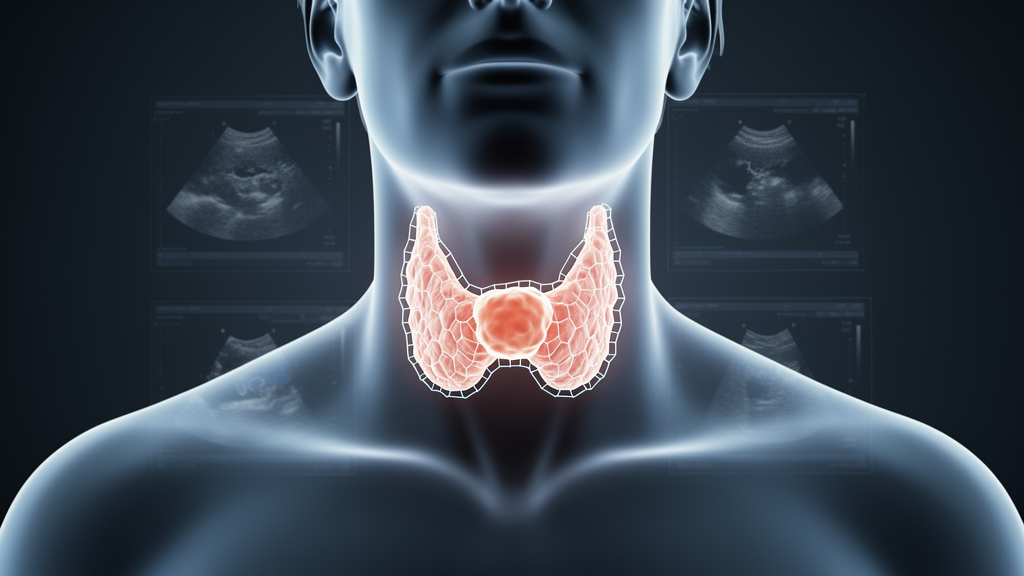
Artificial intelligence models that trace the outlines of thyroid nodules on ultrasound scans perform far less reliably when moved between medical centers, according to a comparative study published in the journal Cancer Imaging. Released online on 2 November 2026 as an open access article, the study benchmarked existing segmentation models under identical conditions and found that every model tested showed a consistent and substantial drop in accuracy across centers, with TNet achieving the best overall performance.

Segmentation models draw boundaries around thyroid nodules within an image, a step that determines what measurements a downstream diagnostic system can make. Because nodule size, shape and margin characteristics feed into risk assessment, an inaccurate boundary can distort clinical interpretation. The authors set out to compare the performance of existing thyroid nodule ultrasound segmentation models and to provide evidence for their clinical application, rather than to introduce a new architecture of their own.

To make the comparison fair, the team trained and evaluated all models under standardized conditions on two datasets. The first was the TN5000 public dataset, containing 5,000 images, which was split into training and internal validation sets. The second was an institutional dataset of 1,452 images, held back entirely and used as an independent external test set, so no model could tune itself to the external data.

TNet achieved the best overall performance, recording an external Dice score of 0.812. The Dice coefficient measures the overlap between the boundary a model draws and the boundary marked as correct, with 1 representing perfect agreement, so 0.812 indicates substantial but imperfect overlap on unseen external data. LGFFM showed higher recall, meaning it captured nodule regions while missing less of them, though it did not lead on overall overlap.

All models exhibited a consistent and substantial decline in performance over cross-center validation, so the loss of accuracy was not confined to one weak model. Non-thyroid-specific models performed worst, indicating that general-purpose architectures not tailored to thyroid ultrasound imagery fared poorly in this setting.

The authors concluded that existing models have limited cross-center generalizability, and that TNet performed best among the evaluated models in this experimental setting, a phrasing scoped to the specific datasets and conditions of the study. They stated that broader clinical adoption would require prospective multicenter validation before routine use could be justified. The work was published as a Research article under open access, and the journal notes that the early version is citable and carries a permanent DOI while remaining subject to further edits before the final Version of Record replaces it.

Subject of Research: Comparative evaluation of artificial intelligence models that segment thyroid nodules on ultrasound images

Article Title: Comparative evaluation of thyroid nodule ultrasound segmentation models

Article References: Li, C., Tang, Y., Wang, Y., Tan, M., Yao, L., Luo, Z., & Li, W. (2026). Comparative evaluation of thyroid nodule ultrasound segmentation models. Cancer Imaging. https://doi.org/10.1186/s40644-026-01149-y

Image Credits: AI Generated

DOI: 10.1186/s40644-026-01149-y

Keywords: thyroid nodule, ultrasound, image segmentation, deep learning, TNet, Dice score, cross-center validation, generalizability, TN5000 dataset, medical imaging, LGFFM, Cancer Imaging

News Source: Nathaniel Bowman. (November 7, 2026). Thyroid nodule AI segmentation models falter across medical centers. Scienmag.

Tags: cancer imagingcross-center validationdeep learningDice scoregeneralizabilityimage segmentationLGFFMMedical Imagingthyroid noduleTN5000 datasetTNetultrasound
Share12Tweet7Share2ShareShareShare1

Related Posts

Study Compares Core Muscle Electromyography in Snatch Pulls and Specialized Exercises

Study Compares Core Muscle Electromyography in Snatch Pulls and Specialized Exercises

November 8, 2026
Severe cycling injuries: BMX riders face highest risks and slowest recoveries in Olympic-cycle study

Severe injuries in competitive cycling during an Olympic cycle: injury patterns, time loss, and return-to-performance outcomes

November 8, 2026

Four Social Support Profiles Emerge Among Migrant Older Adults, Study Finds

November 8, 2026

Electric toothbrush generates its own power to fight plaque bacteria

November 8, 2026

POPULAR NEWS

  • Four Social Support Profiles Emerge Among Migrant Older Adults, Study Finds

    Four Social Support Profiles Emerge Among Migrant Older Adults, Study Finds

    29 shares
    Share 12 Tweet 7
  • Younger Alzheimer’s patients carry heavier, faster-spreading tau burden, PET study finds

    29 shares
    Share 12 Tweet 7
  • Electric toothbrush generates its own power to fight plaque bacteria

    29 shares
    Share 12 Tweet 7
  • ASPM mutations derail human neural stem cells and explain microcephaly sensitivity

    29 shares
    Share 12 Tweet 7

About

We bring you the latest biotechnology news from best research centers and universities around the world. Check our website.

Follow us

Recent News

Study Compares Core Muscle Electromyography in Snatch Pulls and Specialized Exercises

Wind Tunnel Study Shows How Counter-Rotating Dual Turbines Steer Wakes

Severe injuries in competitive cycling during an Olympic cycle: injury patterns, time loss, and return-to-performance outcomes

Subscribe to Blog via Email

Enter your email address to subscribe to this blog and receive notifications of new posts by email.

Join 86 other subscribers
  • Contact Us

Bioengineer.org © Copyright 2023 All Rights Reserved.

Welcome Back!

Login to your account below

Forgotten Password?

Retrieve your password

Please enter your username or email address to reset your password.

Log In
No Result
View All Result
  • Homepages
    • Home Page 1
    • Home Page 2
  • News
  • National
  • Business
  • Health
  • Lifestyle
  • Science

Bioengineer.org © Copyright 2023 All Rights Reserved.