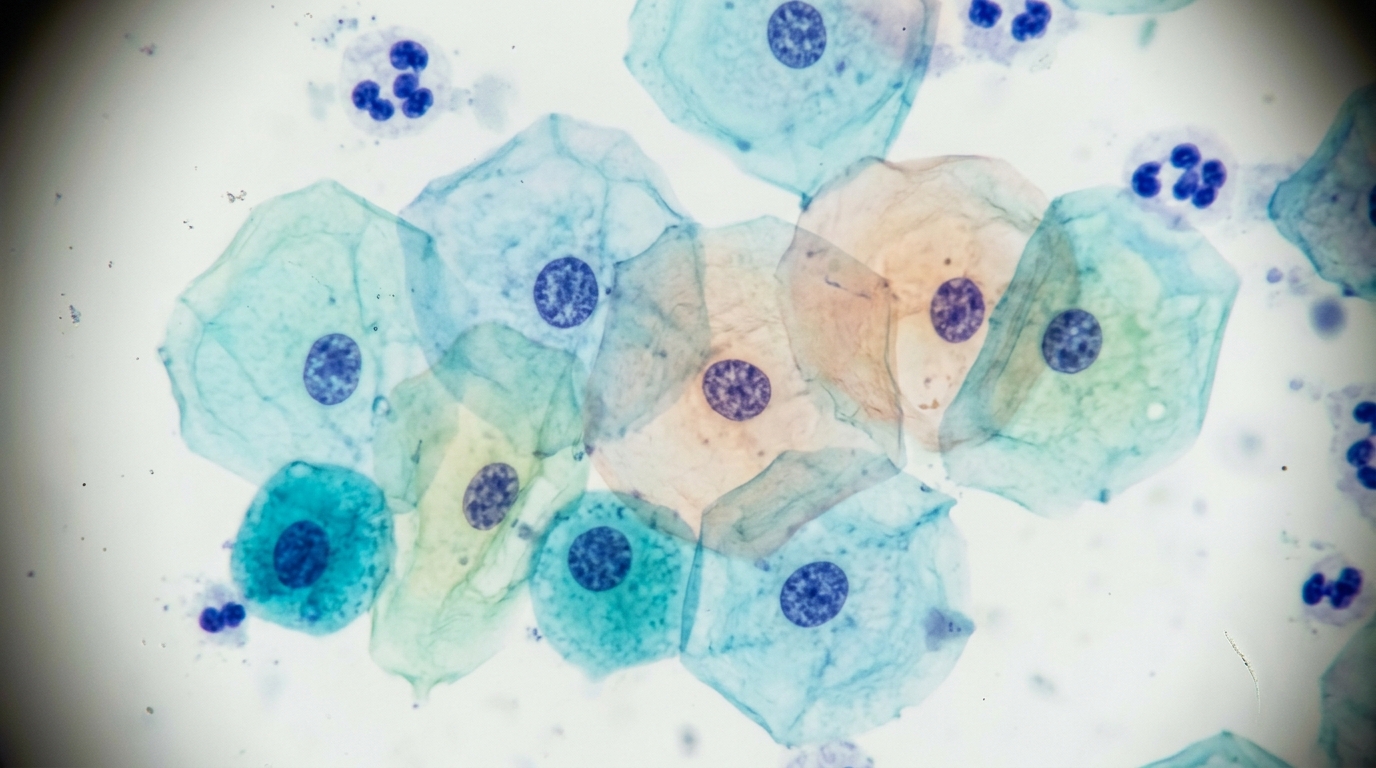
In a community-based cervical cancer screening evaluation conducted in Wuhan, China, researchers evaluated nine hypothesized screening strategies combining artificial intelligence-assisted liquid-based cytology and high-risk human papillomavirus genotyping. The research analyzed data from 284,002 women who underwent screening with both artificial intelligence-assisted liquid-based cytology (AI-LBC) and high-risk human papillomavirus (HR-HPV) testing. The study authors reported that evidence comparing cervical cancer screening strategies that combine AI-LBC and HR-HPV testing across large-scale populations has remained limited. The primary investigation evaluated the performance of these nine hypothesized screening strategies in detecting cervical intraepithelial neoplasia grade 2 or worse (CIN2+) and measured their corresponding colposcopy referral rates.
To ensure rigorous and reliable comparisons across the cohort of 284,002 women, the researchers evaluated all diagnostic performance metrics after correcting for verification bias. The nine hypothesized protocols analyzed in the study encompassed standalone testing methods, triage-based testing protocols utilizing reflex secondary tests, and combined co-testing approaches, allowing the authors to examine diagnostic sensitivity, Youden’s index, and colposcopy referral burdens across different clinical pathways.
When comparing standalone screening approaches after correcting for verification bias, HR-HPV testing alone (designated as Strategy 4) demonstrated higher sensitivity and a higher Youden’s index than AI-LBC alone (designated as Strategy 1), but required a higher referral rate. Specifically, Strategy 4 achieved a sensitivity of 94.93 percent compared with 83.88 percent for Strategy 1. Strategy 4 also achieved a higher Youden’s index of 0.864, compared with 0.789 for Strategy 1. However, Strategy 4 required a colposcopy referral rate of 9.05 percent, whereas Strategy 1 required a colposcopy referral rate of 5.49 percent.
The investigators also examined triage-based screening strategies, which demonstrated substantially reduced colposcopy referral rates compared with standalone HR-HPV testing. Strategy 3, which utilized AI-LBC with reflex HR-HPV testing, achieved a sensitivity of 82.90 percent, a colposcopy referral rate of 2.67 percent, and a Youden’s index of 0.807. In comparison, Strategy 7, which utilized HR-HPV genotyping with reflex AI-LBC, demonstrated a sensitivity of 92.68 percent, a Youden’s index of 0.899, and a colposcopy referral rate of 3.34 percent.
Co-testing of AI-LBC and HR-HPV genotyping, designated as Strategy 9, achieved the highest Youden’s index among all nine evaluated screening strategies at 0.932. Strategy 9 also demonstrated a sensitivity of 96.37 percent and a colposcopy referral rate of 3.70 percent. These findings suggest that AI-LBC performs well as a standalone screening method, as a triage tool, or as a component of a co-testing strategy in cervical cancer screening programs. The authors concluded that when HR-HPV genotyping is available, Strategy 7 or Strategy 9 may be considered, depending on the trade-off between detection performance and referral burden.
The peer-reviewed, accepted research was authored by Qin Yan, Yanhong Gong, Da Zhou, Rong Yang, Ke Peng, Jing Wang, Zina Fan, Tan Wang, Lan Yao, Aifen Zhou, Jing Ma, Xiaoxv Yin, and colleagues. Published in Nature Communications on 30 October 2026 under digital object identifier 10.1038/s41467-026-78739-8, the study was shared early to provide faster access to accepted research. The journal noted that this citable version carries a permanent DOI but remains subject to further edits and will be replaced automatically by the final Version of Record.
Subject of Research: Comparison of AI-assisted cytology and HPV testing strategies for cervical cancer screening
Article Title: Performance of artificial intelligence-assisted cytology and high-risk human papillomavirus testing for cervical cancer screening
Article References: Yan, Q., Gong, Y., Zhou, D., Yang, R., Peng, K., Wang, J., Fan, Z., Wang, T., Yao, L., Zhou, A., Ma, J., & Yin, X. (2026). Performance of artificial intelligence-assisted cytology and high-risk human papillomavirus testing for cervical cancer screening. Nature Communications. https://doi.org/10.1038/s41467-026-78739-8
Image Credits: AI Generated
DOI: 10.1038/s41467-026-78739-8
Keywords: cervical cancer screening, artificial intelligence, cytology, HPV testing, diagnostic accuracy, medical research, public health, Wuhan, Nature Communications, Performance, artificial, intelligence-assisted
News Source: Ophelia Keating. (November 7, 2026). AI Cytology and HPV Testing Compared in Large Cervical Screening Study. Scienmag.