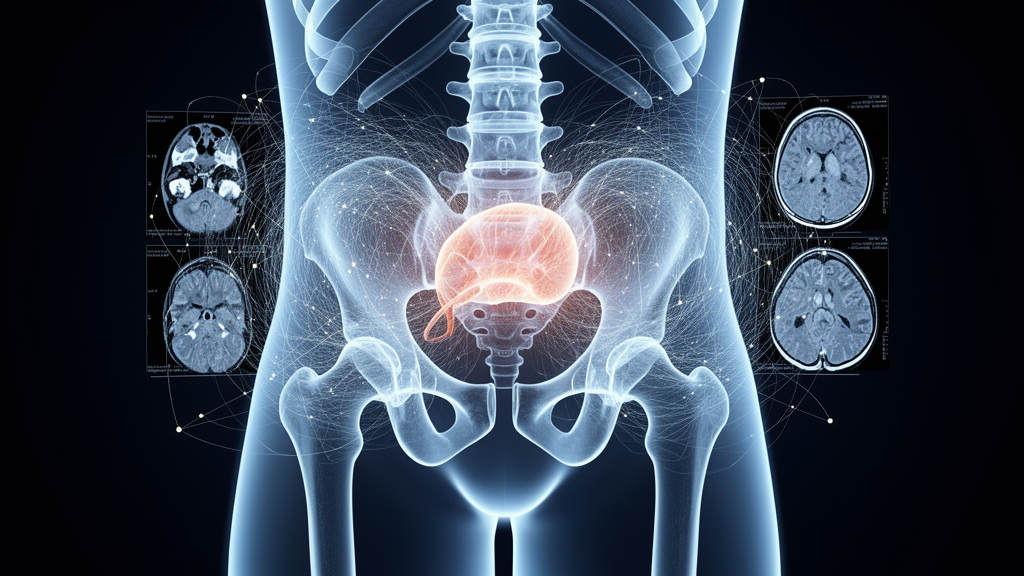
A comprehensive narrative review evaluating more than eighty published studies reveals that artificial intelligence applied to multiparametric magnetic resonance imaging substantially outperforms conventional clinical tools in predicting biochemical recurrence among prostate cancer patients. Published in the African Journal of Urology by an international research team, the synthesis assesses evidence through May 2026 and demonstrates that radiomics models achieve area under the receiver operating characteristic curve values between 0.72 and 0.97, while deep learning architectures attain concordance index values up to 0.83. The authors emphasize that these two evaluation metrics measure fundamentally distinct statistical properties and must not be treated interchangeably; binary receiver operating curves assess threshold discrimination, whereas concordance indices quantify time-to-event survival ranking. Although this wide performance range reflects substantial methodological and institutional heterogeneity across published literature, combining computational image analysis with patient data consistently yields superior predictive accuracy over traditional clinical nomograms.
Prostate cancer represents a major global health burden, ranking second in male cancer incidence worldwide with approximately 1.47 million new diagnoses and 397,000 deaths in 2022 GLOBOCAN estimates. Age-standardized incidence rates remain highest across Australia, New Zealand, North America, and northern Europe, while sub-Saharan Africa and Latin America face disproportionately elevated mortality. Primary curative treatments consist of radical prostatectomy and radiation therapy, yet biochemical recurrence emerges in 10% to 40% of surgical patients and 20% to 30% of radiation patients within ten years. Following surgery, recurrence is commonly defined as two consecutive prostate-specific antigen readings of 0.2 nanograms per milliliter or greater, whereas radiation cohorts apply the Phoenix consensus requiring a rise of 2.0 nanograms per milliliter above nadir. Landmark findings by Pound and colleagues revealed that recurrence serves as the initial clinical harbinger of metastatic spread, exhibiting a median duration of eight years to metastasis and five years to death, with doubling times under ten months elevating metastatic probability above 50%.
Risk stratification currently relies on clinical and pathological frameworks such as the D’Amico risk classification, the Cancer of the Prostate Risk Assessment score, and postoperative nomograms. Preoperative CAPRA scoring integrates baseline prostate-specific antigen, biopsy Gleason grade, clinical T-stage, positive core percentages, and patient age, demonstrating concordance indices between 0.60 and 0.70 in validation cohorts. The postoperative CAPRA-S tool incorporates pathological stage, surgical Gleason score, margin status, and lymph node involvement, reaching a concordance index of 0.77 in its development cohort. Despite widespread adoption, these traditional tools exhibit notable limitations. They do not capture complex intra-tumoral spatial heterogeneity, they depend on needle biopsies vulnerable to tissue sampling errors, and they omit phenotypic information visible on baseline imaging. Most critically, predictive discrimination degrades within intermediate-risk groups, where therapeutic decision-making is most sensitive. Consequently, integrating multiparametric magnetic resonance imaging parameters into prognostic models addresses an urgent unmet clinical need.
Multiparametric magnetic resonance imaging addresses these gaps by combining anatomical and functional sequences. Standard protocols aligned with PI-RADS version 2.1 recommend 3 Tesla acquisitions — or optimized 1.5 Tesla with endorectal coils — uniting T2-weighted imaging, diffusion-weighted imaging with apparent diffusion coefficient mapping, and dynamic contrast-enhanced imaging. T2-weighted imaging assesses zonal anatomy and extracapsular extension, while apparent diffusion coefficient maps quantify water restriction, where aggressive cancer exhibits values from below 700 to below 1000 square micrometers per second. Dynamic contrast imaging derives pharmacokinetic transfer parameters including Ktrans, Kep, and volume fraction Ve, wherein Kep equals Ktrans divided by Ve. Non-contrast bi-parametric imaging offers an efficient alternative with comparable performance. The review emphasizes that PI-RADS was created for pre-biopsy cancer detection rather than recurrence prognosis. Nonetheless, adding imaging parameters to clinical tools improves accuracy; the PIPEN model evaluated by Luzzago and colleagues achieved concordance indices of 0.74 in training and 0.73 in validation cohorts, outperforming clinical metrics.
The canonical radiomics workflow converts medical imaging scans into high-dimensional quantitative data to extract hidden biological information. This analytical sequence progresses through image acquisition, scanner harmonization, region of interest segmentation, feature extraction, test-retest reproducibility filtering, feature selection, and model training. Extracted metrics encompass first-order intensity values, shape descriptors, and complex texture matrices including the gray-level co-occurrence matrix and run-length matrix. Although Image Biomarker Standardization Initiative guidelines standardized feature definitions across platforms such as PyRadiomics, LIFEx, and RaCaT, commercial software variations still induce cross-study variance. The narrative review highlights a frequent methodological deficiency: investigators routinely perform feature selection using LASSO regression, random forests, or minimum redundancy–maximum relevance without initial intraclass correlation coefficient filtering to eliminate non-reproducible features. Omitting this filtering step produces inflated accuracy estimates and diminishes generalizability. Additionally, extracting hundreds of parameters from cohorts of only 50 to 500 individuals creates severe overfitting hazards requiring regularized modeling.
Pooled evidence confirms the additive diagnostic power of clinical-radiomics integration while exposing persistent validation deficits. In a 2025 meta-analysis encompassing 24 studies and 14 pooled cohorts, Salimi and colleagues reported an aggregate validation area under the curve of 0.75 for radiomics models alone, rising to 0.88 when combining radiomics with clinical variables. Nevertheless, only 40% of included studies incorporated external validation cohorts, mean Methodological Radiomics Scores reached only 65.68%, and QUADAS-2 assessments revealed substantial risks of bias. Because I-squared heterogeneity statistics were inconsistently reported, pooled figures represent approximate central tendencies. Demonstrating multicenter application, Wu and colleagues validated a bi-parametric magnetic resonance model across 666 patients at four centers that accurately predicted recurrence without requiring post-operative pathology. In surveillance settings, magnetic resonance imaging faces interpretive challenges from surgical bed distortion, while molecular imaging with PSMA-PET has largely superseded MRI for recurrence localization at low prostate-specific antigen levels under 2024 European clinical guidelines.
Deep learning architectures operating directly on raw voxel data consistently surpass handcrafted radiomics by extracting hierarchical spatial representations without manual feature engineering. Convolutional neural networks such as ResNet and EfficientNet adapt effectively to prostate imaging cohorts through transfer learning, while deep survival analysis networks model continuous time-to-recurrence trajectories. In a comparative evaluation of 437 surgical patients, Lee and colleagues demonstrated that an EfficientNet-B0 model integrating clinical variables achieved a cross-validated concordance index of 0.74, significantly outperforming conventional radiomics at 0.66. Similarly, Yan and colleagues evaluated the deep-radiomic DRS-BCR signature across 485 patients from three medical institutions, securing a concordance index of 0.802 across primary and validation cohorts, significantly outperforming CAPRA-S at 0.677 and reducing false-positive predictions by approximately one-third. In advanced disease, Wang and colleagues reported that deep-learning radiomics reached an area under the curve of 0.954 on apparent diffusion coefficient images, substantially outperforming clinical models and conventional radiomics.
Research investigating artificial intelligence for post-radiation recurrence prediction remains comparatively sparse but addresses distinct clinical considerations. Bourbonne and colleagues demonstrated proof-of-concept in 2019, showing that pre-treatment radiomics predicted recurrence with an area under the curve of 0.76. Subsequent radiation studies include Zhong and colleagues reporting an area under the curve of 0.73 across 91 patients, Nanekaran and colleagues achieving 0.84 using early fusion machine learning, and Dutta and colleagues obtaining 0.89 across 142 patients by segmenting whole-prostate volumes. The review notes that concurrent androgen deprivation therapy represents an unaddressed methodological confounder in radiation cohorts, as hormonal therapy alters antigen kinetics without being incorporated into existing models. In parallel, investigators emphasize the prognostic value of peri-lesional tissue features capturing microenvironmental changes. Zhang and colleagues demonstrated in 140 patients that combining peri-lesional with intra-lesional features increased discrimination from 0.90 to 0.94 in decision curve analysis, while systematic review findings by Rodrigues and colleagues confirmed that whole-gland bi-parametric radiomics outperforms index-lesion modeling.
Multimodal artificial intelligence integrating magnetic resonance imaging with digital pathology, molecular imaging, and genomics represents an expanding frontier. Combining pre-treatment bi-parametric magnetic resonance radiomics with post-operative digital pathomics in an integrated classifier by Stringer and colleagues achieved an external validation area under the curve of 0.80, outperforming single-modality classifiers. In digital pathology, Pinckaers and colleagues demonstrated that deep learning networks identify histological patterns including cribriform growth and perineural invasion as primary drivers of recurrence prediction. In molecular imaging, PSMA-PET demonstrates superior sensitivity over magnetic resonance imaging for recurrence detection, with pooled meta-analytic sensitivity reaching 75% to 80% compared to 50% to 60% for magnetic resonance, although PSMA sensitivity drops to 40% to 50% at prostate-specific antigen levels below 0.5 nanograms per milliliter. Crucially, the authors distinguish tissue-based genomic classifiers — such as Decipher, which predicts recurrence with concordance indices of 0.74 to 0.77 using physical biopsy specimens — from non-invasive imaging radiogenomics. Taheri and colleagues illustrated imaging-genomic synergy, showing that combining magnetic resonance radiomics with Ki-67 and PTEN markers in a survival model significantly improved recurrence predictions over radiomics alone.
Routine clinical translation faces persistent methodological hurdles. A 2024 systematic review by Liu and colleagues examining 35 post-prostatectomy prediction studies revealed that fewer than 30% conducted external validation, and fewer than 10% utilized prospective designs. The overwhelming reliance on single-center retrospective cohorts containing fewer than 300 patients generates substantial overfitting risks and limits real-world generalizability. Furthermore, existing studies focus almost exclusively on discrimination metrics while completely ignoring model calibration — the agreement between predicted probabilities and observed event rates — which must be assessed via Hosmer-Lemeshow tests and calibration curves. To establish clinical trustworthiness and satisfy regulatory standards outlined by the Food and Drug Administration and European Medicines Agency, algorithms must incorporate explainability techniques like Grad-CAM and SHAP, while adhering to TRIPOD-AI and METRICS reporting guidelines. Collaborative paradigms such as federated learning offer potential pathways to train models across distributed datasets while respecting patient privacy, though researchers must address communication costs. Finally, global health equity demands urgent attention: because advanced 3 Tesla scanners remain scarce across low- and middle-income regions where mortality remains disproportionately elevated, developing validated, non-contrast bi-parametric magnetic resonance models represents a critical prerequisite for equitable clinical deployment.
Subject of Research: Artificial intelligence prediction of prostate cancer biochemical recurrence using multiparametric magnetic resonance imaging
Article Title: Artificial intelligence-based prediction of biochemical recurrence of prostate cancer using multiparametric mri: a critical narrative review
Article References: Narimani, N., Atarod, M. M., Zolfi, E., Shahrokhi-Damavand, R., Maleki, H., Farshid, S., Noroozi, N., Dastgheib, A., Naseri, A., Mehdikhani, B., Shiri, A., & Neamatzadeh, H. (2026). Artificial intelligence-based prediction of biochemical recurrence of prostate cancer using multiparametric mri: a critical narrative review. African Journal of Urology, 32(1), Article 55. https://doi.org/10.1186/s12301-026-00604-3
Image Credits: AI Generated
DOI: 10.1186/s12301-026-00604-3
Keywords: Prostate Cancer, Biochemical Recurrence, Multiparametric MRI, Artificial Intelligence, Radiomics, Deep Learning, Machine Learning, Prostatectomy, Radiation Therapy, PSMA-PET, Artificial, intelligence-based
News Source: Blake Davidson. (November 7, 2026). Artificial Intelligence Enhances Prostate Cancer Recurrence Prediction Using Magnetic Resonance Imaging. Scienmag.