• HOME
  • NEWS
  • EXPLORE
    • CAREER
      • Companies
      • Jobs
    • EVENTS
    • iGEM
      • News
      • Team
    • PHOTOS
    • VIDEO
    • WIKI
  • BLOG
  • COMMUNITY
    • FACEBOOK
    • INSTAGRAM
    • TWITTER
Sunday, November 8, 2026
BIOENGINEER.ORG
No Result
View All Result
  • Login
  • HOME
  • NEWS
  • EXPLORE
    • CAREER
      • Companies
      • Jobs
        • Lecturer
        • PhD Studentship
        • Postdoc
        • Research Assistant
    • EVENTS
    • iGEM
      • News
      • Team
    • PHOTOS
    • VIDEO
    • WIKI
  • BLOG
  • COMMUNITY
    • FACEBOOK
    • INSTAGRAM
    • TWITTER
No Result
View All Result
Bioengineer.org
No Result
View All Result
Home NEWS Science News Health

EZHIP Links Dual Differentiation Programs During Pediatric PFA Ependymoma Progression

by
November 7, 2026
in Health
Reading Time: 2 mins read
0
EZHIP Links Dual Differentiation Programs During Pediatric PFA Ependymoma Progression

EZHIP Links Dual Differentiation Programs During Pediatric PFA Ependymoma Progression

Share on FacebookShare on TwitterShare on LinkedinShare on RedditShare on Telegram

Increased expression of cilia-related genes, particularly CAPS and DNAAF1, characterizes posterior fossa group A ependymoma compared to supratentorial tumors harboring zinc finger translocation-associated protein fusions, according to an integrative molecular study. Pediatric high-risk ependymomas arise across the neuroaxis, with posterior fossa group A tumors exhibiting distinctly poor overall survival linked to frequent recurrence and limited therapeutic response.

The aggressive clinical behavior of this high-risk subtype has driven efforts to identify its underlying epigenetic drivers and mechanisms. While stem-like and progenitor-like cell populations are abundant in these tumors, EZH2 inhibitory protein, known as EZHIP, has been identified as a driver of epigenetic reprogramming whose role in cellular differentiation during tumor progression remained uncharacterized.

To investigate the interactions between EZHIP, cilia-associated genes, and mesenchymal markers, the authors integrated multi-omic data from patient cohorts and publicly available datasets. Their profiling evaluated RNA expression across 58 tissue specimens, DNA methylation patterns across 37 specimens, chromatin immunoprecipitation sequencing for H3K27me3, H3K27ac, and EZHIP across four samples, and multiplex immunohistochemistry across 15 specimens.

Functional genomic profiling revealed that EZHIP binds directly to CAPS gene loci. Knockdown of EZHIP in posterior fossa group A ependymoma cells led to significantly reduced CAPS levels, establishing an association between EZHIP and neuro-epithelial differentiation programs. In addition, the investigators detected a strong correlation between CAPS, EZHIP, and chromosome 1q gain that was enriched in progressive disease specimens.

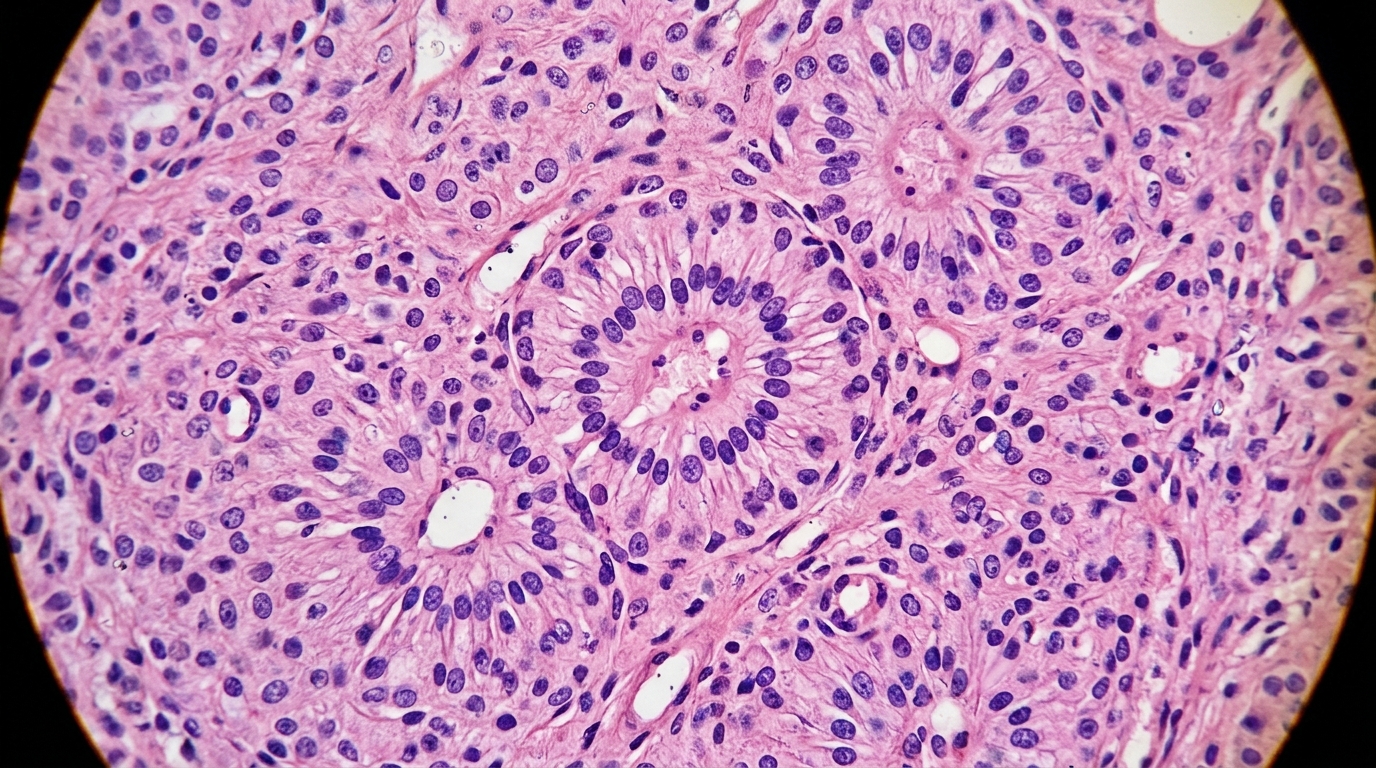
Tissue reorganization during tumor progression produced layered pseudorosette structures characterized by spatial compartmentalization. Within these formations, CA9-positive mesenchymal compartments encircled CAPS-positive ciliated cells, with both distinct cell populations expressing EZHIP, revealing the epigenetic and structural coordination between neuro-epithelial and mesenchymal differentiation programs during progression.

Subject of Research: EZHIP regulation of cellular differentiation programs in PFA ependymoma progression

Article Title: EZHIP links neuro-epithelial and mesenchymal tumor programs during progression of PFA ependymoma

Article References: Jaunecker, C. N., Mager, L., Bruckner, K., Zehetbauer, T., Tukmachi, D. A., Freund, J., Machreich, S., Pacher, L., Pirker, C., Jenseit, A., Hübner, J. M., Wang, S., Kerschbaumer, L., Dorfer, C., Rössler, K., Stepien, N., Krause, E., Haberler, C., Kool, M., … Lötsch, D. (2026). EZHIP links neuro-epithelial and mesenchymal tumor programs during progression of PFA ependymoma. Acta Neuropathologica Communications. https://doi.org/10.1186/s40478-026-02446-0

Image Credits: AI Generated

DOI: 10.1186/s40478-026-02446-0

Keywords: PFA ependymoma, EZHIP, neuro-epithelial differentiation, mesenchymal differentiation, pediatric brain tumors, CAPS gene, pseudorosettes, epigenetic reprogramming, links, neuro-epithelial, mesenchymal, tumor

News Source: Harold Sullivan. (November 7, 2026). EZHIP Links Dual Differentiation Programs During Pediatric PFA Ependymoma Progression. Scienmag.


Tags: CAPS geneEpigenetic reprogrammingEZHIPlinksmesenchymalmesenchymal differentiationneuro-epithelialneuro-epithelial differentiationpediatric brain tumorsPFA ependymomapseudorosettestümör
Share12Tweet7Share2ShareShareShare1

Related Posts

Study Compares Core Muscle Electromyography in Snatch Pulls and Specialized Exercises

Study Compares Core Muscle Electromyography in Snatch Pulls and Specialized Exercises

November 8, 2026
Severe cycling injuries: BMX riders face highest risks and slowest recoveries in Olympic-cycle study

Severe injuries in competitive cycling during an Olympic cycle: injury patterns, time loss, and return-to-performance outcomes

November 8, 2026

Four Social Support Profiles Emerge Among Migrant Older Adults, Study Finds

November 8, 2026

Electric toothbrush generates its own power to fight plaque bacteria

November 8, 2026

POPULAR NEWS

  • Four Social Support Profiles Emerge Among Migrant Older Adults, Study Finds

    Four Social Support Profiles Emerge Among Migrant Older Adults, Study Finds

    29 shares
    Share 12 Tweet 7
  • Younger Alzheimer’s patients carry heavier, faster-spreading tau burden, PET study finds

    29 shares
    Share 12 Tweet 7
  • Electric toothbrush generates its own power to fight plaque bacteria

    29 shares
    Share 12 Tweet 7
  • ASPM mutations derail human neural stem cells and explain microcephaly sensitivity

    29 shares
    Share 12 Tweet 7

About

We bring you the latest biotechnology news from best research centers and universities around the world. Check our website.

Follow us

Recent News

Study Compares Core Muscle Electromyography in Snatch Pulls and Specialized Exercises

Wind Tunnel Study Shows How Counter-Rotating Dual Turbines Steer Wakes

Severe injuries in competitive cycling during an Olympic cycle: injury patterns, time loss, and return-to-performance outcomes

Subscribe to Blog via Email

Enter your email address to subscribe to this blog and receive notifications of new posts by email.

Join 86 other subscribers
  • Contact Us

Bioengineer.org © Copyright 2023 All Rights Reserved.

Welcome Back!

Login to your account below

Forgotten Password?

Retrieve your password

Please enter your username or email address to reset your password.

Log In
No Result
View All Result
  • Homepages
    • Home Page 1
    • Home Page 2
  • News
  • National
  • Business
  • Health
  • Lifestyle
  • Science

Bioengineer.org © Copyright 2023 All Rights Reserved.