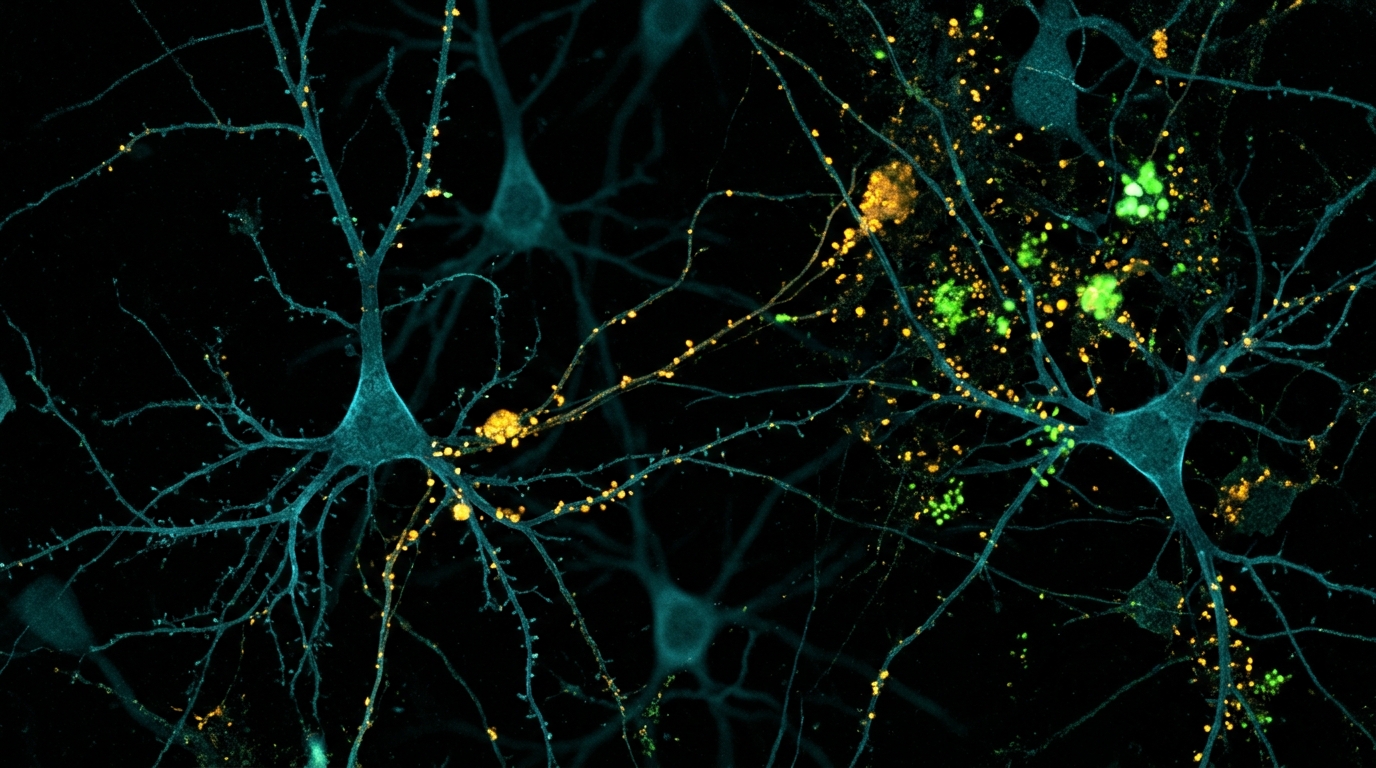
In an experimental mouse model of early Lewy body dementia, cortical alpha-synuclein pathology induced cellular hypoactivity and altered local circuit properties without causing functional visuoperceptual impairments.
Posterior cortical deficits affecting visuospatial and perceptual abilities represent common non-motor manifestations of Lewy body dementias and are relatively specific to these conditions compared to other dementias. Across patient cohorts, cognitive deterioration correlates with the anatomical presence of alpha-synuclein pathology within limbic and neocortical territories, yet the precise causal role of such pathology in precipitating cortical circuit breakdown and cognitive deficits has remained unresolved. The authors hypothesized that directly establishing alpha-synuclein pathology in the primary visual cortex, known as V1, would degrade neuronal signaling and visual information encoding to produce measurable visuoperceptual deficits.
To test this hypothesis, investigators injected alpha-synuclein pre-formed fibrils directly into V1 in mice, producing sparse Lewy-like pathology. They tracked cortical physiology longitudinally over a six-month duration using in vivo two-photon calcium imaging, recording visually evoked activity within layer 2/3 pyramidal neurons. Concurrently, the accumulation of aggregated alpha-synuclein was quantified using C05-05, a specialized fluorescent ligand that binds aggregated forms of the protein.
Analysis of network activity revealed notable population-level shifts emerging at four to five months post-injection. Compared to control subjects, fibril-injected mice exhibited a greater proportion of neurons responsive to visual stimuli, alongside lower direction selectivity across the population. At the cellular level, pyramidal neurons containing somatic Lewy-like inclusions displayed reduced activity relative to adjacent cells lacking inclusions. In contrast, neighboring neurons without somatic inclusions exhibited increased activity that correlated positively with the local density of alpha-synuclein pathology.
Despite these measurable cellular and population-level alterations, behavioral assessments revealed no corresponding loss of sensory function. Mice evaluated on a coherent motion discrimination task showed no impairments in visuoperceptual ability following fibril injection. The authors concluded that while alpha-synuclein pathology produces hypoactivity in inclusion-bearing cells and reciprocal network adjustments in surrounding neurons, it does not impair visuoperceptual function at this stage, providing a framework to investigate the clinical heterogeneity of cognitive symptoms and pathology across Lewy body dementias.
Subject of Research: Cortical alpha-synuclein pathology and visual circuit function in early Lewy body dementia models
Article Title: Cortical α-synuclein pathology induces neuronal hypoactivity and circuit changes but not functional impairments in a model of early Lewy body dementia
Article References: Theint, A. T., Cazares, N., Jr., Zhang, S., Zhang, N., Mosley, R., Ishida, K., Higuchi, M., Peng, C., & Zeiger, W. (2026). Cortical α-synuclein pathology induces neuronal hypoactivity and circuit changes but not functional impairments in a model of early Lewy body dementia. npj Parkinson's Disease. https://doi.org/10.1038/s41531-026-01619-x
Image Credits: AI Generated
DOI: 10.1038/s41531-026-01619-x
Keywords: Lewy body dementia, alpha-synuclein, primary visual cortex, neural circuits, two-photon calcium imaging, visuoperceptual function, mouse model, pyramidal cells, Cortical, synuclein, pathology, induces
News Source: Cassandra Pierce. (November 7, 2026). Cortical Alpha-Synuclein Pathology Disrupts Mouse Neural Circuits Without Causing Visuoperceptual Impairment. Scienmag.