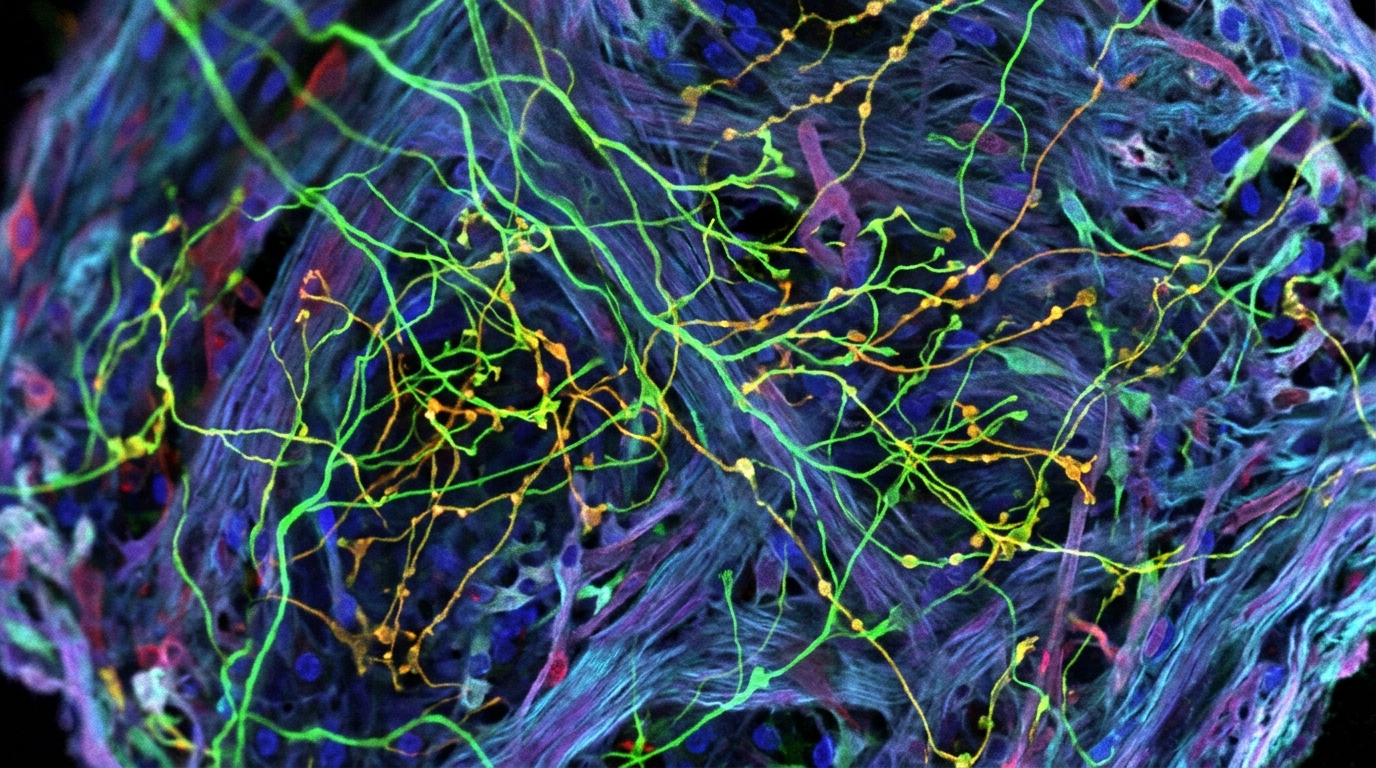
Selected sensory axons can act directly as peripheral effector units by releasing neurotransmitters and neuropeptides from their peripheral terminals, rather than functioning solely as conduits for afferent information. This local signaling mechanism enables sensory nerve endings to exert direct control over target tissues without relying on central synaptic processing or motor-neuron output.
According to a perspective review published in Frontiers in Pain Research by Carlos E. Morado-Urbina and Tony L. Yaksh of the University of California, San Diego, these terminal-derived chemical messengers regulate key physiological parameters in peripheral tissues. Specifically, the local release of neuropeptides and neurotransmitters controls vascular tone, alters vascular permeability, and modulates immune-cell activity within the local microenvironment.
The efferent-like functions of sensory axons extend across several critical biological processes in animal physiology and disease. In addition to regulating blood flow and immune responses, these localized terminal actions participate in neurogenic inflammation, tissue repair cascades, and, within select specialized organs, the regulation of contractile function.
The publication synthesizes and preserves the core scientific concepts first presented in the lecture “The Motor Function of the Sensory Axon,” delivered at the International Veterinary Emergency and Critical Care Society meeting in San Diego, California, on September 4, 2025. It forms part of an academic collection documenting the scientific contributions presented during the symposium within the section on veterinary and comparative pain.
The authors emphasize a clear mechanistic distinction between these direct peripheral effector actions and conventional sensory contributions to motor control. Whereas traditional sensory-driven reflexes strictly require afferent signals to undergo central synaptic processing before eliciting motor-neuron output, the efferent-like functions of sensory axons operate locally at the axon terminal itself to coordinate tissue responses in the periphery.
By focusing on sensory axons within the veterinary and comparative pain domain, the work underscores that peripheral terminals are not merely passive recipients that convey afferent signals upward. Within peripheral tissues, this efferent-like activity alters the local microenvironment by directing immune-cell engagement and modifying vascular parameters, thereby playing an active role in ongoing disease processes across animal species.
Furthermore, the authors note that in specialized organ systems, these terminal discharges directly influence contractile activity.
Carlos E. Morado-Urbina and Tony L. Yaksh, conducting this work from the University of California, San Diego, submitted the formal manuscript in June 2026, which was accepted after peer review in October 2026.
Subject of Research: Peripheral effector functions of sensory axons in animal physiology
Article Title: Peripheral effector functions of sensory axons
Article References: Morado-Urbina, C. E., & Yaksh, T. L. (2026). Peripheral effector functions of sensory axons. Frontiers in Pain Research, 7, Article 1898579. https://doi.org/10.3389/fpain.2026.1898579
Image Credits: AI Generated
DOI: 10.3389/fpain.2026.1898579
Keywords: Sensory Axons, Neurogenic Inflammation, Neuropeptides, Vascular Control, Tissue Repair, Animal Physiology, Veterinary Pain, Peripheral, effector, functions, sensory, axons
News Source: Ophelia Keating. (November 6, 2026). Sensory Axons Function as Peripheral Effectors Regulating Inflammation and Tissue Repair. Scienmag.