• HOME
  • NEWS
  • EXPLORE
    • CAREER
      • Companies
      • Jobs
    • EVENTS
    • iGEM
      • News
      • Team
    • PHOTOS
    • VIDEO
    • WIKI
  • BLOG
  • COMMUNITY
    • FACEBOOK
    • INSTAGRAM
    • TWITTER
Saturday, November 7, 2026
BIOENGINEER.ORG
No Result
View All Result
  • Login
  • HOME
  • NEWS
  • EXPLORE
    • CAREER
      • Companies
      • Jobs
        • Lecturer
        • PhD Studentship
        • Postdoc
        • Research Assistant
    • EVENTS
    • iGEM
      • News
      • Team
    • PHOTOS
    • VIDEO
    • WIKI
  • BLOG
  • COMMUNITY
    • FACEBOOK
    • INSTAGRAM
    • TWITTER
No Result
View All Result
Bioengineer.org
No Result
View All Result
Home NEWS Science News Chemistry

Metasurface Sensor and Deep Learning Enable Real-Time Hyperspectral Polarimetric Imaging

by
November 6, 2026
in Chemistry
Reading Time: 2 mins read
0
Metasurface Sensor and Deep Learning Enable Real-Time Hyperspectral Polarimetric Imaging

Metasurface Sensor and Deep Learning Enable Real-Time Hyperspectral Polarimetric Imaging

Share on FacebookShare on TwitterShare on LinkedinShare on RedditShare on Telegram

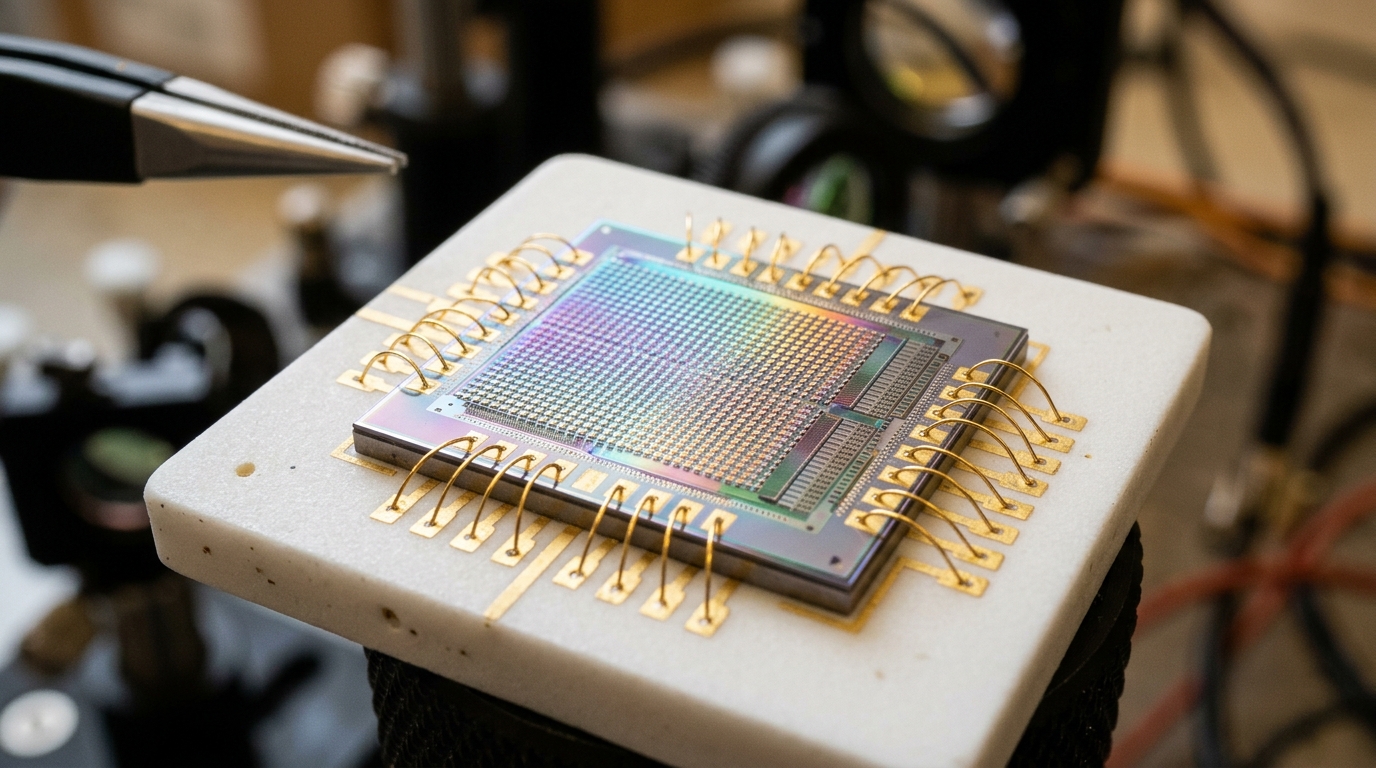
A research team led by Professor Wei Lu, Professor Xiaoshuang Chen, and Professor Jing Zhou from the Shanghai Institute of Technical Physics, Chinese Academy of Sciences, has developed a high-dimensional optical sensing framework that achieves single-shot hyperspectral full-Stokes real-time imaging. Published in Light: Science & Applications, the framework integrates metasurface physical encoding with artificial intelligence-driven decoding to capture high-dimensional optical light fields.

The proposed system simultaneously reconstructs 167 spectral channels and full-Stokes polarization information across the broadband range of 1150 to 1650 nanometers. In experimental evaluations, the device demonstrated a minimum distinguishable wavelength interval of 3 nanometers, an average polarization reconstruction error as low as 0.14 degrees, and a real-time imaging speed of 55 frames per second.

At the center of the imaging architecture is an infrared meta-sensor that integrates a metasurface with an indium gallium arsenide focal plane array. The system actively utilizes both the polarization multiplexing capability and the structural dispersion characteristics of the metasurface as high-dimensional information encoding degrees of freedom.

Unlike conventional optical designs that attempt to suppress wavelength-dependent dispersion effects, the framework actively harnesses the intrinsic polarization–dispersion coupling of the metasurface. Different polarization states are spatially multiplexed into distinct diffraction channels, while different wavelengths are continuously dispersed along the radial direction through structural dispersion.

To reconstruct the encoded optical information, the researchers combined physical metasurface encoding with a deep neural network designated as HSPI-net. The neural network learns the complex physical mapping relationships of the real optical system, enabling the direct reconstruction of hyperspectral full-Stokes information from a single captured grayscale image.

According to the researchers, utilizing the polarization modulation capability and structural dispersion characteristics of the metasurface simultaneously as high-dimensional optical encoding degrees of freedom allows the system to reconstruct hyperspectral full-Stokes information directly from a single captured frame, facilitating real-time high-dimensional sensing.

The scientists further emphasized that transforming intrinsic polarization–dispersion coupling into a usable information encoding mechanism, rather than treating dispersion as a limitation, provides a new route toward compact, intelligent, and real-time high-dimensional optical sensing systems.

Embedded-platform deployment validation confirmed the system’s operational viability for compact, intelligent sensing hardware. Looking ahead, the researchers forecast that the technique could open new avenues for intelligent optical sensing systems in autonomous driving, infrared target recognition, remote sensing, biomedical imaging, machine vision, and high-dimensional optical communications.

Subject of Research: Real-time hyperspectral and polarimetric light-field imaging

Article Title: New paradigm for real-time high-dimensional hyperspectral–polarimetric light-field imaging

Article References: New paradigm for real-time high-dimensional hyperspectral–polarimetric light-field imaging. Original publication (Bibliographic details unavailable.)

Image Credits: AI Generated

DOI: Not provided

Keywords: hyperspectral imaging, polarimetric imaging, metasurfaces, deep learning, optical sensing, infrared sensors, light-field imaging, HSPI-net, paradigm, real-time, high-dimensional, hyperspectral

News Source: Blake Davidson. (November 6, 2026). Metasurface Sensor and Deep Learning Enable Real-Time Hyperspectral Polarimetric Imaging. Scienmag.

Tags: deep learninghigh-dimensionalHSPI-nethyperspectralhyperspectral imaginginfrared sensorslight-field imagingmetasurfacesoptical sensingparadigmpolarimetric imagingreal-time
Share12Tweet7Share2ShareShareShare1

Related Posts

Physicists Uncover Key Electron Pairing Requirement for Room-Temperature Superconductivity

Physicists Uncover Key Electron Pairing Requirement for Room-Temperature Superconductivity

November 7, 2026
First Electrochemical Insights Into Ensartinib Oxidation

First Electrochemical Insights Into Ensartinib Oxidation

November 7, 2026

Physics-Informed AI Converts Existing Fiber-Optic Cables Into Highway Traffic Sensors

November 7, 2026

Polyamines Hijack Neural and Immune Signals in Brain Tumors

November 7, 2026

POPULAR NEWS

  • Surgeons Resect Transverse Colon Cancer Invading Reconstructed Jejunum Following Prior Pancreaticoduodenectomy

    Surgeons Resect Transverse Colon Cancer Invading Reconstructed Jejunum Following Prior Pancreaticoduodenectomy

    29 shares
    Share 12 Tweet 7
  • Flash Heating Transforms Decommissioned Wind Turbine Blades Into Graphene and Silicon Carbide

    29 shares
    Share 12 Tweet 7
  • INRS Hosts First North American Pasteur Network Meeting in Québec

    29 shares
    Share 12 Tweet 7
  • Research report: Neuroimmune buffering reserve at the neurovascular unit: a CLDN5- and microglia-centred view of recurrent peripheral inflammation

    29 shares
    Share 12 Tweet 7

About

We bring you the latest biotechnology news from best research centers and universities around the world. Check our website.

Follow us

Recent News

Pediatric acute heart failure in low- and middle-income countries mapped in scoping review

Plant Extract Boosts Stress Resistance in C. elegans

Electroacupuncture Linked to Reduced Heart Injury in Animal Models

Subscribe to Blog via Email

Enter your email address to subscribe to this blog and receive notifications of new posts by email.

Join 86 other subscribers
  • Contact Us

Bioengineer.org © Copyright 2023 All Rights Reserved.

Welcome Back!

Login to your account below

Forgotten Password?

Retrieve your password

Please enter your username or email address to reset your password.

Log In
No Result
View All Result
  • Homepages
    • Home Page 1
    • Home Page 2
  • News
  • National
  • Business
  • Health
  • Lifestyle
  • Science

Bioengineer.org © Copyright 2023 All Rights Reserved.