• HOME
  • NEWS
  • EXPLORE
    • CAREER
      • Companies
      • Jobs
    • EVENTS
    • iGEM
      • News
      • Team
    • PHOTOS
    • VIDEO
    • WIKI
  • BLOG
  • COMMUNITY
    • FACEBOOK
    • INSTAGRAM
    • TWITTER
Friday, November 6, 2026
BIOENGINEER.ORG
No Result
View All Result
  • Login
  • HOME
  • NEWS
  • EXPLORE
    • CAREER
      • Companies
      • Jobs
        • Lecturer
        • PhD Studentship
        • Postdoc
        • Research Assistant
    • EVENTS
    • iGEM
      • News
      • Team
    • PHOTOS
    • VIDEO
    • WIKI
  • BLOG
  • COMMUNITY
    • FACEBOOK
    • INSTAGRAM
    • TWITTER
No Result
View All Result
Bioengineer.org
No Result
View All Result
Home NEWS Science News Biology

T-Cell IRG1-Itaconate Axis Inhibits Allergic Airway Inflammation

by
November 6, 2026
in Biology
Reading Time: 2 mins read
0
T-Cell IRG1-Itaconate Axis Inhibits Allergic Airway Inflammation

T-Cell IRG1-Itaconate Axis Inhibits Allergic Airway Inflammation

Share on FacebookShare on TwitterShare on LinkedinShare on RedditShare on Telegram

An intrinsic IRG1-itaconate axis in CD4+ T cells suppresses allergic airway inflammation by dampening the PI3K/Akt/mTOR signaling pathway, according to a study published in Cellular and Molecular Life Sciences. While the regulatory role of IRG1-itaconate in innate immune cells was previously established, its functional role in T cells had remained elusive. In an experimental house dust mite-induced allergic asthma model, researchers observed that IRG1 expression was upregulated in CD4+ T cells alongside increased levels of the metabolite itaconate in bronchoalveolar lavage fluid.

To determine the physiological role of this pathway in vivo, the investigators evaluated mice with global Irg1 deficiency as well as mice with a conditional knockout of Irg1 restricted to T cells. In both models, the absence of IRG1 significantly exacerbated allergic airway inflammation. This worsening of disease was characterized by more pronounced CD4+ T cell activation and enhanced differentiation of Th2 cells, which serve as canonical producers of type 2 cytokines in allergic asthma.

In vitro experiments corroborated these findings, demonstrating that IRG1 deficiency directly promoted the activation and Th2 polarization of CD4+ T cells. The enhanced activation and polarization were linked to heightened activity of the PI3K/Akt/mTOR signaling pathway. When researchers treated the deficient cells with a PI3K inhibitor or with 4-octyl itaconate (4-OI), a cell-permeable itaconate derivative, the excessive cellular activation and differentiation phenotypes were successfully reversed.

To elucidate the molecular mechanism underlying this inhibition, the team utilized an alkylation inhibitor alongside an itaconate-alkyne probe, identifying PI3K-p85α as the direct target protein of itaconate-mediated alkylation. Further analysis revealed that 4-OI directly alkylates PI3K-p85α at the Cys670 residue. This specific post-translational modification suppressed downstream kinase signaling cascades and restrained T-cell effector responses, confirming that cell-intrinsic itaconate acts directly on this pathway.

The investigators also assessed the clinical relevance of these findings in human patients with asthma, discovering that reduced itaconate levels in airway sputum correlate with impaired lung function and heightened type 2 inflammatory responses. The authors concluded that CD4+ T cell-intrinsic itaconate functions as a regulatory immunometabolite that shapes adaptive immune responses, highlighting the IRG1-itaconate axis as a promising therapeutic target for allergic airway inflammation.

Subject of Research: CD4+ T cell immunometabolism and allergic airway inflammation

Article Title: Intrinsic IRG1-itaconate axis in CD4+ T cells inhibits allergic airway inflammation by suppressing the PI3K/Akt/mTOR pathway

Article References: Wang, Q., Gao, L., Wu, M., Liu, H., Lin, Y., Zhou, J., Huang, J., Jiang, H., Qu, S., Huang, Y., & Han, J. (2026). Intrinsic IRG1-itaconate axis in CD4+ T cells inhibits allergic airway inflammation by suppressing the PI3K/Akt/mTOR pathway. Cellular and Molecular Life Sciences. https://doi.org/10.1007/s00018-026-06495-5

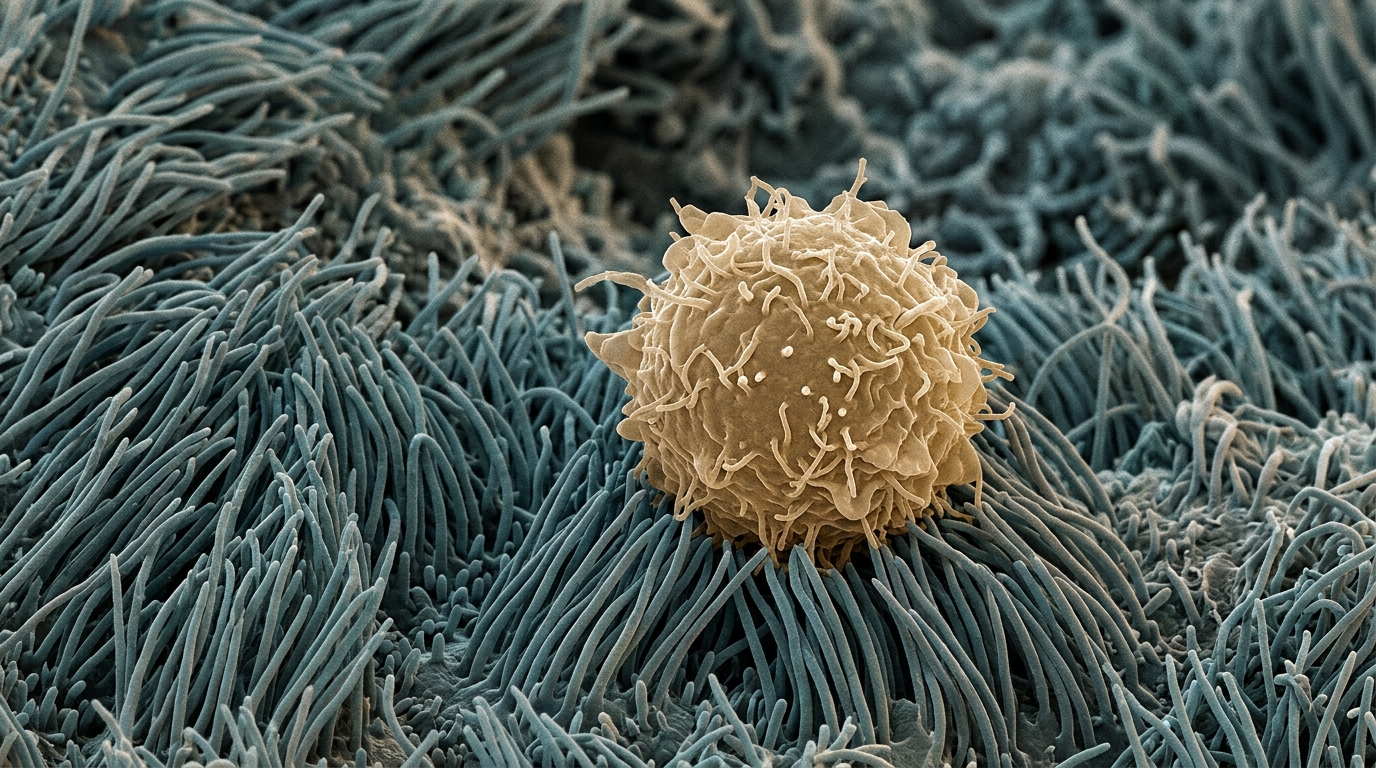
Image Credits: AI Generated

DOI: 10.1007/s00018-026-06495-5

Keywords: IRG1, itaconate, CD4+ T cells, allergic asthma, airway inflammation, PI3K/Akt/mTOR pathway, Th2 differentiation, immunometabolism, Intrinsic, IRG1-itaconate, axis, cells

News Source: Drew Townsend. (November 6, 2026). T-Cell IRG1-Itaconate Axis Inhibits Allergic Airway Inflammation. Scienmag.


Tags: airway inflammationallergic asthmaaxisCD4+ T cellscellsimmunometabolismIntrinsicIRG1IRG1-itaconateitaconatePI3K-Akt-mTOR pathwayTh2 differentiation
Share12Tweet7Share2ShareShareShare1

Related Posts

Genomic Analysis Uncovers Selection Signatures in Turkish Awassi Sheep

Genomic Analysis Uncovers Selection Signatures in Turkish Awassi Sheep

November 6, 2026
Review Details How Extracellular ATP Coordinates Plant Defense Responses Against Herbivory

Review Details How Extracellular ATP Coordinates Plant Defense Responses Against Herbivory

November 6, 2026

Ten Simple Rules Outline Practical AI Training Framework for Healthcare Data Teams

November 6, 2026

Streptomyces anulatus DEF39 genome decoded, revealing biocontrol genes against wheat fungal disease

November 6, 2026

POPULAR NEWS

  • KRAS Phosphorylation Drives Colorectal Cancer Invasion by Boosting Cathepsin B Secretion

    KRAS Phosphorylation Drives Colorectal Cancer Invasion by Boosting Cathepsin B Secretion

    29 shares
    Share 12 Tweet 7
  • Platelets Undergo Lifespan Remodeling That Promotes Thromboinflammation and Fuels Tumor Progression

    29 shares
    Share 12 Tweet 7
  • Social Sciences Expose Hidden Inequities Shaping Neglected Tropical Diseases

    29 shares
    Share 12 Tweet 7
  • Fourier-Enhanced TecoGAN Improves Video Super-Resolution Quality and Temporal Stability

    29 shares
    Share 12 Tweet 7

About

We bring you the latest biotechnology news from best research centers and universities around the world. Check our website.

Follow us

Recent News

Composite Metabolic-Frailty Score Linked to Cardiovascular-Kidney-Metabolic Syndrome Progression

Seasonal Dietary Shifts Linked to Muscle Parameter Changes in Institutionalized Older Adults

Two Pediatric Spinal Implants, Two FDA Verdicts: What VEPTR and VBT Reveal About the Probable Benefit Standard

Subscribe to Blog via Email

Enter your email address to subscribe to this blog and receive notifications of new posts by email.

Join 86 other subscribers
  • Contact Us

Bioengineer.org © Copyright 2023 All Rights Reserved.

Welcome Back!

Login to your account below

Forgotten Password?

Retrieve your password

Please enter your username or email address to reset your password.

Log In
No Result
View All Result
  • Homepages
    • Home Page 1
    • Home Page 2
  • News
  • National
  • Business
  • Health
  • Lifestyle
  • Science

Bioengineer.org © Copyright 2023 All Rights Reserved.