Chinese researchers have built a deep learning model that estimates the yield of seed maize plots from Sentinel-2 satellite images, and it outperforms Transformer, LSTM, GRU and common machine learning methods on their test data. The model, called AKGMamba, combines spectral time series with crop growth parameters retrieved from a radiative transfer model, and it adds an agronomic rule about flowering synchrony at the output layer. Across three years of field observations in Zhangye, Gansu Province, it reached a coefficient of determination of 0.78 and a root mean square error of 793.73 kilograms per hectare, with a normalized RMSE of 8.79 percent.
The work, published in Artificial Intelligence in Agriculture, addresses a gap the authors say has been largely ignored. Most remote sensing yield estimation studies focus on common field maize, yet seed maize production is the critical link that supplies hybrid seed for large-scale grain output. In 2023, roughly 250,000 hectares of seed production fields were needed to meet the demand for 1.22 billion kilograms of hybrid maize seed in China, where the maize cultivation area has stayed above 40 million hectares. Seed maize is harder to monitor from orbit because its two parent lines are managed differently, including emasculation and pollen parent removal, which physically alter the canopy mid-season.
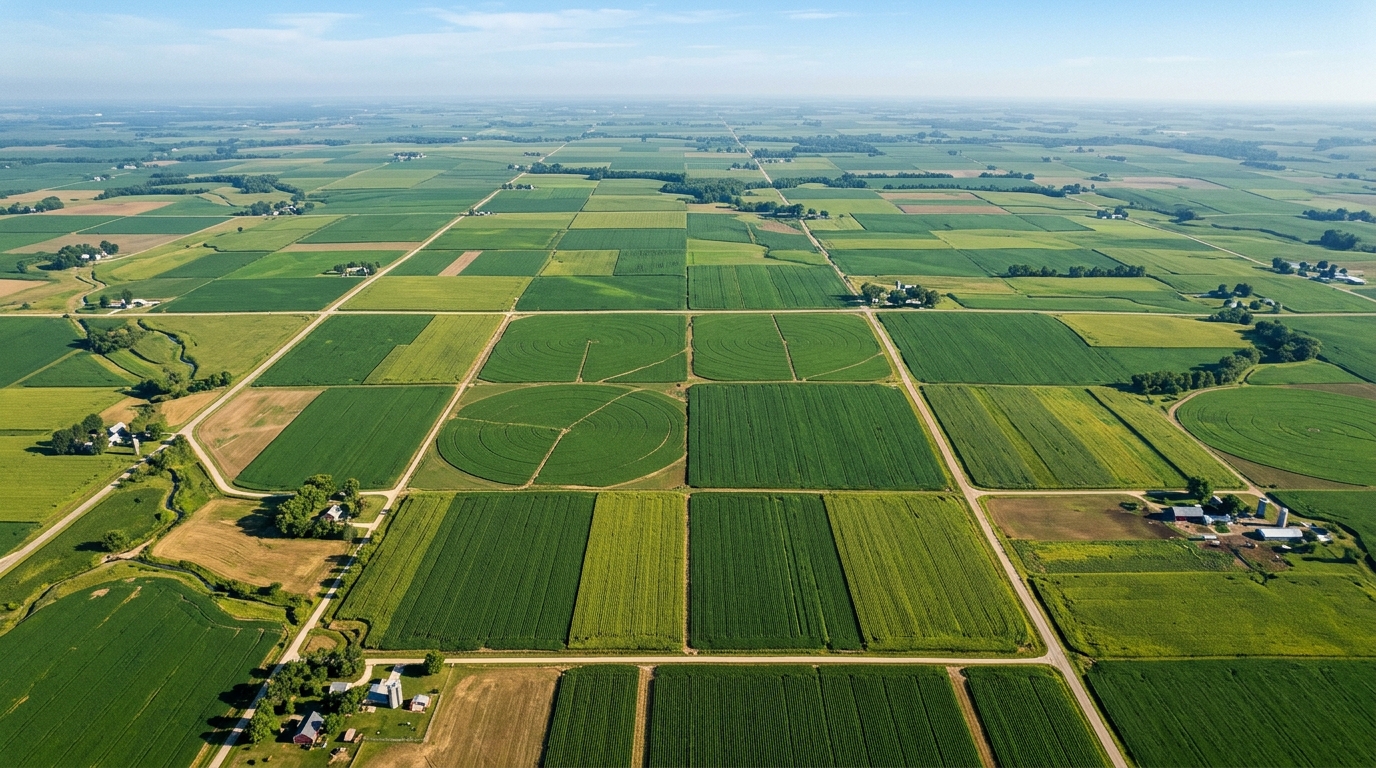
The study area sits in Ganzhou District, China’s largest hybrid maize seed production base, sometimes called the golden belt for seed maize. The district plants more than 46,000 hectares of seed maize annually, 50,200 hectares in 2024, producing about 340 million kilograms, over 30 percent of national maize seed demand. The climate is temperate continental and arid, with 129 millimeters of average annual precipitation, annual evaporation above 2,000 millimeters, and irrigation from snowmelt water. All experimental plots used integrated drip irrigation, which the authors note eliminated significant water stress or drought-induced yield loss in their samples, a caveat worth remembering when considering how the model would behave in rain-fed systems.
Field campaigns ran in 2021, 2023 and 2024, covering a cumulative 1,730 hectares and 5,987 plots. Yield labels came from 853 plots: 54 samples in 2021 measured by agronomic statistical method based on ear number, kernels per ear and thousand-grain weight, and 799 samples in 2023 and 2024 from whole-plot harvest weighing with grain moisture measured at seed acquisition. All values were converted to standard moisture content and expressed in kilograms per hectare. Plot boundaries came from professional surveys with total stations and levels, and a 15-meter inner buffer, about 1.5 pixels, was applied to strip out mixed pixels from farm roads at plot edges.
On the satellite side, the team used Sentinel-2 Level-2A imagery at 10-meter resolution from May 1 to October 31 each year, drawing on bands 3 through 8, which cover red, green, near-infrared and three red-edge bands. They built 12 vegetation indices, from classics like NDVI and EVI to newer physiological indicators such as the Green BioMass Index and Canopy Chlorophyll Content Index, and composited images into 15-day periods to bridge cloud gaps, producing a unified feature vector of temporal length 10. In parallel, six biophysical parameters, including leaf area index, canopy chlorophyll content, canopy water content, fAPAR, fCOVER and albedo, were retrieved with the SL2P processor, which trains a neural network on a PROSAIL radiative transfer simulation database through the LEAF toolbox on Google Earth Engine.
The retrieval was checked against field-measured LAI collected at jointing, heading and milking stages, with 143, 192 and 146 samples per year. Accuracy was highest at jointing, with an R2 of 0.77 and RMSE of 0.35, slipped to 0.66 and 0.46 at heading as canopy closure induced red-edge band saturation, and dropped to 0.43 and 0.56 at milking. The authors attribute the late-season decline to emasculation and pollen parent removal, which abruptly disrupt the canopy and violate the continuous-canopy assumptions of radiative transfer models, plus senescence-related biochemical changes that weaken the spectral connection to vegetation indices. Maize inbred lines also saturate the canopy earlier than hybrid cultivars.
The architectural core of AKGMamba is the Mamba selective state space model, a newer temporal modeling design that scales linearly with sequence length, unlike Transformers whose computational cost grows with input length. Two stacked Mamba blocks encode the plot-level temporal dependencies, with skip connections between them, followed by two fully connected layers and dropout at a rate of 0.3. Hyperparameters were tuned globally with Bayesian optimization, settling on a state size of 64, two layers, a learning rate of 5e-3, batch size 64, dropout 0.3 and weight decay 0.005. Data were split 7:2:1 into training, validation and test sets, standardized with Winsorized Z-scores, and training stopped early if validation loss failed to improve for 15 epochs. The model converged within 60 epochs, reaching R2 of 0.85 on training and 0.81 on validation.
The agronomic twist sits at the output. Seed maize yield depends not only on growth but on flowering synchrony between the male pollen parent and the female seed parent. The model applies a learnable yield decay function built on a tanh activation, in which the decay rate rises with the number of days between the parents’ flowering periods, modulated by a varietal sensitivity coefficient set to 0.18 from expert knowledge and field calibration. The design draws on published evidence that each one-day increase in the anthesis-silking interval cuts kernel number per ear by 6.8 percent, and that once the interval exceeds three days the barren-tip rate can surpass 40 percent. CIMMYT research cited by the authors reports roughly 5 percent linear yield loss per day of asynchrony, accelerating to about 12 percent per day beyond three days, consistent with the decay function at R2 above 0.89.
On the independent test set, AKGMamba scored R2 of 0.78 and RMSE of 793.73 kilograms per hectare, ahead of Transformer at 0.65 and 1,065.54, LSTM at 0.54 and 1,193.60, and XGBoost at 0.35 and 1,743.63. Box plots of absolute error showed the smallest median, the narrowest interquartile range and few outliers, and ablation experiments confirmed that the agronomic constraint narrowed error distributions, cut median error and avoided extreme outliers above 2,000 kilograms per hectare, particularly for the Mamba variant. Feature ablation told a similar story: spectral features alone gave R2 of 0.52 and RMSE of 1,554.84, while adding the six growth parameters lifted R2 to 0.78 and cut RMSE to 793.73, a 48.9 percent error reduction, even though the parameters alone were weak predictors at R2 of 0.25.
Cross-year tests exposed the limits of generalization. Training on mixed years and testing on a random 20 percent gave 0.81; testing on 2021 gave 0.71, on 2023 gave 0.65, and on 2024 only 0.48, which the authors attribute to the 2021 and 2023 training pool being under 300 samples against more than 500 in the 2024 data. The model’s learned temporal gating weights peaked twice, at 0.37 to 0.42 during May-June jointing and at 0.45 during August-September tasseling to grain filling, the yield-determining window of flowering synchrony and grain formation. Generated yield maps showed interannual variation, with 2024 average yields about 12 percent higher, attributed to high-yield hybrid varieties, and nested low-yield patches linked in the field to pests and diseases, notably 15 to 20 percent local depressions in 2023 from maize borer and leaf spot. The authors flag the absence of meteorological drivers such as growing degree days as a limitation on interannual stability and suggest hybrid Mamba-Transformer architectures and knowledge graph reasoning as next steps.
Subject of Research: Agronomic-knowledge guided deep learning for plot-scale seed maize yield estimation from Sentinel-2 satellite imagery
Article Title: An agronomic-knowledge guided deep learning approach for plot-scale seed maize yield estimation using sentinel-2 satellite images
Article References: Liu, J., Xue, Y., Dong, H., Gong, R., Liu, L., Yao, Y., Hu, J., Wang, H., Li, S., & Liu, Z. (2026). An agronomic-knowledge guided deep learning approach for plot-scale seed maize yield estimation using sentinel-2 satellite images. Artificial Intelligence in Agriculture. https://doi.org/10.1016/j.aiia.2026.10.004
Image Credits: AI Generated
DOI: 10.1016/j.aiia.2026.10.004
Keywords: seed maize, yield estimation, Sentinel-2, deep learning, Mamba, remote sensing, flowering synchrony, PROSAIL, LAI, precision agriculture, Zhangye, maize breeding
News Source: Alan Morgan. (November 6, 2026). Mamba AI model reads Sentinel-2 satellite data to map seed maize yields. Scienmag.