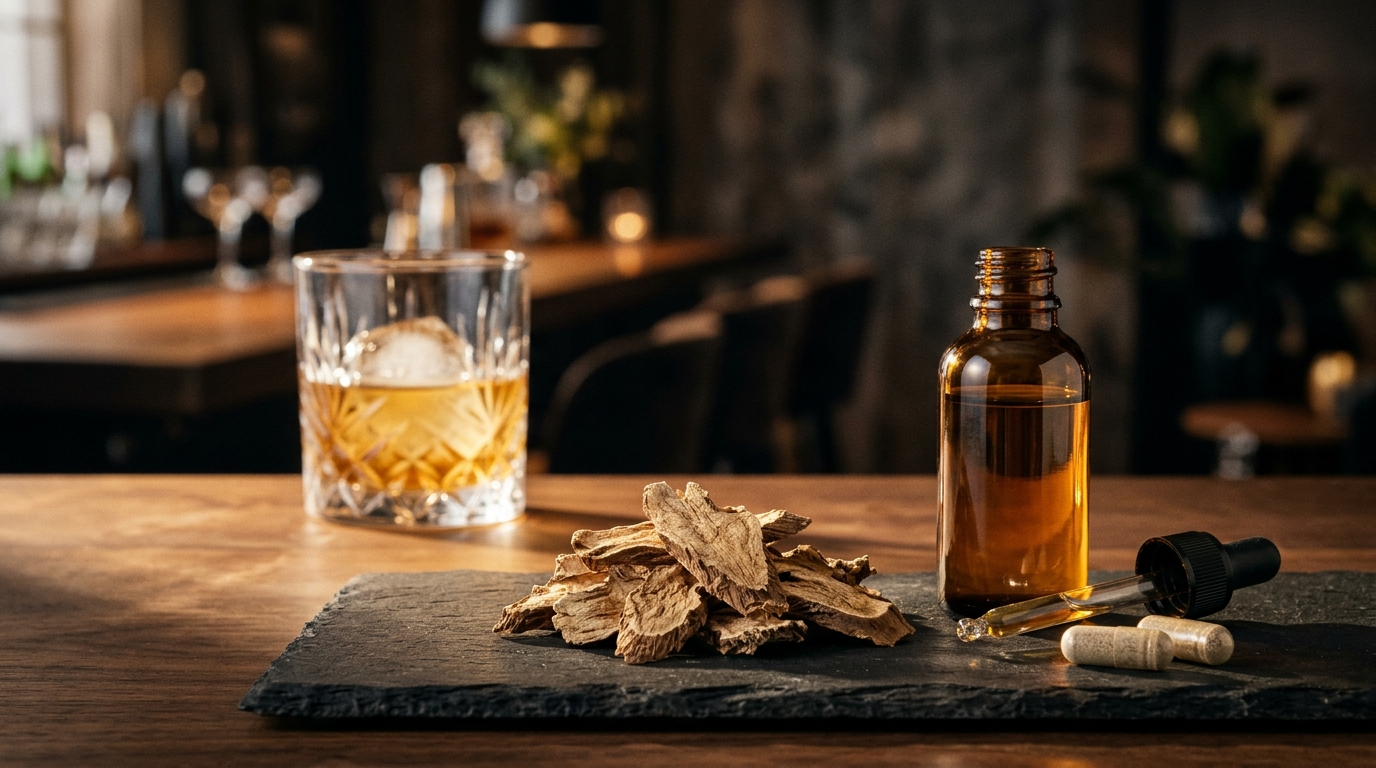
People with alcohol use disorder who took an extract of kudzu, a plant long used in traditional East Asian medicine, only when they expected to drink heavily had fewer binge-drinking days than those who received a placebo, and the benefit persisted for three months after the treatment ended, according to a randomized controlled trial led by researchers at the University of California, San Francisco. The study, published in the American Journal of Psychiatry on Nov. 4, offers a targeted alternative to daily medication for a condition that few patients ever receive drug treatment for.
Binge drinking is a major public health problem, accounting for more than half of the roughly 80,000 annual U.S. deaths attributed to excessive alcohol consumption, the researchers noted. Yet fewer than 10% of people with alcohol use disorder have ever received medication to treat it. “Binge drinking is incredibly common, but we don’t have many tools to offer people who want to cut back,” said Glenn-Milo Santos, PhD, MPH, the study’s lead author and a UCSF professor of community health systems. “Our goal is to expand that toolkit. What’s exciting about this approach is that people can use it when they know they may be at risk of heavy drinking, rather than taking a medication every day.”
The trial, described as a phase 2b randomized study, included 120 adults with alcohol use disorder who binge drank at least once a week. For men, binge drinking was defined as having five or more drinks on one occasion, and for women, it was four or more. Half the participants received a standardized kudzu extract and half received a placebo. For 12 weeks, they were instructed to take the treatment about 2.5 hours before they expected to drink heavily. Both groups also received brief weekly counseling sessions, so the comparison isolated the effect of the supplement itself.
The results showed a clear separation between the groups by the end of treatment. The average number of binge-drinking days fell from 2.15 to 1.42 per week in the kudzu group, while it hardly changed in the placebo group, going from 2.15 to 2.06. The proportion of weeks in which participants reported any binge drinking also declined markedly in the kudzu group, from 88% to 58%, compared with a much smaller change in the placebo group, from 88% to just 81%. Because both arms started at identical baseline levels, the divergence points to an effect of the extract rather than the counseling or the passage of time.
The durability of the effect is what makes the findings notable. Three months after treatment stopped, people assigned to take kudzu continued to have significantly fewer binge-drinking days than those who were assigned to the placebo.
Safety also favored the intervention. The participants tolerated taking kudzu and had no more side effects than those in the placebo group, and no serious side effects were linked to the treatment.
The researchers caution that consumers should not assume commercially available kudzu supplements will produce the same results. The study used a standardized formulation, while over-the-counter products can vary considerably in content and potency, meaning a bottle bought at a store may not deliver the same dose of the relevant compounds. Larger studies are needed to confirm the findings in broader populations before the approach can be considered established care.
The study was funded by the National Institutes of Health through grant R01AA025930, with additional support to Santos through a K24 career development grant from the National Institute on Alcohol Abuse and Alcoholism. The funder had no role in the study design, data collection, analysis, interpretation, or the writing and approval of the manuscript, and the authors report no financial relationships with commercial interests. UCSF co-authors include Phillip Coffin, Allie Dunham, Thomas Hoffmann, John Walker, Tim Matheson, and Steven Batki.
If confirmed in larger trials, a standardized kudzu extract taken before anticipated heavy drinking could add a genuinely new option to a sparse treatment landscape, one that patients can deploy on their own terms at the moments of greatest risk.
Subject of Research: A phase 2b randomized trial of targeted kudzu extract use for reducing binge drinking in adults with alcohol use disorder
Article Title: Could an herbal supplement help you stop binge drinking?
Article References: Could an herbal supplement help you stop binge drinking?. Original publication (Bibliographic details unavailable.)
Image Credits: AI Generated
DOI: Not provided
Keywords: kudzu, binge drinking, alcohol use disorder, randomized controlled trial, UC San Francisco, American Journal of Psychiatry, herbal supplement, placebo-controlled, targeted dosing, alcohol harm reduction, NIAAA, public health
News Source: Ophelia Keating. (November 6, 2026). Kudzu extract taken before drinking curbed binge drinking in trial. Scienmag.