Researchers in South Korea have produced complete, gap-free genome sequences for eleven bacterial strains that are used to manufacture inactivated animal vaccines, together with detailed gene annotations for each one. The work, published in BMC Genomic Data as a data note, was carried out by Yeonkyeong Lee, Jin-Ju Nah, Su-Min Go, Hyun-Ok Ku and Il Jang, who describe the resulting dataset as a reference resource for vaccine production and quality control.
The authors note that the production of high-quality biological products depends on the careful selection and consistent management of seed strains. The authors note that the production of high-quality biological products depends on the careful selection and consistent management of seed strains, the bacterial stocks from which vaccine batches are grown. Because manufacturers are expected to keep using the same seed strains over time, a fully resolved genome offers a way to confirm, at the level of the individual strain, whether that consistency has actually been maintained.
This pairing of technologies produced high-quality, gap-free genomes for all eleven strains. The genome sizes ranged from 2.28 megabases to 5.35 megabases, a span that reflects the diversity of species included in the set.
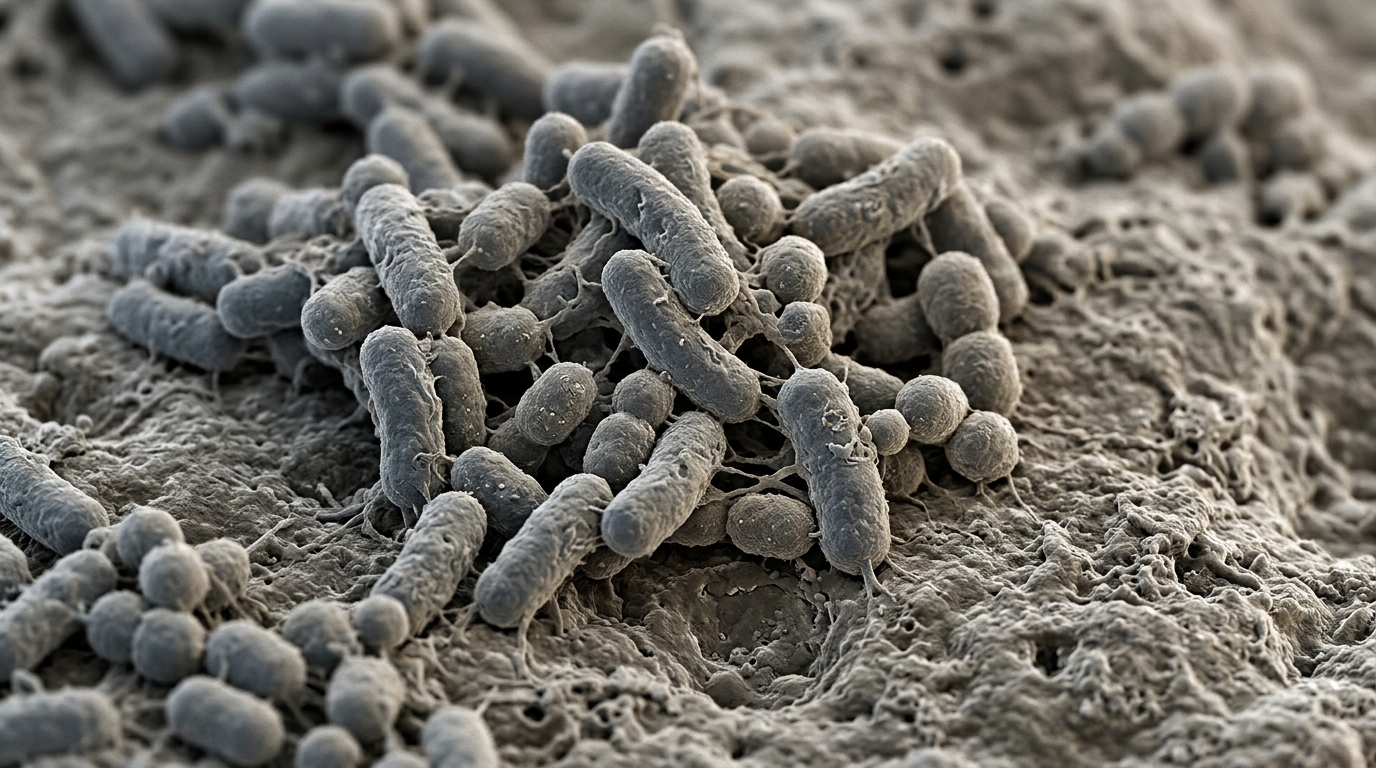
The strains spanned several species and types. The eleven strains comprised Pasteurella multocida of capsular types D, 3A and A, Actinobacillus pleuropneumoniae of serovars 2 and 5, Glaesserella parasuis type 4, Mannheimia haemolytica KO, Avibacterium paragallinarum type C, and three Escherichia coli strains designated F41, YC21-F17 and K99S.
Quality metrics for the assemblies were reported as high. Every assembly exhibited completeness above 99 percent and contamination below 1 percent, figures the authors say ensure reliable downstream genomic characterization. All assemblies exhibited high completeness (>99%) and minimal contamination (<1%), which the authors state ensures reliable downstream genomic characterization.
Alongside the assemblies, the researchers comprehensively examined the gene annotations of the strains. Alongside the assemblies, the researchers comprehensively examined the gene annotations of the strains. The authors state that these data offer a useful reference resource to support stable large-scale production and quality control of biological products.
The authors describe two uses for the dataset. First, it provides a basis for confirming at the strain level whether manufacturers are using the same seed strains over time, addressing a persistent concern in biological product manufacturing. Second, the authors state that the data offer a useful reference resource to support stable large-scale production and quality control of biological products, giving producers a benchmark against which incoming seed stocks can be checked.
The study is presented as a data note, a format that documents datasets and methods rather than testing a hypothesis, and it reports the generation and annotation of the genomes rather than the performance of the vaccines made from these strains. The study is presented as a data note, a format that documents datasets and methods rather than testing a hypothesis, and it reports the generation and annotation of the genomes rather than the performance of the vaccines made from these strains. The authors state that the genome data provide a solid basis for confirming, at the strain level, whether manufacturers are using the same seed strains over time.
Subject of Research: Complete genome sequencing and annotation of bacterial strains used in inactivated animal vaccines in South Korea
Article Title: High-quality genome assembly and annotation of inactivated animal vaccine bacteria strains in South Korea
Article References: Lee, Y., Nah, J.-J., Go, S.-M., Ku, H.-O., & Jang, I. (2026). High-quality genome assembly and annotation of inactivated animal vaccine bacteria strains in South Korea. BMC Genomic Data, 27(1), Article 65. https://doi.org/10.1186/s12863-026-01475-x
Image Credits: AI Generated
DOI: 10.1186/s12863-026-01475-x
Keywords: genome assembly, vaccine seed strains, South Korea, Pasteurella multocida, Actinobacillus pleuropneumoniae, Escherichia coli, hybrid assembly, Oxford Nanopore, Illumina, quality control, veterinary vaccines, gene annotation
News Source: Kristina Jarvis. (November 6, 2026). Complete genomes of South Korean animal vaccine bacteria released as quality-control reference. Scienmag.