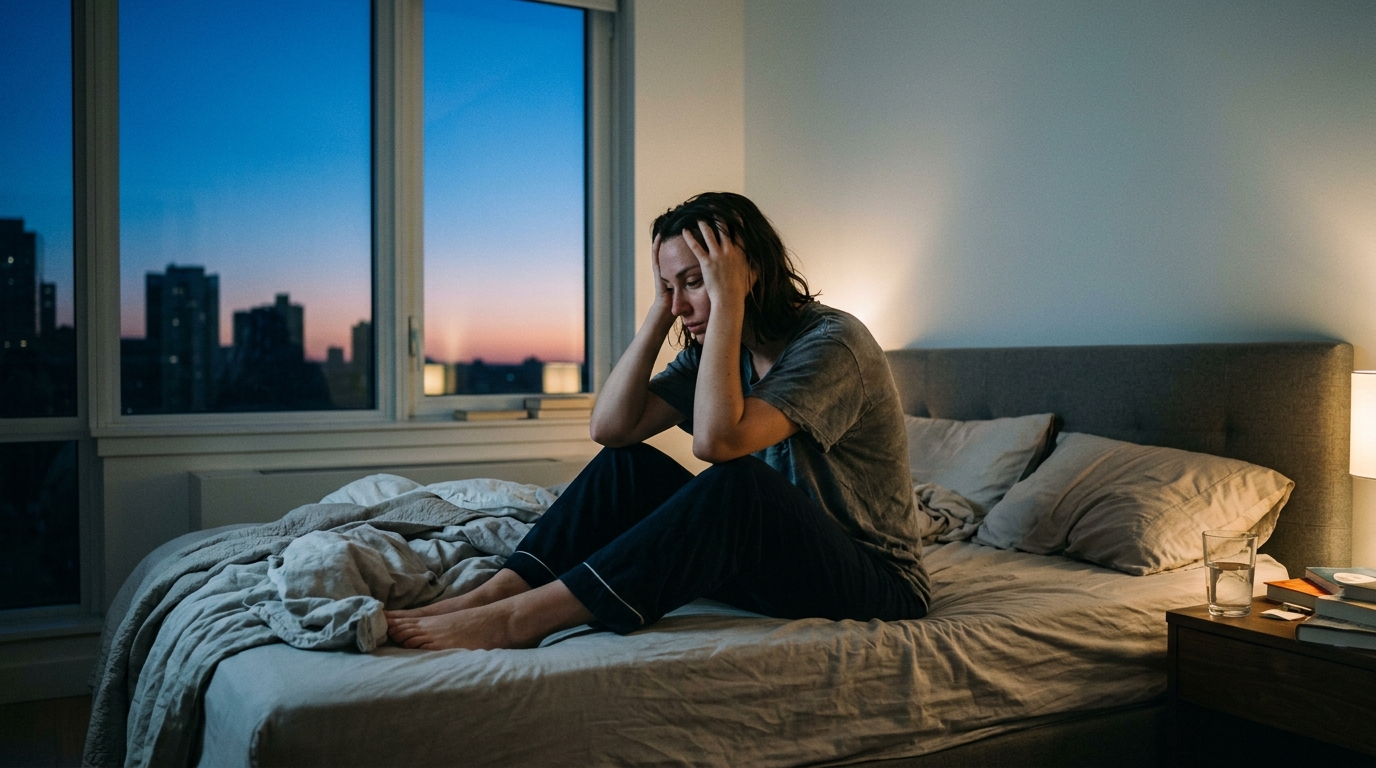
In an analysis examining sleep patterns and circadian health, researchers evaluated data from 63,752 adults living across China who wore photoplethysmography-based wearable devices. The investigation, conducted by Fu and colleagues and discussed in a commentary by Karin G. Johnson and Sabra M. Abbott in the Journal of Clinical Sleep Medicine, explored the consequences of social clocks diverging from natural solar timing. China provides a distinctive setting to assess this divergence because the country spans five geographic time zones under a single unified clock time. Johnson and Abbott observe that this single clock creates an environment where individuals residing farther west experience substantial schedule misalignment, directly mirroring the circadian disruptions that occur globally during daylight saving time.
The central mechanism examined is social jet lag, defined as sleeping later on free days compared to work days. Social jet lag serves as a documented marker of circadian disruption and reflects a mismatch between endogenous circadian time, which typically follows solar time, and exogenous social time set by external responsibilities. Obligations like early work, school, or caregiving schedules force earlier awakenings than biology dictates, while endogenous circadian timing makes falling asleep at earlier hours during the workweek difficult. For populations residing farther west within a single time zone, as well as those subject to daylight saving time, sunrises and sunsets occur at a later social time, intensifying this mismatch between biological clocks and social schedules.
Daylight saving time disrupts sleep cycles at both ends of the daily schedule. By shifting the social clock later, individuals receive greater evening light exposure, increasing the likelihood of circadian delays that make falling asleep at required bedtimes difficult. In the morning, mismatched social timing frequently requires waking prior to the endogenous circadian wake time, producing increased grogginess. In addition, because sunrises occur later relative to social clock time, individuals experience decreased exposure to morning light at required wake times. Morning light normally provides an essential daily advancing signal that resets circadian timing. This signal is especially vital for evening chronotypes and teenagers, who rely most heavily on morning cues to prevent their circadian rhythms from delaying further.
The broader consequences of prolonged clock shifts were illustrated by a natural experiment in Russia, where the country adopted permanent daylight saving time before shifting to permanent standard time. Analyzing this shift, Borisenkov and colleagues found that adolescents exposed to seasonal or permanent daylight saving time were 7 to 8 percent more likely to experience at least one hour of social jet lag and 17 percent more likely to experience at least two hours of social jet lag compared to permanent standard time. Although sleep duration remained similar, researchers documented an increased incidence of seasonal depression, indicating that circadian disruption affects health outcomes independently of sleep duration. Commentary authors Johnson and Abbott also evaluate proposals suggesting that later school start times could mitigate these negative effects on youth, noting that an established 8:30 AM high school start recommendation would have to shift to 9:30 AM under permanent daylight saving time to secure equivalent benefits.
In the wearable device study, Fu and colleagues found that individuals living farther west in China’s unified time zone had later sleep timing and greater social jet lag. The authors also found that high social jet lag was associated with increased smoking, caffeine use, and alcohol use, aligning with prior studies linking social jet lag or early school start times to elevated risk-taking behaviors. Fu and colleagues further observed correlations with higher rates of self-reported depression, diabetes, and obesity. Other studies evaluating daylight saving time and geographic position within a time zone report similar patterns. Clock misalignment with later sunrises and sunsets, characteristic of daylight saving time or living on a time zone’s western edge, is associated with higher rates of cancer, stroke, suicide, fatal motor vehicle accidents, and lower academic achievement.
These findings from China also counter a common myth used to support permanent daylight saving time, which claims that later sunsets promote increased exercise and improved health. In the wearable device analysis, Fu and colleagues found that higher social jet lag was actually associated with lower step attainment and reduced likelihood of meeting World Health Organization active status. This aligns with several studies, particularly in the United States, showing no overall increase in exercise levels with daylight saving time. Citing evidence that chronically misaligning solar and social clocks damages health, the American Academy of Sleep Medicine and more than one hundred medical and scientific societies have endorsed permanent standard time as the best approach to end seasonal clock changes.
Subject of Research: Circadian disruption and health impacts associated with social jet lag and clock misalignment
Article Title: The times they aren’t a-changin?
Article References: Johnson, K. G., & Abbott, S. M. (2026). The times they aren’t a-changin?. Journal of Clinical Sleep Medicine, 22(1), Article 217. https://doi.org/10.1007/s44470-026-00227-z
Image Credits: AI Generated
DOI: 10.1007/s44470-026-00227-z
Keywords: circadian disruption, social jet lag, daylight saving time, standard time, sleep medicine, wearable devices, public health, sleep timing, times, they, aren, a-changin
News Source: Ophelia Keating. (November 6, 2026). Study Links Social Jet Lag and Time Zone Misalignment to Health Risks. Scienmag.