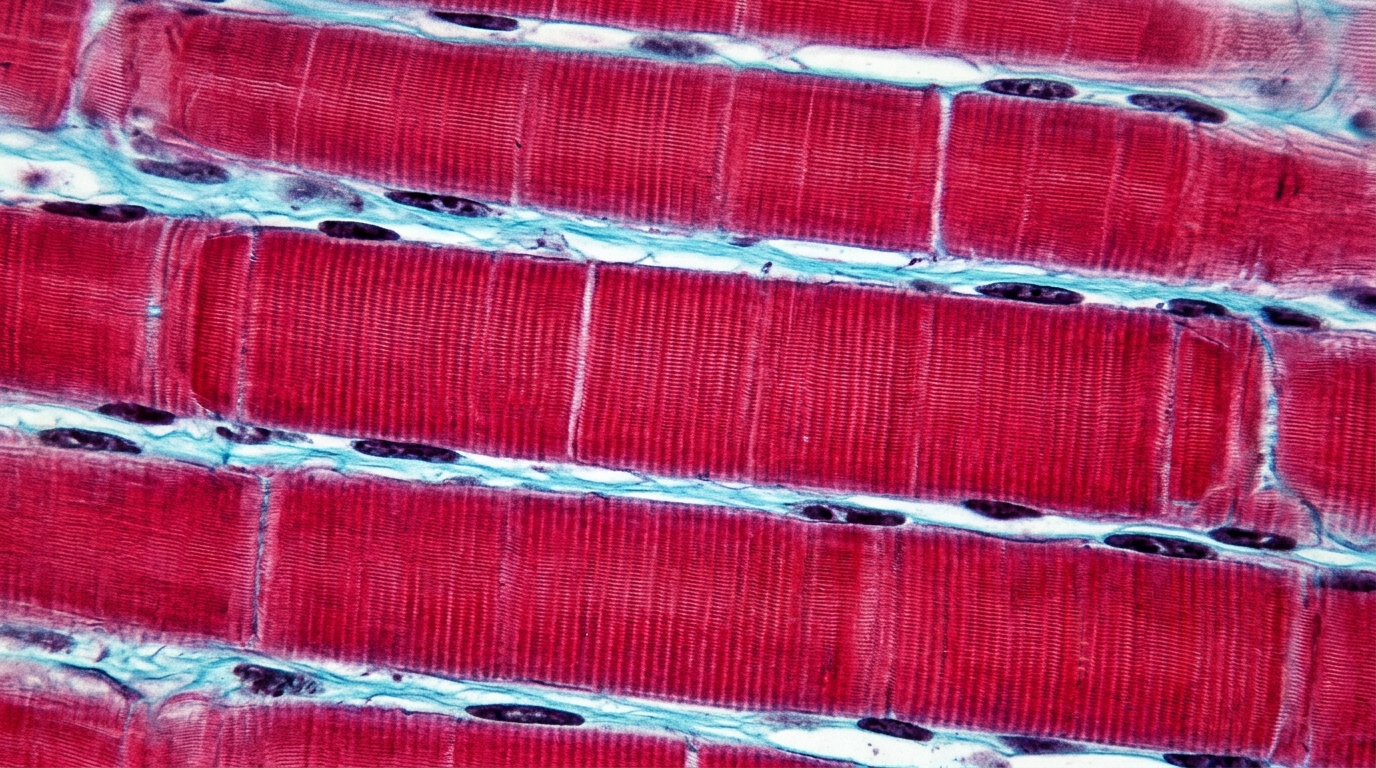
Dietary polyphenols—the diverse plant compounds behind the astringency of tea, the bitterness of coffee, and the deep colors of berries—may do far more than act as antioxidants. A new review published in Food Science & Nutrition argues that these secondary metabolites can act as genuine regulators of protein deposition, the net accumulation of protein in tissue that occurs when synthesis outpaces degradation. Drawing together cell studies, animal experiments, and the sparse human trials available, the authors map how compounds such as quercetin, curcumin, resveratrol, and EGCG intersect with the molecular machinery that builds and breaks down muscle protein, while also cautioning that the field’s most exciting claims still rest on indirect evidence.
Physiological protein deposition is distinct from the pathological protein clumping seen in neurodegenerative disease. In muscle, it underpins mass, strength, and physical performance, and its decline with aging contributes to sarcopenia, falls, and fractures in older adults. Beyond human health, the same biology drives growth rates and meat quality in livestock, which is why feed scientists and gerontologists alike are watching this literature. The review’s central claim is that polyphenols sit at a regulatory junction: they can nudge anabolic signaling upward, restrain excessive proteolysis, and reshape the metabolic environment—amino acid supply, lipid partitioning, glucose handling—in which protein accretion takes place.
The mechanistic core involves two master pathways. The IGF-1/PI3K/Akt cascade activates mechanistic target of rapamycin complex 1, or mTORC1, which promotes translation by phosphorylating S6K1 and 4E-BP1, releasing the brake on the initiation factor eIF4E. On the opposing side, AMP-activated protein kinase restrains mTORC1 under energy stress and promotes autophagy through ULK1. Crucially, the review stresses that neither pathway is uniformly anabolic or catabolic. In A549 lung cancer cells, resveratrol activates AMPK and suppresses mTOR, driving autophagy and apoptosis of the tumor cells. In C2C12 mouse myoblasts, quercetin does the opposite: it activates Akt/mTOR/4E-BP1 signaling and promotes protein synthesis and myogenic differentiation. The same molecular switch that starves a cancer cell may feed a growing muscle fiber.
The experimental record bears this out in fragments. Dietary quercetin at 0.2 grams per kilogram of feed increased protein content in the breast and thigh muscles of broilers and altered IGF-1/PI3K/Akt/mTOR-associated translational regulators. Curcumin has preserved myotube size or muscle mass under catabolic conditions in multiple models, alongside shifts in IGF-1/Akt/mTOR signaling and oxidative or inflammatory markers. On the degradation side, curcumin reduced expression of the muscle-specific E3 ubiquitin ligases MuRF1 and Atrogin-1 in stress- or dexamethasone-treated muscle cells, and daidzein alleviated cisplatin-induced muscle atrophy in mice while downregulating the same ligases through the Glut4/AMPK/FoxO pathway. These changes are consistent with restraint of excessive ubiquitin–proteasome activity, the cellular shredder that removes short-lived and damaged proteins.
Autophagy tells a subtler story. In denervated rat skeletal muscle, resveratrol reduced total proteolysis and dampened excessive proteasomal and lysosomal degradation, partly through PKA/CREB-associated regulation. Yet in other settings resveratrol increases autophagosome formation and promotes clearance of damaged proteins and organelles. The review argues these observations are not contradictory: suppressing runaway lysosomal proteolysis during wasting differs from restoring basal autophagic quality control. It also flags a methodological trap—more autophagosomes do not prove more autophagic flux, since stalled lysosomal clearance can inflate their numbers. Cyanidin, meanwhile, may limit calcium leakage from the sarcoplasmic reticulum and attenuate calpain activation, potentially sparing sarcomeric proteins from cleavage, while several polyphenols influence heat-shock proteins that chaperone protein folding.
Indirect metabolic routes may matter as much as direct signaling. Apple polyphenols at 800 milligrams per kilogram of diet increased crude protein content and the proportions of essential, flavor, and total amino acids in the longissimus dorsi muscle of finishing pigs, alongside elevated mRNA of the amino acid transporters SLC7A1, SLC7A2, SLC7A7, and SLC1A2. The same dose reduced backfat thickness and the abdominal adipose tissue index. Chlorogenic acid raised total and flavor amino acid contents and shifted myosin heavy chain expression in finishing pigs, and in grass carp, curcumin or ferulic acid increased intestinal amino acid and peptide transporter expression with improved growth. But the authors are blunt about the inferential gap: transporter mRNA abundance does not demonstrate transporter activity, amino acid flux, or incorporation into newly synthesized muscle protein.
Dose dependence complicates any simple narrative. In juvenile black carp, a moderate dose of tea polyphenols—50 milligrams per kilogram—improved growth performance and crude protein content while reducing crude lipid, but the highest tested dose reduced both growth and crude protein. Higher exposure is not uniformly better, and species- and compound-specific dose ranges remain undefined. Human evidence is thinner still. In an open-label, single-arm study of 46 older adults, a fermented black soybean product delivering 44.9 milligrams of polyphenols per packet, taken twice daily for 10 weeks, was associated with increased appendicular skeletal muscle mass index and reduced serum LDL cholesterol. Without a concurrent control group, however, the intervention effect cannot be separated from temporal, dietary, or behavioral changes, and the simultaneous muscle and lipid improvements do not show that lipid metabolism mediated muscle preservation.
The review’s most technically forward-looking section proposes a fix for the field’s chronic translation problem: quantitative in vitro-to-in vivo extrapolation, or QIVIVE. Rather than converting a nominal culture-medium concentration directly into an oral dose, investigators would estimate the unbound concentration, then feed compound-specific parameters—intestinal absorption, intrinsic hepatic clearance, plasma protein binding, tissue-to-plasma distribution—into a physiologically based kinetic model. Reverse dosimetry through tools like the web-based PBK toolbox developed by Punt and colleagues could estimate the oral-equivalent dose needed to reproduce an in vitro effect. If the required internal concentration cannot be achieved through realistic dietary or supplemental intake, the finding should not advance to a clinical efficacy trial. For polyphenols, the analysis must include circulating conjugates and gut microbial metabolites, which may dominate systemic exposure.
Clinical design would follow the question. Acute crossover studies could assess postprandial muscle protein synthesis with stable-isotope-labeled amino acids; longer parallel trials could use deuterated water to measure integrated synthesis over days or weeks. When polyphenols are co-administered with protein supplements or exercise, factorial designs should disentangle independent and interactive effects, with prespecified outcomes such as muscle mass by DXA or MRI, strength, and physical function. The review also proposes a tiered validation strategy for cell work: C2C12 screening first, then primary human myotubes, then co-culture or 3D constructs, with parent compounds compared against their circulating metabolites at physiologically relevant concentrations, and functional readouts—puromycin-based synthesis assays, proteasomal activity, autophagic flux, myotube diameter—replacing pathway markers alone.
The bottom line is measured but not dismissive. Current evidence supports the ability of selected polyphenols to restrain excessive proteolysis under specific catabolic conditions and to shift metabolic parameters in directions compatible with protein accretion, but most studies measured tissue protein content, pathway phosphorylation, or growth outcomes rather than fractional synthesis rates by tracer methods. Some apparent preservation of muscle mass may reflect reduced degradation rather than increased synthesis. In livestock, improvements in growth performance or meat quality do not necessarily indicate increased protein deposition, and natural origin alone does not establish safety or regulatory acceptability. The authors call for standardized doses, energy-matched or pair-fed controls, and direct measurements of protein turnover before polyphenols can be recommended as targeted nutritional agents for muscle health—whether the beneficiary is an aging adult or a finishing pig.
Subject of Research: Mechanisms by which dietary polyphenols regulate muscle protein deposition and health
Article Title: Dietary Polyphenols as Regulators of Protein Deposition and Muscle Health: Mechanisms, Interactions, and Functional Applications
Article References: Liu, C., Ren, M., Lai, X., Gu, K., Tan, L., Wu, A., & Chen, D. (2026). Dietary Polyphenols as Regulators of Protein Deposition and Muscle Health: Mechanisms, Interactions, and Functional Applications. Food Science & Nutrition, 14(11), Article e72487. https://doi.org/10.1002/fsn3.72487
Image Credits: AI Generated
DOI: 10.1002/fsn3.72487
Keywords: polyphenols, muscle protein synthesis, mTOR, AMPK, protein degradation, sarcopenia, quercetin, curcumin, resveratrol, EGCG, livestock nutrition, autophagy
News Source: Alan Morgan. (November 6, 2026). Plant Polyphenols May Steer Muscle Protein Deposition Through mTOR and AMPK. Scienmag.