• HOME
  • NEWS
  • EXPLORE
    • CAREER
      • Companies
      • Jobs
    • EVENTS
    • iGEM
      • News
      • Team
    • PHOTOS
    • VIDEO
    • WIKI
  • BLOG
  • COMMUNITY
    • FACEBOOK
    • INSTAGRAM
    • TWITTER
Friday, November 6, 2026
BIOENGINEER.ORG
No Result
View All Result
  • Login
  • HOME
  • NEWS
  • EXPLORE
    • CAREER
      • Companies
      • Jobs
        • Lecturer
        • PhD Studentship
        • Postdoc
        • Research Assistant
    • EVENTS
    • iGEM
      • News
      • Team
    • PHOTOS
    • VIDEO
    • WIKI
  • BLOG
  • COMMUNITY
    • FACEBOOK
    • INSTAGRAM
    • TWITTER
No Result
View All Result
Bioengineer.org
No Result
View All Result
Home NEWS Science News Technology

Skin-inspired gradient hydrogel electrode keeps EEG signals sharp for over 14 hours

by
November 6, 2026
in Technology
Reading Time: 2 mins read
0
Skin-inspired gradient hydrogel electrode keeps EEG signals sharp for over 14 hours

Skin-inspired gradient hydrogel electrode keeps EEG signals sharp for over 14 hours

Share on FacebookShare on TwitterShare on LinkedinShare on RedditShare on Telegram

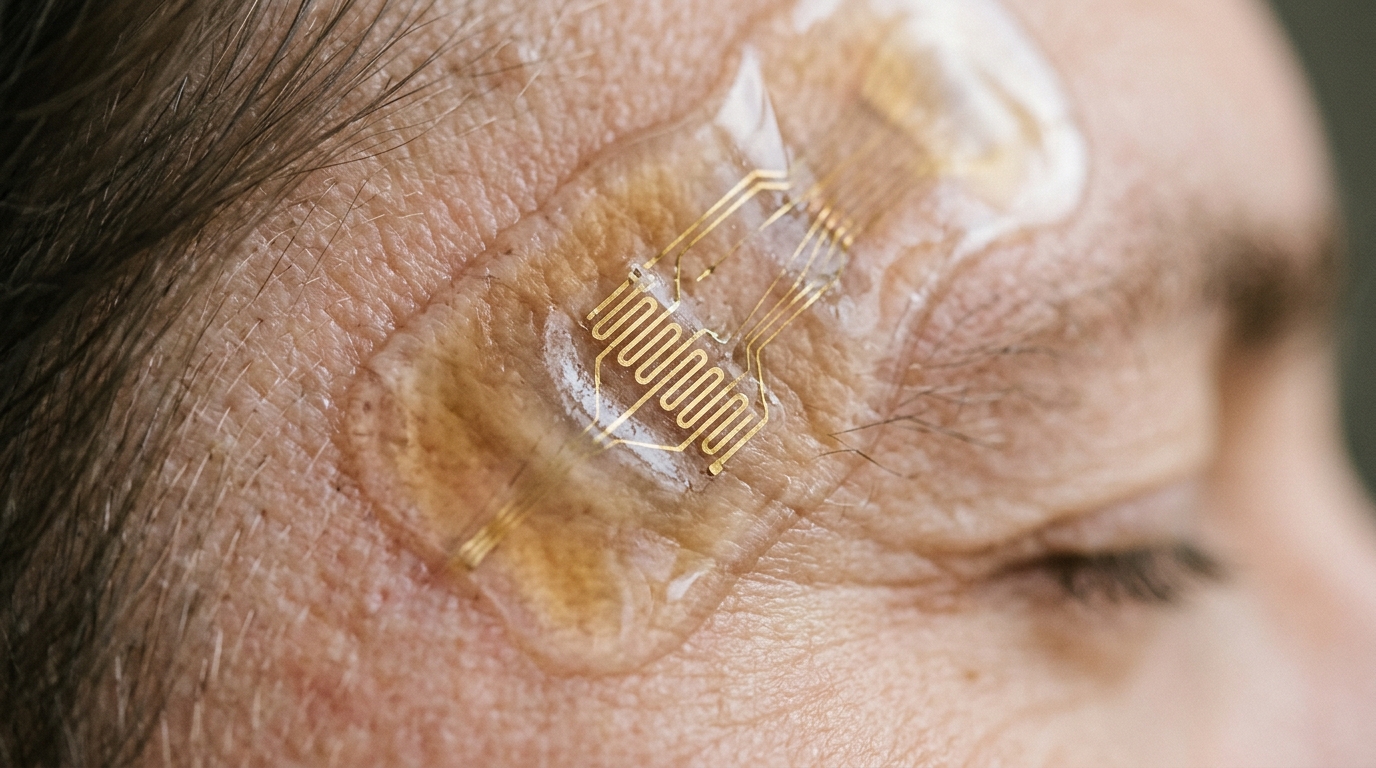
Noninvasive brain-computer interfaces promise to translate electrical activity from the scalp into commands for computers, but the electrodes that make this possible have long been caught in a design compromise. According to the researchers, current rigid or uniformly soft electrodes suffer from a mismatch with the scalp, causing motion artifacts and short operation times. A team reporting in npj Flexible Electronics says it has broken through this trade-off with a hydrogel electrode whose stiffness changes gradually from one end to the other, mimicking the layered structure of human skin.

The device, called a skin-mimetic adaptive gradient electrode, is soft at the interface with the scalp, where comfort and conformity matter most, and firm at the opposite end, where a solid connection to the electronic circuit is required.

The manufacturing approach behind the gradient relies on the Marangoni effect. By placing the hydrogel in a gradient temperature field, the team induced heterogeneous crosslinking, meaning the polymer network formed more densely in some regions than others.

The gradient design does more than tune stiffness. The crosslinking process also produces a gradient pore structure within the hydrogel, which the authors say enables sustained release of electrolyte. The authors link the gradient pore structure to sustained electrolyte release, which they associate with stable, high-quality recording over many hours of wear.

The electrode maintained stable, high-quality electroencephalographic recording for more than eight hours while the wearer moved freely, and for more than fourteen hours at rest. In a typing task used to gauge brain-computer interface function, accuracy stayed above 94 percent throughout the recording sessions.

The authors frame the advance as a demonstration of the potential of gradient-designed hydrogels for noninvasive BCIs in freely moving practicality.

Skin itself is the inspiration. The design is inspired by human skin's gradient structure, according to the researchers.

For now, the reported results establish that a gradient temperature field can induce heterogeneous crosslinking in a hydrogel, producing an electrode with gradual stiffness change and a gradient pore structure for sustained electrolyte release.

Subject of Research: A skin-mimetic hydrogel electrode with a stiffness gradient for long-term noninvasive brain-computer interface recording

Article Title: Skin-mimetic adaptive gradient electrode for ambulatory noninvasive brain-computer interfaces

Article References: Jiang, J., Chen, H., Huang, Z., Feng, Z., Zhou, S., Jia, H., Li, X., Huang, J., Xie, J., Liang, Y., Liang, Y., Tang, Z., Zhao, Z., Wei, W., Chen, H., Yang, L., Wang, H., Wang, J., Cao, S., … Lin, S. (2026). Skin-mimetic adaptive gradient electrode for ambulatory noninvasive brain-computer interfaces. npj Flexible Electronics. https://doi.org/10.1038/s41528-026-00650-5

Image Credits: AI Generated

DOI: 10.1038/s41528-026-00650-5

Keywords: brain-computer interface, hydrogel electrode, EEG, Marangoni effect, gradient stiffness, scalp electronics, motion artifacts, electrolyte release, wearable sensors, noninvasive BCI, Skin-mimetic, adaptive

News Source: Denise Maddox. (November 6, 2026). Skin-inspired gradient hydrogel electrode keeps EEG signals sharp for over 14 hours. Scienmag.


Tags: adaptiveBrain-Computer InterfaceEEGelectrolyte releasegradient stiffnesshydrogel electrodeMarangoni effectmotion artifactsnoninvasive BCIscalp electronicsSkin-mimeticwearable sensors
Share12Tweet7Share2ShareShareShare1

Related Posts

Quantum Convolutional Networks Classify Images Directly on Superconducting Hardware

Quantum Convolutional Networks Classify Images Directly on Superconducting Hardware

November 6, 2026
Solid Waste Geopolymer Pervious Concrete Balances Strength and Water Permeability

Solid Waste Geopolymer Pervious Concrete Balances Strength and Water Permeability

November 6, 2026

Research report: Enabling Users to Work Sustainably on Shared Institute Computing Resources

November 6, 2026

Study Maps Interdependent Socio-Technical Facilitators of Agricultural Blockchain Adoption

November 6, 2026

POPULAR NEWS

  • Diabetes and pre-treatment fatigue flag men at risk of years-long exhaustion after prostate radiotherapy

    Diabetes and pre-treatment fatigue flag men at risk of years-long exhaustion after prostate radiotherapy

    29 shares
    Share 12 Tweet 7
  • Two neighboring Tibetan townships, one shared policy, and two very different fates for their grasslands

    29 shares
    Share 12 Tweet 7
  • Solid-state caloric cooling edges closer to replacing vapour compression

    29 shares
    Share 12 Tweet 7
  • Review examines microbial oil fermentation strategies and industrial scale-up barriers

    29 shares
    Share 12 Tweet 7

About

We bring you the latest biotechnology news from best research centers and universities around the world. Check our website.

Follow us

Recent News

Dual Aptamer Systems Recognize Small Molecules by Sensing Conformational DNA States

Quantum Convolutional Networks Classify Images Directly on Superconducting Hardware

Cows and Goats on the Same Diet Host Distinct Anaerobic Fungal Communities

Subscribe to Blog via Email

Enter your email address to subscribe to this blog and receive notifications of new posts by email.

Join 86 other subscribers
  • Contact Us

Bioengineer.org © Copyright 2023 All Rights Reserved.

Welcome Back!

Login to your account below

Forgotten Password?

Retrieve your password

Please enter your username or email address to reset your password.

Log In
No Result
View All Result
  • Homepages
    • Home Page 1
    • Home Page 2
  • News
  • National
  • Business
  • Health
  • Lifestyle
  • Science

Bioengineer.org © Copyright 2023 All Rights Reserved.