• HOME
  • NEWS
  • EXPLORE
    • CAREER
      • Companies
      • Jobs
    • EVENTS
    • iGEM
      • News
      • Team
    • PHOTOS
    • VIDEO
    • WIKI
  • BLOG
  • COMMUNITY
    • FACEBOOK
    • INSTAGRAM
    • TWITTER
Friday, November 6, 2026
BIOENGINEER.ORG
No Result
View All Result
  • Login
  • HOME
  • NEWS
  • EXPLORE
    • CAREER
      • Companies
      • Jobs
        • Lecturer
        • PhD Studentship
        • Postdoc
        • Research Assistant
    • EVENTS
    • iGEM
      • News
      • Team
    • PHOTOS
    • VIDEO
    • WIKI
  • BLOG
  • COMMUNITY
    • FACEBOOK
    • INSTAGRAM
    • TWITTER
No Result
View All Result
Bioengineer.org
No Result
View All Result
Home NEWS Science News Biology

Replication Fork Instability at Specific Loci Drives PARP Inhibitor Cytotoxicity in Cells

by
November 5, 2026
in Biology
Reading Time: 2 mins read
0
Replication Fork Instability at Specific Loci Drives PARP Inhibitor Cytotoxicity in Cells

Replication Fork Instability at Specific Loci Drives PARP Inhibitor Cytotoxicity in Cells

Share on FacebookShare on TwitterShare on LinkedinShare on RedditShare on Telegram

Distinct replication-fork lesions in specific genomic regions serve as key determinants of poly(ADP-ribose) polymerase inhibitor cytotoxicity in cancer cells, according to research published in Nature Cell Biology. Although poly(ADP-ribose) polymerase inhibitors show promise for treating homologous recombination-deficient cancers, observed hypersensitivity in additional genetic contexts expands their potential use in precision oncology, despite the specific DNA lesions driving this cytotoxicity remaining poorly defined. Using CRISPR screens, investigators identified that the loss of the replication-coupled cohesin acetyltransferase ESCO2 confers hypersensitivity to poly(ADP-ribose) polymerase inhibitors independently of homologous recombination deficiency, sensitizing cells to treatment.

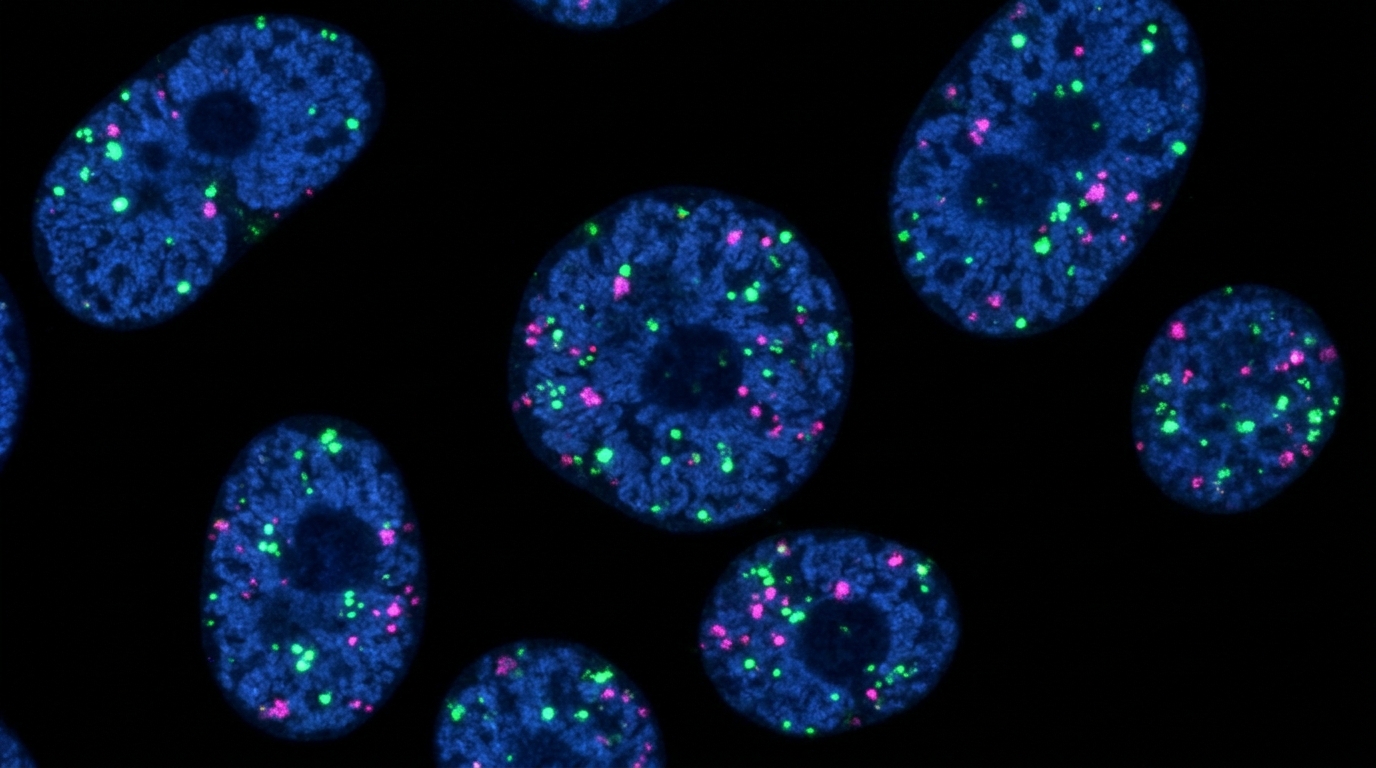
Through quantitative single-molecule imaging, the researchers demonstrated that ESCO2 depletion triggers replication-associated damage signalling and promotes the accumulation of G-quadruplex DNA structures at a subset of replication-associated sites. Experimental analyses showed that ESCO2 depletion specifically increases these replisome-associated G-quadruplex structures during DNA replication without elevating R-loops. In response to this accumulation, replisome-associated G-quadruplex structures activate PARP1 and engage the fork protection factor TIMELESS to mitigate G-quadruplex-induced replication stress.

The investigation further revealed that these G-quadruplex lesions localize specifically to fragile pericentromeric regions and engage the G-quadruplex helicase DDX11. Under conditions of ESCO2 deficiency, this pericentric replisome-associated G-quadruplex fragility becomes sensitive to poly(ADP-ribose) polymerase inhibition. When poly(ADP-ribose) polymerase is inhibited in this setting, the protective response is disrupted because the treatment prevents the PARP1-dependent engagement of both TIMELESS and DDX11, significantly reducing TIMELESS recruitment and exacerbating the cellular G-quadruplex burden.

Disruption of this protective pathway ultimately leads to unresolved G-quadruplex accumulation, DNA damage, and chromosomal instability in treated cells. Overall, the findings define the G-quadruplex–PARP1–TIMELESS–DDX11 axis as a critical safeguard of replication fork stability at hard-to-replicate loci. By demonstrating that positional replication fork instability drives inhibitor cytotoxicity, the cellular findings reveal ESCO2 as a potential therapeutic target for promoting synthetic lethality in cancers treated with poly(ADP-ribose) polymerase inhibitors.

Subject of Research: ESCO2 deficiency and replication fork instability in PARP inhibitor cytotoxicity

Article Title: Positional replication fork instability drives PARP inhibitor cytotoxicity

Article References: Gupta, D., Ding, X., Zhang, L., Coleman, K. E., Tang, G., Lee, W. T. C., Oyer, J., Kang, X., Ramms, D. J., Yu, Z., VanArsdale, T., Fenyo, D., Huang, T. T., & Rothenberg, E. (2026). Positional replication fork instability drives PARP inhibitor cytotoxicity. Nature Cell Biology. https://doi.org/10.1038/s41556-026-02126-0

Image Credits: AI Generated

DOI: 10.1038/s41556-026-02126-0

Keywords: PARP inhibitors, ESCO2, replication fork instability, G-quadruplex, TIMELESS, DDX11, synthetic lethality, CRISPR screens, Positional, replication, fork, instability

News Source: Drew Townsend. (November 5, 2026). Replication Fork Instability at Specific Loci Drives PARP Inhibitor Cytotoxicity in Cells. Scienmag.


Tags: CRISPR ScreensDDX11ESCO2forkG-quadruplexinstabilityPARP inhibitorsPositionalreplicationreplication fork instabilitySynthetic lethalityTIMELESS
Share12Tweet7Share2ShareShareShare1

Related Posts

Sex May Modify Obesity-Related Heart Failure Physiology but Not Treatment Eligibility

Sex May Modify Obesity-Related Heart Failure Physiology but Not Treatment Eligibility

November 6, 2026
Isoflurane Anaesthesia Leaves Rabbit Gut Transit and Appetite Largely Unchanged

Isoflurane Anaesthesia Leaves Rabbit Gut Transit and Appetite Largely Unchanged

November 6, 2026

Scientists design first selective TNKS2 inhibitor to shut down WNT signaling in 8p-deleted tumors

November 6, 2026

Long Contact Times on AAV Affinity Resins Reshape Yield and Purity

November 5, 2026

POPULAR NEWS

  • Sex May Modify Obesity-Related Heart Failure Physiology but Not Treatment Eligibility

    Sex May Modify Obesity-Related Heart Failure Physiology but Not Treatment Eligibility

    29 shares
    Share 12 Tweet 7
  • ADHD Medication Dispensing in Norway Rose Significantly Between 2005 and 2025

    29 shares
    Share 12 Tweet 7
  • Survey Finds Gap Between Geriatric Prescribing Knowledge and Practice in Indian Dentists

    29 shares
    Share 12 Tweet 7
  • Isoflurane Anaesthesia Leaves Rabbit Gut Transit and Appetite Largely Unchanged

    29 shares
    Share 12 Tweet 7

About

We bring you the latest biotechnology news from best research centers and universities around the world. Check our website.

Follow us

Recent News

Sex May Modify Obesity-Related Heart Failure Physiology but Not Treatment Eligibility

ADHD Medication Dispensing in Norway Rose Significantly Between 2005 and 2025

Survey Finds Gap Between Geriatric Prescribing Knowledge and Practice in Indian Dentists

Subscribe to Blog via Email

Enter your email address to subscribe to this blog and receive notifications of new posts by email.

Join 86 other subscribers
  • Contact Us

Bioengineer.org © Copyright 2023 All Rights Reserved.

Welcome Back!

Login to your account below

Forgotten Password?

Retrieve your password

Please enter your username or email address to reset your password.

Log In
No Result
View All Result
  • Homepages
    • Home Page 1
    • Home Page 2
  • News
  • National
  • Business
  • Health
  • Lifestyle
  • Science

Bioengineer.org © Copyright 2023 All Rights Reserved.