Artificial intelligence has transformed the way engineers monitor electric motors, but a new systematic review argues that many of the field’s headline results rest on fragile foundations. The review, published in Discover Electronics, examined AI-enabled methods for estimating the thermal and fault states of electric motor drives, with particular emphasis on permanent magnet synchronous motors and induction motors. Its central conclusion is uncomfortable for a field that routinely reports near-perfect diagnostic scores: trustworthy motor monitoring depends less on isolated accuracy gains than on transparent datasets, group-aware validation, training-only preprocessing, evaluation under unseen conditions, and honest reporting of hardware-relevant metrics.
The review followed PRISMA 2020 reporting guidelines and searched IEEE Xplore, SpringerLink, ScienceDirect, and the MDPI platform from January 2015 through a formal cut-off of 31 May 2026. The search identified 254 records, of which 33 were removed as duplicates. After title and abstract screening excluded 64 records and full-text assessment excluded another 33, the qualitative synthesis comprised 124 studies. Each study was assessed along five dimensions: dataset transparency, validation clarity, leakage control, generalization evidence, and deployment relevance. Notably, the single-author review did not perform a quantitative meta-analysis, because the evidence base is too heterogeneous in motor type, fault definition, signal modality, dataset size, and outcome metric for pooled accuracy figures to be meaningful.
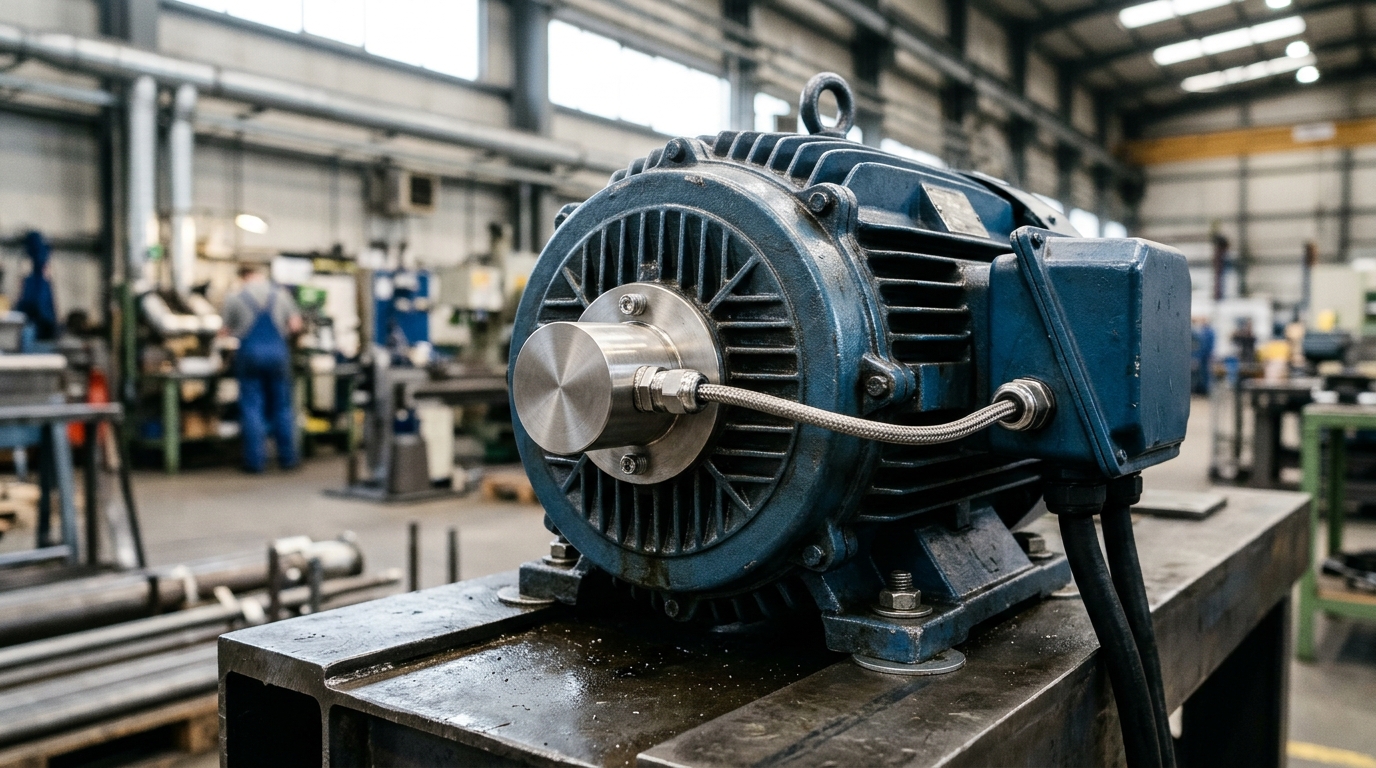
The motivation is practical. Electric motor drives now sit at the heart of electric vehicles, industrial automation, robotics, renewable energy systems, aerospace actuators, and smart manufacturing. Permanent magnet synchronous motors are prized for their high torque density and efficiency but are vulnerable to stator winding faults, demagnetization, eccentricity, inverter-related faults, sensor faults, and thermal overstress. Induction motors remain dominant in industry thanks to their robustness and low cost, yet they frequently suffer bearing faults, broken rotor bars, stator faults, and load-dependent degradation. Failures can cascade into efficiency losses, unplanned downtime, maintenance costs, or safety-critical consequences, which is why condition monitoring has attracted sustained attention from academia and industry alike.
What makes the review distinctive is its insistence that fault diagnosis and thermal state estimation be treated as coupled problems rather than separate research silos. In real motor-drive systems, the two are physically intertwined. A stator winding fault can raise local losses and generate abnormal heating; bearing degradation increases friction, vibration, and thermal load; demagnetization alters electromagnetic characteristics and loss distribution; and inverter faults distort current waveforms while adding thermal stress. The causality runs both ways, since excessive winding temperature accelerates insulation aging and excessive magnet temperature can trigger irreversible demagnetization. The review argues that future monitoring systems should therefore move toward integrated thermal-fault state estimation frameworks that combine electrical, mechanical, thermal, and operating-profile information.
The methodological heart of the paper is its analysis of data leakage in correlated motor time series. Because motor datasets are built from continuous recordings, adjacent windows extracted from the same operating sequence are highly correlated. When overlapping or neighboring windows are randomly distributed across training and test sets, a high-capacity model can exploit sequence-specific patterns rather than learning genuinely generalizable fault or thermal features. The review catalogs four contamination mechanisms: window overlap, preprocessing fitted before data separation, operating-profile overlap, and feature-selection leakage. Normalization statistics computed on the full dataset before splitting, for example, let the distribution of unseen test data partially leak into training. Similarly, if samples from the same driving profile appear in both training and test sets, a thermal model may post a low error simply because the test samples closely resemble its training data.
Leakage status was coded separately from general methodological quality, using four categories: documented low risk, explicit high risk, indeterminate, and not applicable. The authors stress that missing reporting was never treated as proof that leakage occurred, and statements that risk cannot be ruled out refer to reporting limitations rather than confirmed contamination. Even so, the assessment revealed uneven methodological strength across the literature. Dataset reporting was strongest in benchmark and data papers, while operating-profile identifiers and preprocessing details were often incomplete in private test-bench studies. Basic train-test procedures were usually reported, but held-out profile, condition, machine, or external-dataset tests were much less common, leaving a substantial part of the literature with medium-strength evidence: useful algorithmic results, but limited support for claims of transfer beyond the evaluated data distribution.
The review also maps how signal modality shapes what can be monitored. Stator current is popular because it is non-invasive, cheap to acquire, and already measured for control purposes in inverter-fed drives, yet its signatures shift with operating conditions, supply harmonics, and control strategy. Vibration signals are more directly sensitive to mechanical faults such as bearing defects and eccentricity, but they demand additional sensors, careful placement, and robust noise handling. Acoustic sensing has emerged as a low-cost, non-contact alternative, though it is highly sensitive to background noise and microphone position. Thermal estimation requires sequential information on load torque, speed, current, voltage, ambient and coolant temperatures, and previous thermal history, while infrared imaging visualizes surface heat distribution but cannot see internal states. Multi-sensor fusion can improve reliability, but it raises synchronization requirements, hardware cost, and overfitting risk on small datasets.
On the modeling side, the field has moved from handcrafted features and classical machine learning toward deep architectures. Convolutional neural networks dominate signal-based fault diagnosis, learning local patterns directly from raw current, vibration, or acoustic sequences or from spectrograms and scalograms. Recurrent networks, long short-term memory models, and gated recurrent units capture the temporal dependencies that thermal estimation demands, since motor temperature reflects accumulated heat from previous operating states rather than instantaneous conditions alone. Autoencoders support anomaly detection when labeled fault data are scarce, attention mechanisms and Transformers promise better handling of long-range dependencies, and transfer learning addresses domain shift between test benches. Thermal neural networks, which combine data-driven learning with a state-space structure inspired by lumped-parameter thermal modeling, are highlighted as a way to preserve physical plausibility while improving extrapolation to unseen duty cycles.
Deployment emerges as a recurring blind spot. Deep learning models with strong offline performance may not fit motor controllers, embedded devices, or edge monitoring units that face strict limits on computational cost, memory usage, inference latency, and sensor availability. The review calls for lightweight architectures, model compression through pruning, quantization, and knowledge distillation, physics-informed learning, digital twin integration, and edge AI, all evaluated under leakage-free and deployment-aware protocols. It also urges researchers to report deployment-related metrics such as model size, inference time, memory footprint, and preprocessing complexity alongside accuracy. For thermal estimators running continuously as virtual temperature sensors, average error is not enough: a model with low mean error may still underestimate peak temperature during overload, and underestimation is the more dangerous failure because it can delay protection or derating actions.
The review closes with a research agenda for integrated thermal-fault monitoring built on robust validation, interpretable learning, compact models, and real-time deployment. Its recommended roadmap is staged: define the intended deployment scenario before designing the validation protocol; split datasets at the profile, condition, machine, or dataset level whenever generalization is claimed; fit preprocessing only on training data; evaluate models on robustness, failure cases, peak-temperature behavior, false alarms, and deployment cost rather than average accuracy alone; and integrate thermal, electrical, mechanical, and drive-level information for a fuller picture of motor health. The authors also acknowledge their own limitations, including a single-author screening process, an unregistered protocol, and a formal search that ended on 31 May 2026, with later publications cited only as contextual updates. The message for the field is clear: a modest score under held-out operating profiles can be stronger evidence than a near-perfect score from correlated windows, and the next generation of motor monitoring research will be judged on how convincingly it proves that point.
Subject of Research: Systematic review of artificial intelligence methods for thermal and fault state estimation in electric motor drives
Article Title: Systematic review of artificial intelligence for thermal and fault state estimation in electric motor drives
Article References: Jobani, A. E. (2026). Systematic review of artificial intelligence for thermal and fault state estimation in electric motor drives. Discover Electronics, 3(1), Article 130. https://doi.org/10.1007/s44291-026-00287-8
Image Credits: AI Generated
DOI: 10.1007/s44291-026-00287-8
Keywords: electric motor drives, artificial intelligence, fault diagnosis, thermal state estimation, data leakage, validation protocols, permanent magnet synchronous motors, induction motors, deep learning, edge deployment, systematic review, condition monitoring
News Source: Blake Davidson. (November 5, 2026). AI motor monitoring shows high accuracy but weak validation, review finds. Scienmag.