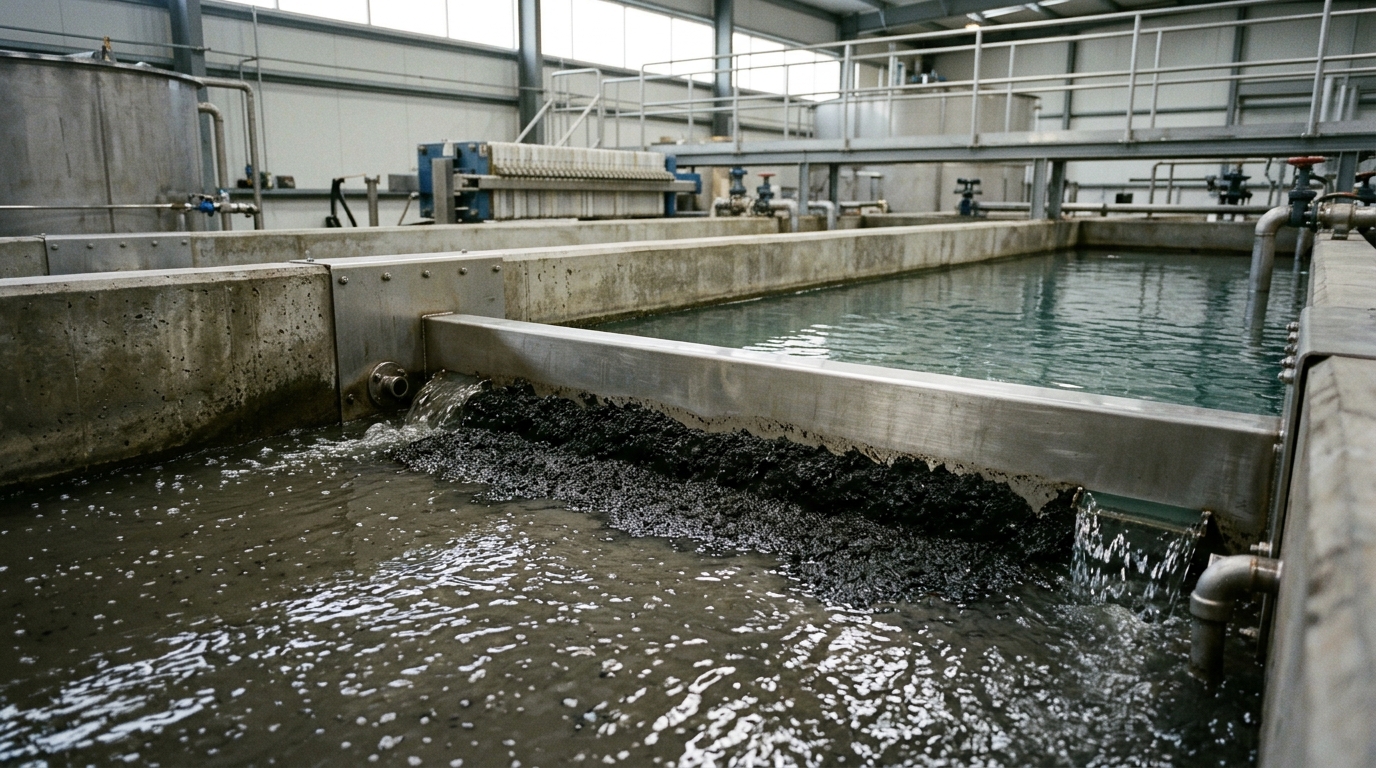
Researchers report a new computational framework that predicts and optimizes the synthesis of ZnO-modified Fe₂O₃ nanoparticles, materials designed for adsorption and photocatalytic wastewater treatment. The study, published in Earth Science Informatics, introduces two tools: a Hierarchical Cognitive Neuro Forecasting Framework (HCNFF) for predicting photocatalytic degradation efficiency and adsorption performance, and an Adaptive Quantum Automation Intelligence Network (AQAI-Net) for automatically tuning synthesis parameters. According to the abstract, the system achieved a maximum prediction accuracy of 98.88% and an optimization accuracy of 98.91%.
The work addresses a persistent bottleneck in environmental nanotechnology. ZnO-modified Fe₂O₃ nanoparticles are valued for high adsorption capacity and enhanced catalytic activity, making them candidates for advanced remediation and photocatalytic treatment of polluted water. But the authors note that existing prediction and optimization methods suffer from poor prediction accuracy, high computational complexity, low convergence stability and low environmental adaptability, limiting how reliably laboratories can scale such materials to varying operational conditions.
HCNFF tackles the prediction side through three combined mechanisms: hierarchical feature reconstruction, adaptive neural forecasting and cognitive learning. The abstract states that the framework was built to realize intelligent prediction of the nanoparticles, extending pollutant degradation abilities, structural strength and environmental adaptability across changing operational conditions.
AQAI-Net handles the optimization and control side. It combines quantum-inspired optimization, adaptive learning and automatic control regulation to adjust synthesis parameters without constant manual intervention.
The reported performance figures come from the study’s experimental results as summarized in the abstract: a maximum prediction accuracy of 98.88% for HCNFF and an optimization accuracy of 98.91% for AQAI-Net. These are model-level accuracies for forecasting and parameter optimization within the reported experiments; the abstract does not report field-scale deployment data, long-term stability results or comparisons against specific competing algorithms, so the figures should be read as benchmarks from the authors’ own testing rather than independently validated performance guarantees.
It appears in Volume 19, article number 236 of Earth Science Informatics, published on 03 November 2026 under DOI 10.1007/s12145-026-02276-7.
Why does this matter for water treatment? Photocatalytic degradation and adsorption are two of the most widely studied mechanisms for removing organic pollutants and contaminants from wastewater.
Limitations remain. The reported accuracies describe the computational system’s performance, not the nanoparticles’ real-world pollutant removal rates under uncontrolled field conditions.
Subject of Research: AI-driven prediction and optimization framework for synthesizing ZnO-modified Fe₂O₃ nanoparticles for environmental remediation and photocatalytic wastewater treatment.
Article Title: Synthesis and physicochemical characterization of ZnO-modified Fe₂O₃ nanoparticles with HCNFF-based prediction and AQAI-Net-based optimization for environmental applications
Article References: Singh, P. K., Pamuluri, V. K. N., Sree, S. N., Rajput, V., Saravanan, A., Punia, A., Sule, B., Mundada, K., & Arumugam, M. (2026). Synthesis and physicochemical characterization of ZnO-modified Fe₂O₃ nanoparticles with HCNFF-based prediction and AQAI-Net-based optimization for environmental applications. Earth Science Informatics, 19(12), Article 236. https://doi.org/10.1007/s12145-026-02276-7
Image Credits: AI Generated
DOI: 10.1007/s12145-026-02276-7
Keywords: ZnO-modified Fe2O3 nanoparticles, HCNFF, AQAI-Net, photocatalytic wastewater treatment, adsorption, environmental remediation, quantum-inspired optimization, prediction accuracy, nanotechnology, Earth Science Informatics, synthesis optimization, sustainable environmental nanotechnology
News Source: Violet Maxwell. (November 5, 2026). AI-guided ZnO-modified iron oxide nanoparticles hit 98.88% prediction accuracy for wastewater cleanup. Scienmag.