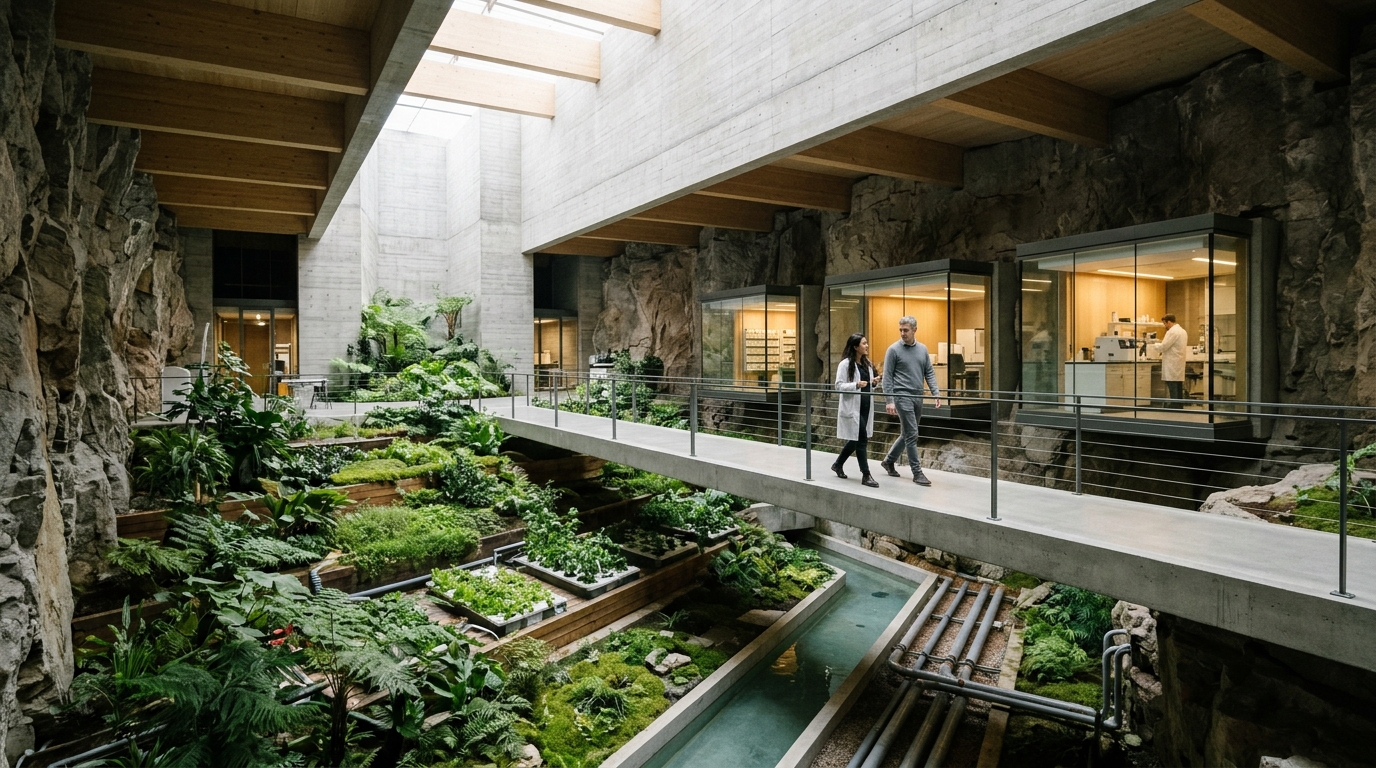
A new open access journal called GeoEnergy Communications has launched with a mission that reaches far beneath the surface: the sustainable use of the Earth’s crust for energy generation, storage and infrastructure. The editorial, published on 17 September 2025 in Volume 1 of the journal, lays out why the subsurface has become central to climate policy, energy security and urban planning, and what kind of research the journal hopes to attract. It is free for authors and readers alike, a model the editors argue removes financial barriers to knowledge dissemination at a moment when sharing technical ideas across borders has become urgent.
The journal’s thematic focus sits at the intersection of energy, environment and underground engineering. The editorial notes that fossil fuels still accounted for 79 percent of global primary energy consumption in 2023, according to the International Energy Agency, yet decarbonization pressures are reshaping the mix. By 2030, renewables are projected to supply 35 percent of global electricity, with geothermal energy alone expected to grow by 150 percent, citing IRENA figures. The editors stress that replacing fossil capacity is not enough on its own; the transition also requires harmonizing base-load capacity, storage solutions and fluctuating renewable supply so that grids remain stable as generation patterns shift.
Storage is where the underground becomes indispensable, the editorial argues. Grid-scale energy storage must expand fifteenfold by 2040 to meet net-zero targets, according to Bloomberg NEF, and subsurface technologies offer what the editors call unparalleled potential for meeting that demand.
Beyond energy, the journal emphasizes environmentally responsible use of underground space as urbanization intensifies. More than 70 percent of the global population is expected to live in cities by 2050, according to the United Nations, requiring smarter infrastructure including tunnels and repurposed abandoned mines. Europe already hosts over 15,000 kilometers of underground transport tunnels, while China’s sponge city programs use subsurface reservoirs to manage flooding. The editorial also points to carbon capture and storage, with 40 operational facilities worldwide sequestering 45 million tons of carbon dioxide annually according to the Global CCS Institute, and geothermal heating systems now warming 100 million households globally.
The editors frame the broader challenge in stark terms. The global population is approaching 8.1 billion, with 3 billion people aspiring to higher living standards, while atmospheric carbon dioxide exceeds 420 parts per million and species are vanishing roughly a thousand times faster than natural rates, citing the IPCC and IUCN. Resource extraction is responsible for half of the world’s carbon emissions and 80 percent of biodiversity loss, according to WWF figures quoted in the editorial. Mining remains indispensable for supplying materials for renewables, batteries and infrastructure, but the journal advocates that it must evolve toward less disruptive practices.
Among the techniques the editorial highlights are in-situ leaching, already used in 30 percent of uranium extraction, and biomining, which the editors say can reduce surface disruption by up to 60 percent. Repurposing abandoned mines is presented as another opportunity, with voids convertible into compressed air energy storage or flooded chambers usable for hydropower that supports grid stability. The journal also invites work on circular economy models for mining waste, an area the editors link to soaring demand for critical minerals; lithium requirements alone are projected to grow fortyfold by 2040 according to the IEA.
On the technology frontier, the editorial names enhanced geothermal systems, hydrogen storage in caverns and AI-driven subsurface modeling as priority topics.
Editorial governance is presented as a strength. The board comprises leading experts from different countries spanning academia, industry and management, which the editors say ensures rigorous peer review and visionary curation. Unlike traditional journals, GeoEnergy Communications aims to spotlight not only peer-reviewed articles and comprehensive reviews but also cutting-edge technical solutions, disruptive ideas and visionary concepts that cross disciplinary boundaries. The editors describe this as actionable science, intended to accelerate the translation of breakthroughs from laboratory and field trials into engineering practice.
The editorial invokes UNESCO studies suggesting that open access to scientific research can accelerate innovation by up to 40 percent, democratizing insights for policymakers, industry leaders and communities. The invitation to contributors is broad: deep geothermal energy, smart underground cities, ethical and efficient subsurface practices, and concepts that challenge conventions in how the crust is used. The closing ambition is to transform the Earth’s crust from a resource repository into an engine of sustainable progress, with the journal positioned as the communication channel for that transformation.
Subject of Research: Launch of an open access journal on sustainable subsurface utilization for energy, storage and underground infrastructure
Article Title: Bridging innovation and sustainability in subsurface utilization
Article References: Konietzky, H. (2025). Bridging innovation and sustainability in subsurface utilization. GeoEnergy Communications, 1(1), Article 2. https://doi.org/10.1007/s44421-025-00007-0
Image Credits: AI Generated
DOI: 10.1007/s44421-025-00007-0
Keywords: GeoEnergy Communications, open access, geothermal energy, energy storage, carbon capture and storage, hydrogen storage, abandoned mines, urbanization, critical minerals, sustainability, subsurface engineering, energy transition
News Source: Sloane Callahan. (November 5, 2026). New open access journal links underground innovation to sustainability. Scienmag.