Antimicrobial resistance in the Arabian Gulf is being sustained by an unexpected alliance between nature’s harshest ecosystems and humanity’s most ambitious water engineering, according to a narrative review published in Annals of Microbiology. The review, led by Shuaibu Abdullahi Hudu and colleagues, synthesizes studies published between 2005 and 2025 to argue that desert soils, wastewater treatment plants, reclaimed irrigation networks, wildlife-livestock interfaces, atmospheric dust and coastal waters together form interconnected reservoirs of antibiotic resistance genes in one of the driest regions on Earth. The authors propose a Gulf-specific One Health transmission framework and call for environmental surveillance that currently does not exist across most of the region.
The review’s central premise is that hyper-arid environments have been largely overlooked in global antimicrobial resistance research, even though drylands cover roughly forty percent of the planet’s terrestrial surface. Arid ecosystems impose chronic desiccation, intense ultraviolet radiation, high salinity, scarce nutrients and extreme temperature swings on their microbial inhabitants. These pressures select for survival machinery that overlaps with resistance phenotypes, including heightened DNA repair activity, membrane stabilization, overexpression of efflux pumps and biofilm formation. Metagenomic studies cited in the review show that desert microbiomes with little direct exposure to human antimicrobials still carry diverse resistomes, encompassing not only efflux and tetracycline resistance genes but also beta-lactamases. This suggests that resistance genes in these environments may persist as adaptive functions of extremophile life rather than as by-products of clinical or agricultural drug use.
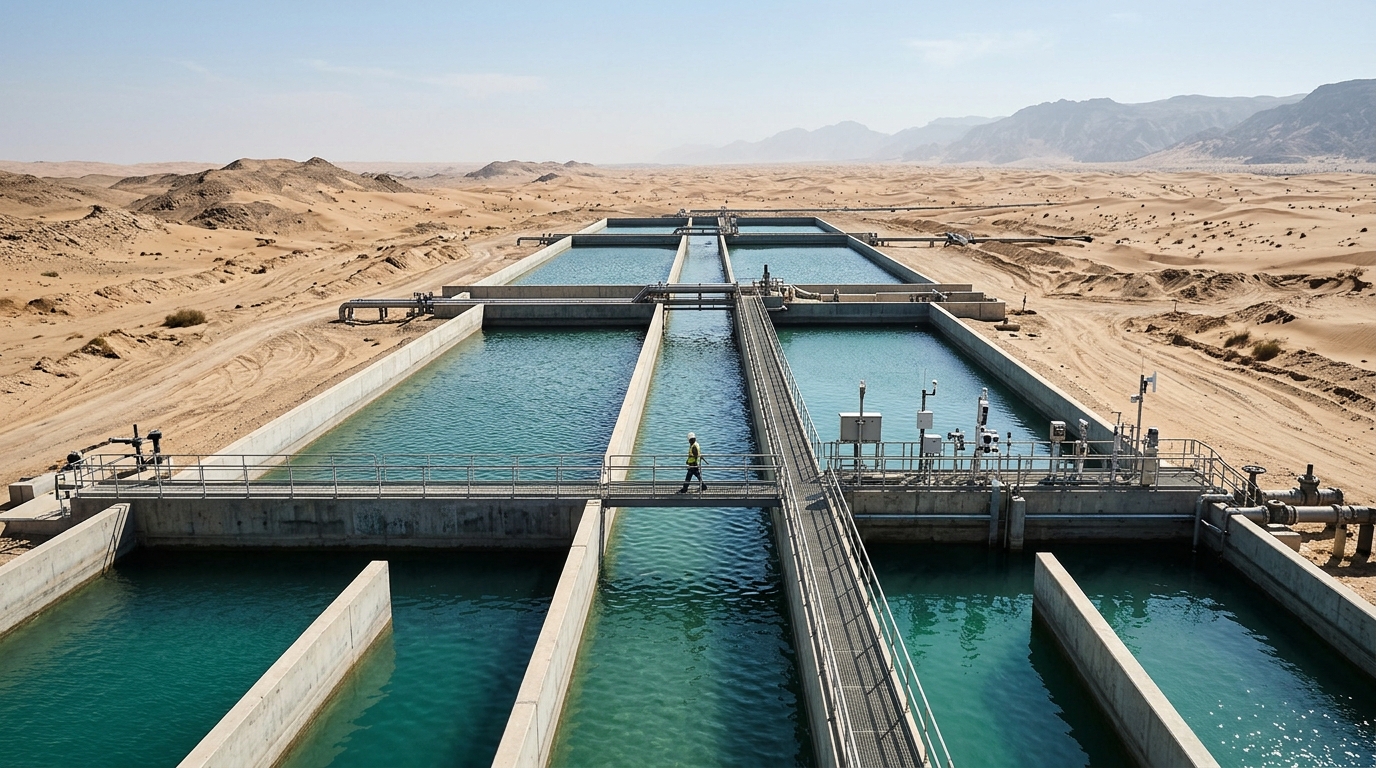
The Arabian Gulf serves as the review’s model system because its hyper-arid climate collides with rapid urbanization, dense urban populations, concentrated animal feeding operations and heavy dependence on engineered water. Desalination supplies much of the region’s freshwater, while reclaimed treated wastewater is widely recycled for agricultural irrigation and landscaping. The authors describe how these practices create interconnected soil-water and water-air interfaces where resistant bacteria, antimicrobial residues and mobile genetic elements accumulate under extreme salinity and evaporation. Hospital effluents, industrial discharges and crowded labor camps add further selective pressures, introducing high levels of antibiotic residues, disinfectants, metal ions and resistant pathogens into both centralized and household water networks.
Wastewater systems emerge as a focal reservoir. More than half of reclaimed effluent in several Gulf states is allocated to agricultural and landscape irrigation, and warm temperatures, prolonged hydraulic retention, elevated nutrient loads and residual antimicrobial exposure create conditions that favor biofilm formation and horizontal gene transfer. The review notes that most conventional treatment methods reduce pathogen levels but do not eliminate the mobile genetic elements, such as plasmids, integrons and transposons, that shuttle resistance genes between environmental and clinically relevant bacteria. Dense multispecies communities within treatment systems, combined with residual antimicrobials, heavy metals and disinfectants, collectively create conditions favorable for genetic exchange. Regional surveillance cited in the review indicates that healthcare-associated effluents can serve as sources of carbapenem-resistant Enterobacterales and extended-spectrum beta-lactamase-producing organisms in urban networks.
Desalination brine adds a distinctly Gulf dimension. Brine discharge often carries high concentrations of microbes, nutrients, metals and organics, and may function as a microhabitat where resistant organisms persist at very high salinity. The authors report that initial data indicate halotolerant bacteria at brine discharge sites harbor multidrug efflux systems and stress-mediated adaptation genes involved in antimicrobial tolerance, potentially through cross-resistance. Research in this area remains minimal, but the review raises the question of whether brine discharges contribute to increased resistance in the semi-enclosed coastal waters of the Arabian Gulf, where limited hydrological exchange slows dilution and flushing.
Soils complete the terrestrial picture. Gulf agricultural soils receive reclaimed wastewater irrigation, manure from poultry and small ruminants exposed to heat stress and antibiotic treatment, and rising groundwater salinity, loading them with antibiotic residues, metals, disinfectants and mobile genetic elements. Under arid conditions, where microbial competition is reduced and stress tolerance is advantageous, these inputs may persist longer than in hydrated soils, forming localized niches that support long-term amplification of resistance gene communities. Desert urban soils, including roadside soils, construction sites and peri-urban open spaces, are described as especially understudied. Studies in arid megacities suggest that extended-spectrum beta-lactamase-producing Enterobacterales and sulfonamide resistance genes can concentrate in surface dust, proliferating when surfaces are intermittently moistened and organically enriched, then remobilized by storm events along urban-to-rural gradients.
Perhaps the most distinctive pathway is atmospheric. Unlike temperate regions where waterborne routes dominate, the Gulf experiences frequent dust storms, sparse vegetation, loose surface sediments and chronic desiccation, all of which facilitate large-scale aerosolization of resistant microorganisms and extracellular genetic material. Recent metagenomic investigations cited in the review have identified clinically relevant resistance genes, including those associated with extended-spectrum beta-lactamases, sulfonamides and tetracyclines, as well as multidrug-resistant Enterobacterales, within airborne particulate matter and urban dust. Although many airborne microorganisms lose viability during transport, extracellular DNA and mobile genetic elements may remain stable under desiccated conditions and integrate into local microbial populations upon deposition, potentially enabling horizontal gene transfer even without viable bacterial transport. Wastewater-derived bioaerosols from treatment processes, reclaimed-water irrigation and cooling towers add another layer, depositing viable resistant bacteria and resistance elements onto nearby soils and urban surfaces.
Livestock and wildlife interfaces further complicate transmission. Gulf animal production relies on reclaimed wastewater irrigation, imported feed and concentrated housing, and commonly used antimicrobial classes include tetracyclines, beta-lactams, sulfonamides, fluoroquinolones and macrolides. Residual antimicrobials, resistant bacteria and resistance genes enter surrounding environments through manure, runoff, aerosolized particulates and contaminated irrigation, persisting in soils and artificial watering sites where low precipitation limits hydrological flushing. Migratory birds using wastewater lagoons and artificial wetlands may acquire resistant microorganisms from contaminated water and carry them across continents, while rodents and scavenging wildlife in peri-urban waste streams create additional cross-species links. The review notes that extended-spectrum beta-lactamase-producing Enterobacterales and methicillin-resistant Staphylococcus aureus have already been reported in Gulf camel, poultry and small-ruminant populations, yet these systems remain underinvestigated.
Aquatic ecosystems, from intermittent wadis and retention basins to man-made lakes and coastal zones, function as concentrated reservoirs because of restricted hydrological exchange, elevated salinity and prolonged water residence times. Episodic inflows and high evaporation rates increase salinity, nutrient concentration and microbial stress, favoring persistence of resistant microorganisms. Artificial water bodies receiving treated effluent have exhibited higher copy numbers of beta-lactamase genes, sulfonamide resistance genes and plasmid-borne mobile elements than reported in comparable arid regions elsewhere. In shallow, poorly flushed coastal waters receiving urban runoff, desalination brine and treated wastewater, resistance genes accumulate and can be retained in sediments over the long term, with recreational water contact and seafood harvesting providing human exposure routes.
The review’s authors conclude that transmission in the Gulf is driven by three interacting forces: climatic stress, engineered infrastructure and human-animal ecological interfaces. Extreme aridity and high evaporation exacerbate microbial stress responses that favor gene persistence, while wastewater treatment plants, reclaimed irrigation networks and desalination plants act as hubs for multispecies interaction and genetic exchange. Yet environmental surveillance across the region remains fragmented and largely confined to clinical facilities, with blind spots in wastewater networks, irrigated soils, wildlife interfaces, coastal zones and atmospheric pathways. Antimicrobial residues and resistance genes are generally not monitored under most Gulf regulations governing reclaimed water use, and no air-quality programs in the region currently include antimicrobial resistance monitoring. The authors call for longitudinal metagenomic surveillance, mechanistic studies of gene persistence under arid stress and evaluation of interventions targeting wastewater reuse, livestock dissemination and aerosol transport, positioning the Gulf as a climate-amplified model of infrastructure-mediated resistance transmission for future global One Health frameworks.
Subject of Research: Environmental reservoirs and engineered water systems driving antimicrobial resistance in hyper-arid Arabian Gulf ecosystems
Article Title: Ecological reservoirs and engineered water systems driving antimicrobial resistance in hyper-arid gulf ecosystems: a One Health narrative review
Article References: Hudu, S. A., Morad, E. A., Soliman, M., Alhazimi, G. M., & Jimoh, A. O. (2026). Ecological reservoirs and engineered water systems driving antimicrobial resistance in hyper-arid gulf ecosystems: a One Health narrative review. Annals of Microbiology, 76(1), Article 36. https://doi.org/10.1186/s13213-026-01866-6
Image Credits: AI Generated
DOI: 10.1186/s13213-026-01866-6
Keywords: antimicrobial resistance, Arabian Gulf, One Health, wastewater reuse, desalination, dust storms, resistome, horizontal gene transfer, dryland microbiome, reclaimed water irrigation, environmental surveillance, bioaerosols
News Source: Kristina Jarvis. (November 5, 2026). Desert reservoirs and engineered water systems fuel antimicrobial resistance in the Gulf. Scienmag.