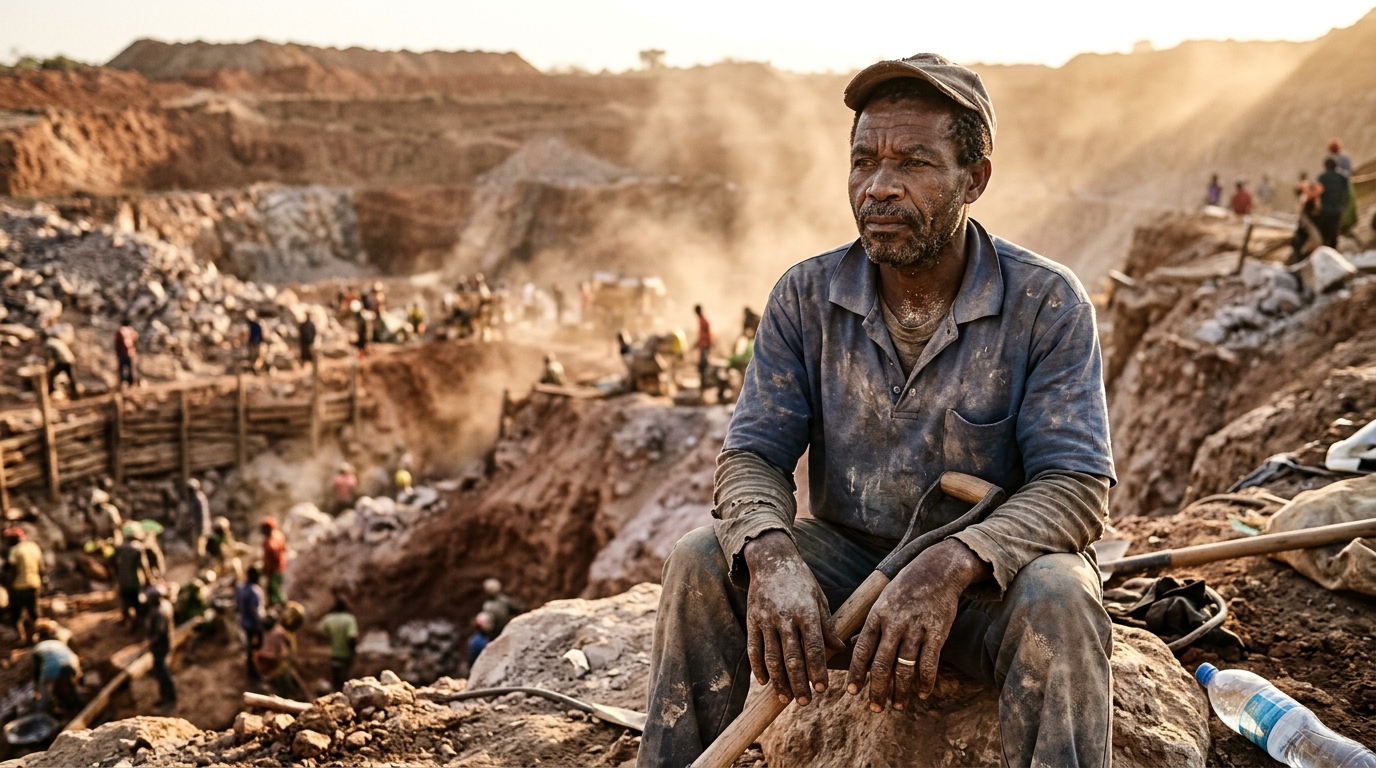
Silicosis, an incurable scarring of the lungs caused by breathing crystalline silica dust, is emerging as a growing occupational health crisis in Tanzania’s fast-expanding artisanal and small-scale mining sector, according to a perspective article published in Discover Social Science and Health. The authors report that the disease currently affects approximately 1.62% to 2% of miners and mining communities in the country, a figure that sits above the global estimate of more than 1.1% for artisanal and small-scale miners and mining communities worldwide. Worldwide, the disease affects more than 35,483 people every year.
The article, written by Jonhas Masatu, Melkizedeki Abdulahi, Emanuel Jonh, Jofrey Mtewele and colleagues, synthesizes the available evidence on the burden, determinants and health system challenges related to silicosis among artisanal miners and mining communities in Tanzania. The authors frame the condition as a crisis that requires urgent policy action, arguing that the rapid expansion of artisanal and small-scale mining has increased workers’ exposure to silica dust and placed both miners and the communities around mine sites at risk.
In its advanced stages, the disease can leave patients dependent on oxygen therapy and burdened by poor quality of life.
The perspective identifies a cluster of contributing risk factors that sustain the outbreak of disease. These include inadequate occupational safety measures, limited awareness about silicosis among miners and mining communities, the absence of a community-based surveillance system for silicosis, uncoordinated enforcement of local and international regulatory law, and inconsistent early screening and diagnostic capabilities.
The consequences extend beyond the lungs. According to the article, silicosis increases the risk of tuberculosis, a well-recognized complication of silica-damaged lung tissue, and leads to disabilities as well as social and economic hardship for affected workers and their families.
To confront the crisis, the authors call for multitrack policy initiatives. Their recommendations include strengthening occupational health safety measures, implementing silica dust control rules, establishing silicosis surveillance, and expanding preventative, control and treatment measures.
The article’s publication as a perspective, rather than an original research study, means its conclusions rest on a synthesis of existing evidence rather than new field measurements. Even so, the reported prevalence range of 1.62% to 2% among Tanzanian miners and mining communities, drawn from the available literature, exceeds the worldwide benchmark of more than 1.1% for this population, underscoring the authors’ argument that the national situation demands attention.
The authors emphasize that early screening and consistent diagnosis are essential to identifying cases before respiratory impairment becomes severe. Inconsistent diagnostic capability, they note, currently undermines that goal.
Subject of Research: Silicosis burden and policy gaps among artisanal and small-scale miners in Tanzania
Article Title: Silicosis among the artisanal and small-scale miners in Tanzania a growing occupational health crisis requiring urgent policy actions
Article References: Masatu, J., Abdulahi, M., Jonh, E., Mtewele, J., Paul, W., Karaba, J., Njokamtali, D., Osima, D., & Edward, M. (2026). Silicosis among the artisanal and small-scale miners in Tanzania a growing occupational health crisis requiring urgent policy actions. Discover Social Science and Health. https://doi.org/10.1007/s44155-026-00506-3
Image Credits: AI Generated
DOI: 10.1007/s44155-026-00506-3
Keywords: silicosis, artisanal and small-scale mining, Tanzania, occupational health, silica dust, tuberculosis risk, surveillance, dust control, policy, lung disease, artisanal, small-scale
News Source: Courtney Benton. (November 5, 2026). Silicosis Is Quietly Crippling Tanzania’s Artisanal Gold Miners. Scienmag.