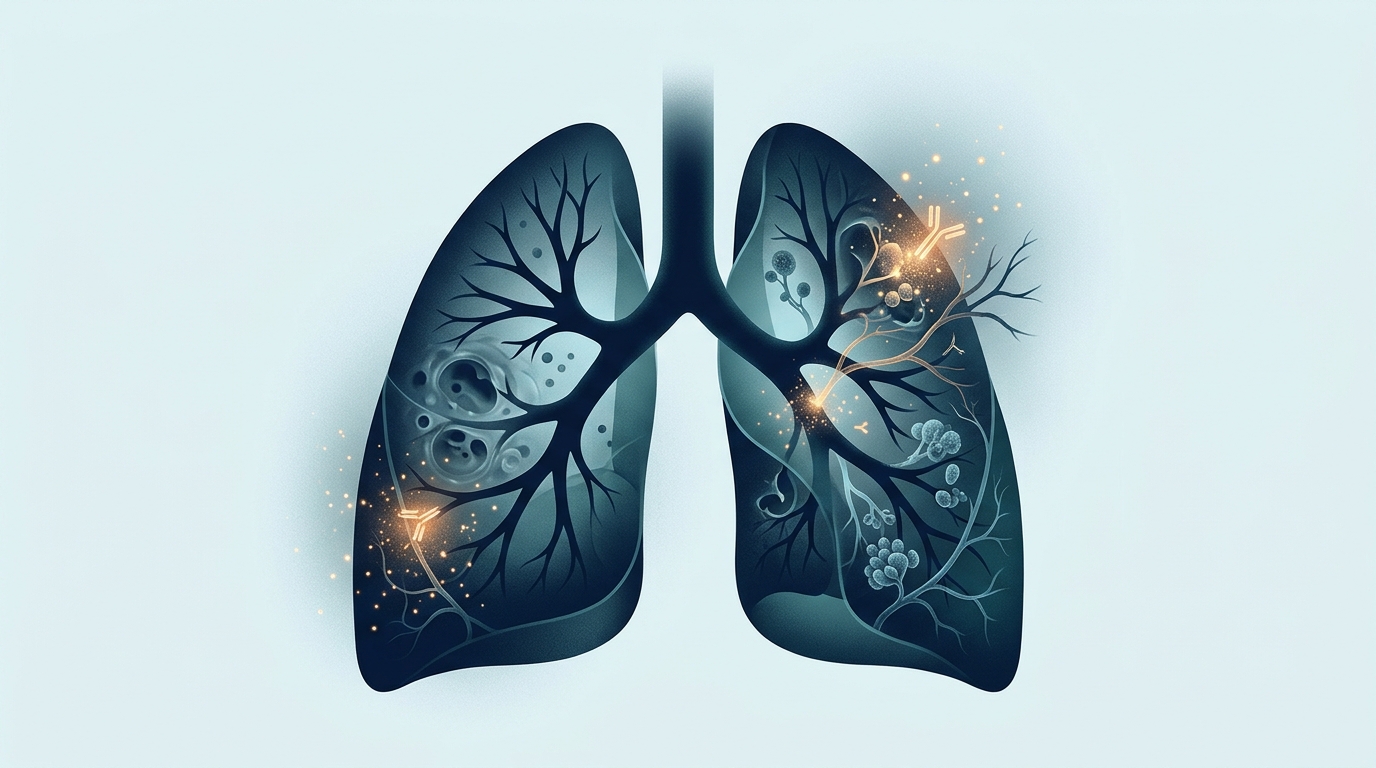
A 48-year-old man with previously undiagnosed advanced HIV infection presented with progressive shortness of breath, weight loss, and multiple cavitary lesions in his lungs, according to a case report published in BMC Infectious Diseases on 04 November 2026. The report, authored by Payam Tabarsi, Esmaeil Mortaz, Farzaneh Gorgani, Mihan Pourabdollah, and Ian Adcock, describes an unusual presentation of Pneumocystis jirovecii pneumonia (PCP) that initially raised suspicion for a serious autoimmune disease.
PCP is an important opportunistic infection in people with advanced HIV and classically appears on imaging as bilateral ground-glass opacities. Cavitation is an uncommon manifestation, and its presence can broaden the differential diagnosis to include mycobacterial infection, fungal infection, malignancy, and vasculitis. In this case, initial investigations for tuberculosis and respiratory viral infections were negative, deepening the diagnostic uncertainty.
Serologic testing showed dual anti-neutrophil cytoplasmic antibody (ANCA) positivity, with P-ANCA/anti-myeloperoxidase measured at 90 AU/mL and C-ANCA/anti-proteinase 3 at 28 U/mL. These findings raised concern for granulomatosis with polyangiitis, a vasculitis that can affect the lungs and is often associated with cavitary lesions. The patient’s CD4 count was 55 cells/µL and his HIV-1 RNA level was 34,124 IU/mL, confirming advanced immunosuppression.
The diagnostic turning point came from tissue. A CT-guided lung biopsy demonstrated numerous P. jirovecii cysts without vasculitis or granulomatous inflammation, supporting a diagnosis of PCP rather than an autoimmune process. The authors emphasize that ANCA results should be interpreted in the context of the clinical and radiologic presentation, and that tissue confirmation can be particularly valuable when the findings are discordant.
The patient was treated with trimethoprim-sulfamethoxazole, adjunctive corticosteroids, and antiretroviral therapy consisting of tenofovir alafenamide, emtricitabine, and dolutegravir. Follow-up CT demonstrated marked resolution of the cavitary lesions. The authors conclude that cavitary PCP is an uncommon but important presentation that can mimic pulmonary vasculitis, particularly when ANCA is positive. As a single case report, the findings describe one patient’s course and do not establish how frequently ANCA positivity occurs in cavitary PCP or guide treatment beyond this individual case.
Subject of Research: A case report of cavitary Pneumocystis jirovecii pneumonia with dual ANCA positivity in advanced HIV infection
Article Title: Cavitary Pneumocystis jirovecii pneumonia with dual ANCA positivity in advanced HIV infection: a case report
Article References: Tabarsi, P., Mortaz, E., Gorgani, F., Pourabdollah, M., & Adcock, I. (2026). Cavitary Pneumocystis jirovecii pneumonia with dual ANCA positivity in advanced HIV infection: a case report. BMC Infectious Diseases. https://doi.org/10.1186/s12879-026-14780-8
Image Credits: AI Generated
DOI: 10.1186/s12879-026-14780-8
Keywords: Pneumocystis jirovecii pneumonia, PCP, HIV, ANCA, granulomatosis with polyangiitis, cavitary lung lesions, lung biopsy, CD4 count, trimethoprim-sulfamethoxazole, antiretroviral therapy, case report, Cavitary
News Source: Ophelia Keating. (November 4, 2026). Cavitary Pneumocystis Pneumonia in Advanced HIV Mimicked Vasculitis on ANCA Testing. Scienmag.