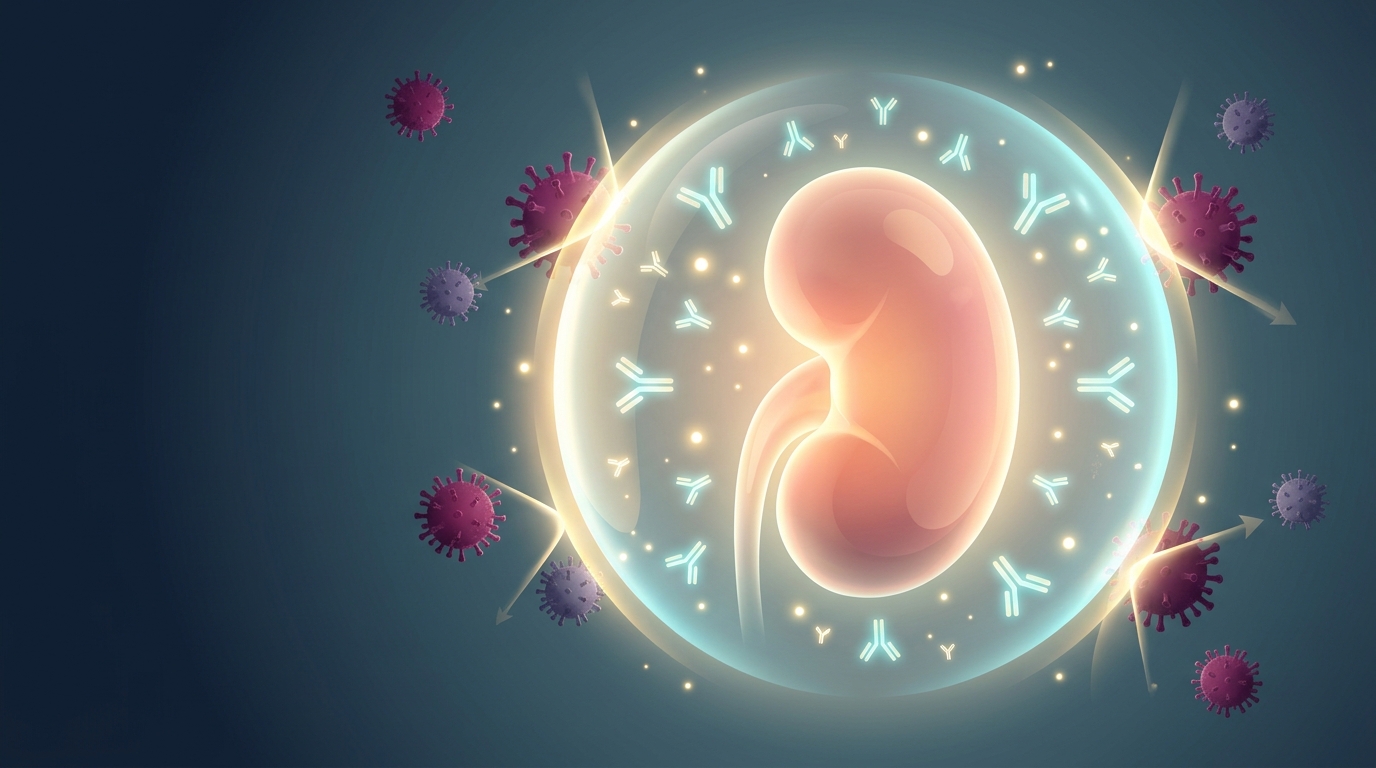
Kidney transplant recipients carry antibody and T cell responses against respiratory syncytial virus that look remarkably similar to those of healthy people, according to a new study from Erasmus Medical Center in Rotterdam.
RSV is best known as a cause of severe illness in infants, but it also poses a serious threat to older adults and people with weakened immune systems. Kidney transplant recipients fall squarely into the last category. The drugs that prevent their bodies from rejecting the transplanted organ deliberately blunt the adaptive immune system, the very arm of immunity that remembers past infections and mounts responses upon re-exposure. Vaccination against new pathogens is notoriously difficult in this group, as shown by the multiple COVID-19 vaccine doses kidney transplant recipients typically needed to reach protective antibody levels.
The research team, led by Britte G. Lenderink and including investigators from the Erasmus MC Transplant Institute and the Department of Viroscience, set out to answer this question by comparing RSV-specific immune responses between kidney transplant recipients and individuals without kidney disease. They analyzed paired serum samples collected in March and October 2021 from 64 kidney transplant recipients and 37 controls.
The samples came from participants in the RECOVAC consortium, a Dutch research collaboration studying immune responses in kidney patients during the pandemic. Selection for the RSV study was based on the availability of stored materials. The participants had provided written informed consent, and the Erasmus MC ethics committee approved the analysis. Most of the transplant recipients were on a two-drug immunosuppressive regimen, with tacrolimus used by 95.3 percent and mycophenolate mofetil by 70.3 percent. The median time since their last transplant was 6.8 years, and 81.3 percent had received their first kidney transplant.
To probe humoral immunity, the researchers measured two types of antibodies in serum. Binding antibodies against the stabilized pre-fusion F protein and the G protein of RSV subgroup A were quantified by enzyme-linked immunosorbent assay, with titers defined as the serum dilution achieving 50 percent inhibition of binding. Neutralizing capacity was assessed with a virus neutralization test using a recombinant RSV strain engineered to express a green fluorescent protein, allowing infected cell foci to be counted automatically. The pre-fusion F protein matters enormously here: it is the metastable form of the protein that the virus presents before it fuses with a target cell, and antibodies specific to this conformation dominate the neutralizing activity of human serum. It is also the antigen used in approved RSV vaccines and prophylactic monoclonal antibodies.
Pre-fusion-specific binding IgG titers were comparable between transplant recipients and controls and remained stable across both timepoints. Ga-specific binding titers were also similar in March, although in October they ran significantly higher in the transplant group. The researchers caution that this October difference likely carries limited biological weight, because neutralizing antibody titers measured at the same timepoint showed no significant difference between the groups. Neutralizing titers themselves were comparable between recipients and controls and stable over time. Pre-fusion-specific binding titers correlated moderately with neutralizing titers in both groups at both timepoints, with correlation coefficients ranging from 0.46 to 0.66, while G-specific titers correlated less strongly.
Cellular immunity told a similar story, though measuring it required more elaborate work. From the full cohort, the team randomly selected 15 transplant recipients and 14 controls who had peripheral blood mononuclear cells available at both timepoints. They stimulated these cells with peptide pools covering RSV surface proteins F and G as well as internal proteins M and N, plus a selection of known immunogenic peptides. After 21 hours of stimulation, flow cytometry with an activation-induced marker assay identified RSV-specific memory T cells by detecting surface markers such as OX40, CD137, CD69 and CD25 on CD4+ cells, and CD69 together with CD137 on CD8+ cells. Total lymphocyte counts were significantly lower in the transplant recipients at both timepoints, a predictable consequence of immunosuppression, yet the relative frequencies of RSV-specific CD4+ and CD8+ memory T cells within those reduced populations were essentially the same as in controls. The only exception was a higher frequency of Fa-stimulated CD4+ responses in recipients in March. Across both groups, the highest T cell frequencies appeared after stimulation with the immunogenic peptide selection, and CD8+ responses were generally lower than CD4+ responses.
Deeper phenotyping added texture to these findings. Within the CD4+ compartment, RSV-specific cells showed a balanced mix of central memory and effector memory populations in both groups, in contrast to the central-memory predominance seen after nonspecific stimulation. In the CD8+ compartment, where frequencies were low enough that data from both timepoints had to be pooled, RSV-specific cells were predominantly terminally differentiated effector memory cells re-expressing CD45RA. When the researchers mapped which viral proteins the CD4+ repertoire targeted, most individuals in both groups showed responses against all four tested proteins without a clear dominance of any single antigen, indicating a diverse rather than monoclonal response. The immunosuppressive drugs taken by transplant recipients act broadly on all lymphocytes rather than on cells with particular specificities, which the authors suggest explains why the proportional representation of RSV-specific cells is preserved even as total lymphocyte numbers fall.
Cytokine production added a final dimension. The team measured 12 cytokines in the supernatant of stimulated cells from March 2021 and, after applying pre-defined exclusion criteria, retained seven for unsupervised hierarchical clustering: IL-2, IL-6, IL-10, IFN-γ, TNF-α, IL17-F and IL-22. The analysis produced three distinct cytokine profiles, a Th1-skewed cluster, a balanced cluster and a non-Th1 cluster, and transplant recipients and controls were distributed evenly across all three. The clusters differed in meaningful ways among themselves. Individuals in the Th1-skewed cluster had significantly lower pre-fusion-specific binding antibody titers than those in the balanced cluster, pointing to reduced humoral responses. Individuals in the non-Th1 cluster had significantly lower RSV-specific CD4+ and CD8+ memory T cell frequencies and were significantly older than those in the balanced cluster. Notably, these cluster differences cut across the transplant-versus-control divide rather than tracking with transplant status.
The authors are careful about what these findings do and do not show. The measurements are immune-based and cannot be translated directly into protection against severe RSV disease, particularly because no established correlate of protection for RSV exists. The use of peripheral blood cells also leaves open questions about tissue-resident memory T cells in the airways, which studies indicate do not necessarily mirror circulating populations and which are considered important for defense against RSV. The sample size was limited, pre-transplant samples were unavailable, and the study did not examine recall responses after vaccination or infection following transplantation. The authors also note that because their assays were performed ex vivo in the absence of immunosuppression, the activation potential of the T cells may be overestimated. Still, recent work on RSV vaccination in solid organ transplant recipients has shown that pre-existing RSV-specific immunity can rise in response to vaccination in a manner similar to controls, albeit more slowly.
Subject of Research: Preservation of RSV-specific antibody and T cell immune responses in kidney transplant recipients under immunosuppressive treatment
Article Title: RSV-specific humoral and cellular immune responses in kidney transplant recipients
Article References: Lenderink, B. G., van Dijk, L. L. A., Dieterich, M., Kho, M. M. L., Heidt, S., & de Vries, R. D. (2026). RSV-specific humoral and cellular immune responses in kidney transplant recipients. Transplant International, 39, Article 17558. https://doi.org/10.3389/ti.2026.17558
Image Credits: AI Generated
Keywords: kidney transplant recipients, respiratory syncytial virus, immunosuppression, neutralizing antibodies, memory T cells, cytokine profiles, humoral immunity, pre-fusion F protein, RECOVAC consortium, Erasmus MC, transplantation, adaptive immunity
News Source: Kristina Jarvis. (November 3, 2026). Kidney transplant recipients hold on to RSV immunity despite immunosuppression. Scienmag.