


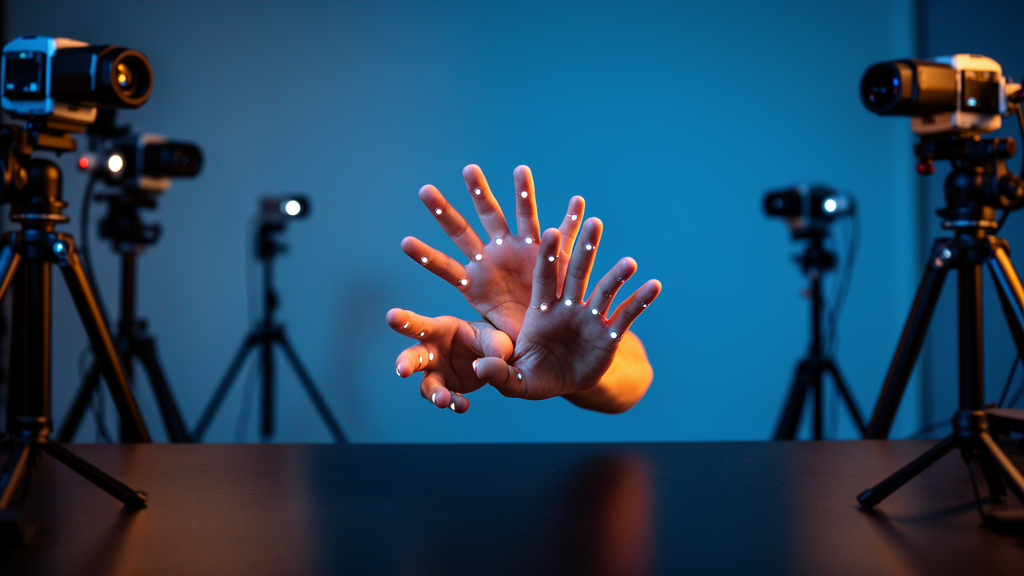
Researchers who track how human fingers move in three dimensions have long faced a stubborn problem: laboratories around the world use different marker setups to capture the same movements, making their results difficult to compare. A systematic review now maps the landscape of existing finger and hand models and finds that none has been standardized for recording 3D finger movements, a gap the authors say limits comparability across laboratories. The review, published in Frontiers in Bioengineering and Biotechnology, also reports that only a handful of the available models have been verified in clinical settings.
The team behind the analysis searched the PubMed and Cochrane databases systematically. They applied predefined exclusion criteria in two steps, first to titles and abstracts and then to full texts. From an initial yield of 2,506 scientific articles, 38 studies made it into the final analysis. For each included study, the reviewers assessed reproducibility systematically and extracted information about methodology, validity and reliability of the marker models.
The 38 studies divided unevenly across the hand. Fourteen included the whole hand, while 14 focused solely on the thumb and 10 on the long fingers. The people studied were mainly healthy volunteers, especially in the full-hand models, but patients also appeared in the literature: people with osteoarthritis, carpal tunnel syndrome or rheumatoid arthritis took part in some of the included studies. The movements analyzed ranged from directed motions to functional tasks such as grasping.
Technically, the review describes two broad ways of attaching markers to the hand. Markers were applied either as clusters or individually. Once the marker trajectories were captured, the two main kinematic approaches for turning them into joint angles were vector analysis or direct kinematics. These methodological choices matter because they determine how comparable the resulting measurements are between laboratories and how easily a model can be transferred to new clinical questions.
The reproducibility assessment identified four hand kinematic models that achieved maximum reproducibility scores: one full-hand model, two thumb models and one long finger model. That outcome might suggest the field is close to consensus, but the clinical picture is thinner than the technical one. Only one of these four top-scoring models was tested on patients, which the authors highlight as evidence of a lack of clinical verification.
Validity and reliability reporting emerged as another weak point. According to the review, suitable measures for ensuring validity and reliability are frequently missing or incomplete across the included studies. In practice, that means a laboratory adopting a published model often cannot tell from the literature how accurately the model reproduces true joint motion or how consistent its measurements remain over repeated trials and between examiners.
The clinical stakes are considerable. Finger kinematics are relevant to patients with osteoarthritis, carpal tunnel syndrome and rheumatoid arthritis, conditions represented in the reviewed studies, and to the assessment of hand function after injury or surgery. Without standardized models and demonstrated reliability under clinical conditions, measurements from different centers cannot be pooled or compared with confidence, and treatment effects on hand movement may be difficult to quantify consistently.
The authors conclude that further research is needed to validate existing models and to test for reliability under clinical conditions. The review itself was conducted as a systematic literature search with predefined exclusion criteria applied in two steps, and its reproducibility scoring provides a structured basis for deciding which of the 38 models merit closer clinical scrutiny. The four maximum-scoring models, spanning the full hand, the thumb and the long fingers, offer starting points for that work.
For now, the review’s central message stands: the tools for marker-based 3D motion analysis of the fingers exist in abundance, but the field lacks the standardization, patient testing and validity and reliability documentation needed to turn them into routine clinical instruments. Until models are validated and reliability-tested under clinical conditions, cross-laboratory comparability of finger movement data will remain limited.
Subject of Research: Systematic review of marker-based 3D motion analysis models for the fingers and hand
Article Title: Marker-based 3D motion analysis of the fingers – a systematic review
Article References: Eckenweber, V., Thielen, M., Prahm, C., & Trinler, U. (2026). Marker-based 3D motion analysis of the fingers – a systematic review. Frontiers in Bioengineering and Biotechnology, 14, 1757710. https://doi.org/10.3389/fbioe.2026.1757710
Image Credits: AI Generated
DOI: 10.3389/fbioe.2026.1757710
Keywords: biomechanics, fingers, kinematics, marker models, motion analysis, systematic review, hand, reproducibility, validity, reliability, osteoarthritis, rheumatoid arthritis
News Source: Gregory Coleman. (October 30, 2026). No Standard Marker Model Exists for 3D Finger Motion, Review Finds. Scienmag.



